
Arrokoth’s Paradox: Why a Gentle Merger Couldn't Have Created Its Perfect Shape
Challenge in Arrokoth's single merger to achieve the shape's principal axis configuration
The study investigates the formation of the contact binary Arrokoth, specifically why its two irregular lobes (Wenu and Weeyo) are aligned almost perfectly along their longest principal axes. Using a Full Two-Body Problem Finite Element Model (F2BPFEM), the authors show that a single "soft merger" is dynamically incapable of producing this alignment, suggesting a post-merger reconfiguration event.
TL;DR
The Kuiper Belt object Arrokoth is famous for its "pancake" lobes joined at a narrow neck, aligned almost perfectly along their longest axes. While scientists long believed a gentle "soft merger" explained this, new research using high-fidelity finite element modeling proves that gravity would have caused the lobes to tumble wildly before impact. The paper argues that Arrokoth’s current alignment is likely the result of a secondary "Sky-forming impact" that reconfigured the body after it had already merged.
The Problem: The Mystery of the 5-Degree Alignment
Arrokoth (2014 MU69) is a pristine "cold classical" Kuiper Belt Object, essentially a time capsule from the early solar system. It consists of two lobes, Weeyo and Wenu. Despite their irregular, flattened shapes, their longest axes are aligned within a mere 5 degrees.
Existing theories—such as gas drag in the protosolar nebula or Lidov-Kozai (LK) oscillations—successfully explain how two distant objects could spiral inward for a "soft merger." However, they fail to account for the "end-game" dynamics. As these two irregular masses get close, their mutual gravity acts like a chaotic torque, twisting them away from each other.
Methodology: Simulating the Irregular Dance
To solve this, the researchers moved beyond "point-mass" approximations. They used the Full Two-Body Problem Finite Element Model (F2BPFEM).
- High-Fidelity Meshing: Each lobe was modeled as a mesh of tetrahedrons to accurately calculate gravitational potential.
- Variable Orbits: They tested "Non-Secular" (chaotic LK), "Precession" (weak LK), and "Min-Separation" (near-contact) orbits.
- Sensitivity Analysis: 441 simulations covered different bulk densities and shape perturbations (adjusting semi-axes by ±250m).
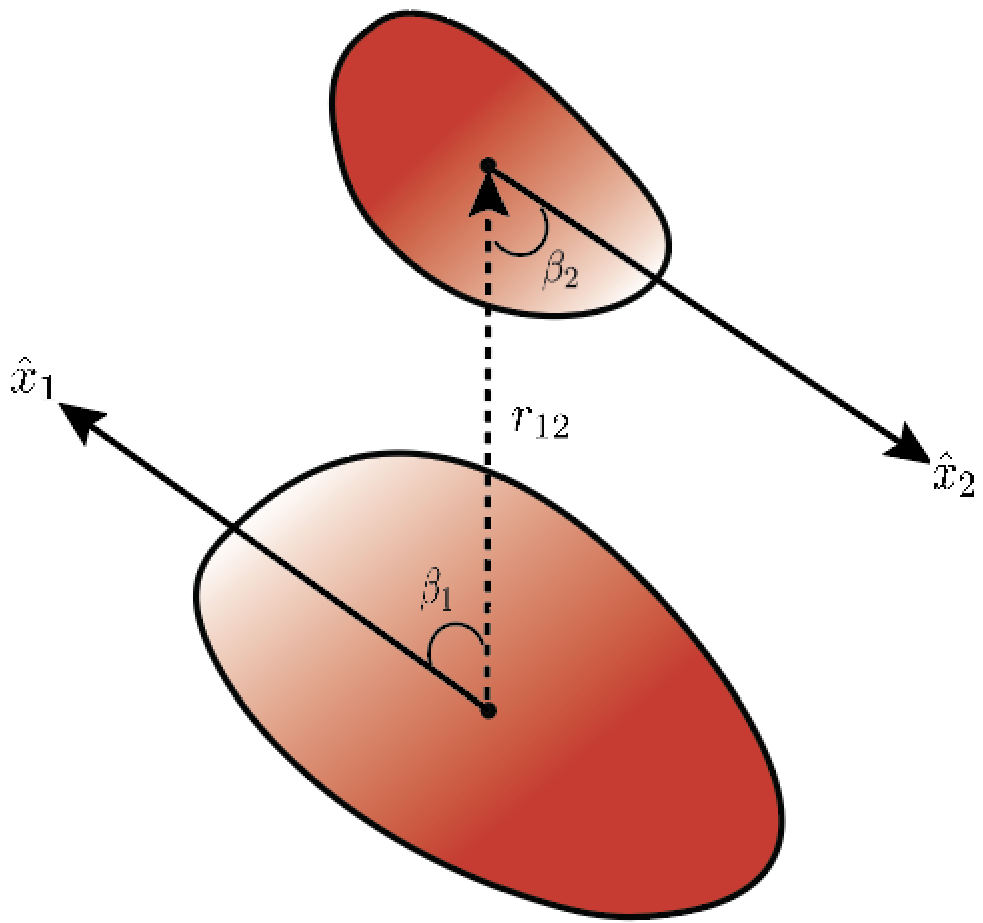 Figure 1: Definition of the collision angle (β) and the initial setup of the two irregular lobes.
Key Insights: Gravity vs. Gas
The most significant finding is the dominance of gravitational torque.
- Ineffective Gas Stabilization: Some hypothesized that gas in the nebula could act as a "stabilizer." The study found that gravitational torque is 6 to 50 times stronger than any torque gas drag could provide.
- Immediate Desynchronization: In every single simulation, the lobes became "desynchronized" shortly after their close approach. Instead of staying face-to-face, they began to tumble (multi-axis rotation).
- The Collision Angle Gap: While Arrokoth shows a ~5° alignment, the simulations consistently produced contact angles between 80° and 120°.
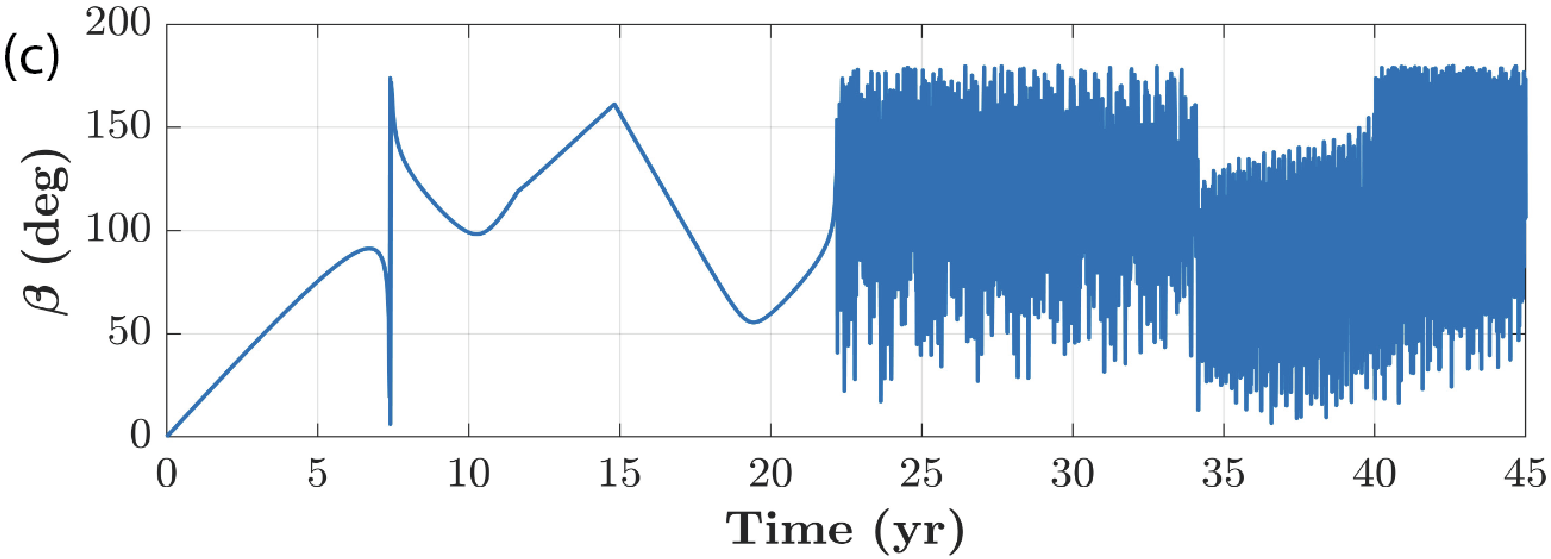 Figure 2: Time evolution showing the rapid rise of the collision angle (β) as the lobes approach periapsis.
A New Formation Narrative: The "Sky-Impact" Reconfiguration
If a single merger leads to a messy, misaligned object (similar to the asteroid Itokawa), how did Arrokoth become so orderly? The authors propose a two-stage process:
- The Messy Merger: Weeyo and Wenu merged gently but misaligned.
- The Structural Reset: A later impact (the "Sky-forming impact") hit Arrokoth. Using the π-scaling law, the researchers calculated that this impact delivered enough energy to potentially break the "neck" of the object.
- Energy Minimization: Once the neck was fractured or fluid-like from the impact, the two lobes naturally settled into a principal axis alignment—the state of minimum potential energy for a rotating binary.
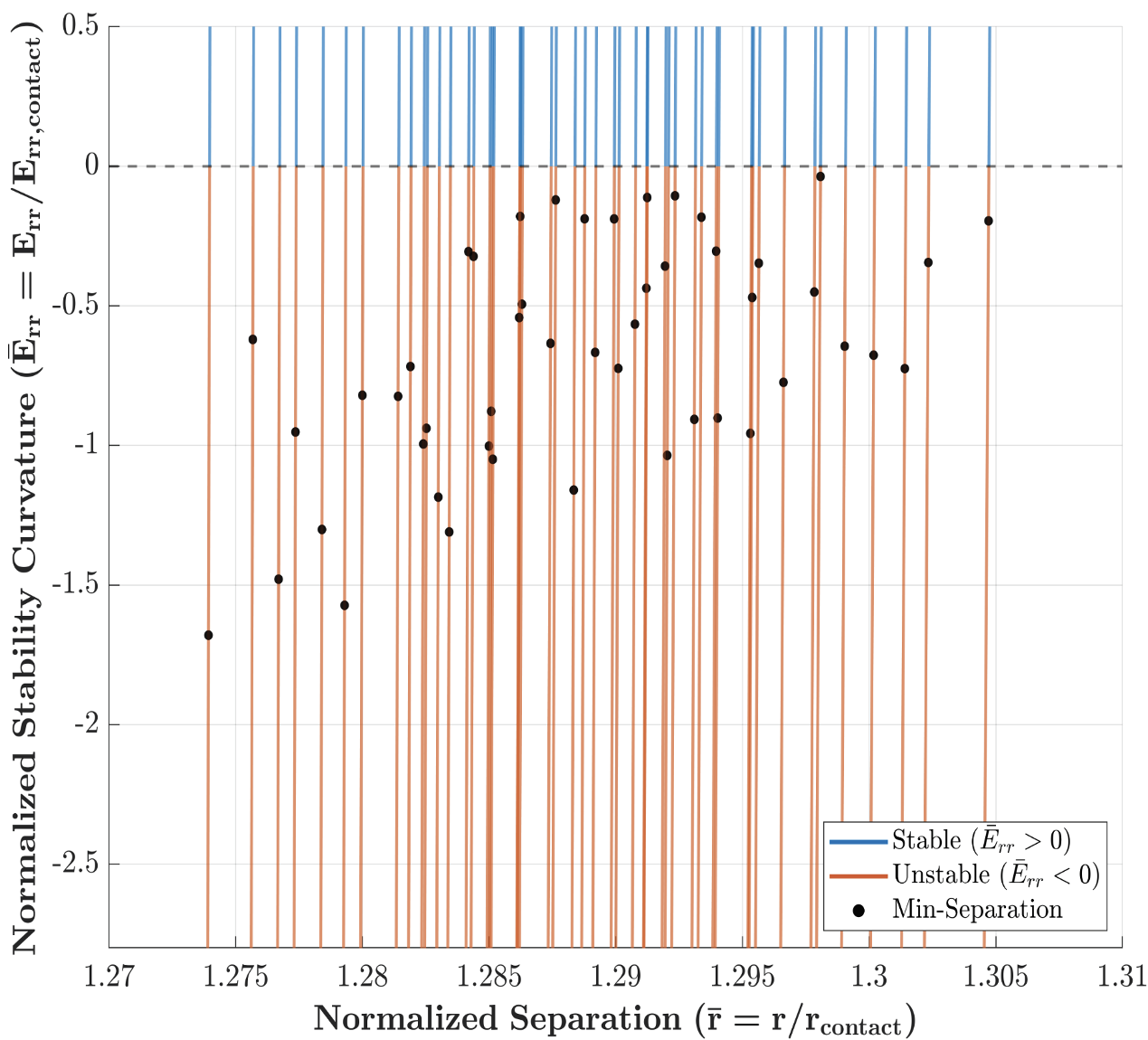 Figure 3: Scenarios a-c show the failed single-merger alignment; scenario d shows the proposed post-impact reconfiguration.
Conclusion: Rethinking Planetesimal Growth
This study challenges the "pristine merger" myth of Arrokoth. It suggests that even in the quiet reaches of the Kuiper Belt, the shapes we see today are not just products of their initial birth, but are refined by dynamic instabilities and subsequent impacts. For planetary scientists, this means Arrokoth is less of a "frozen snapshot" and more of a "reformed survivor."
Takeaway: Gravity's chaotic nature during the close approach of irregular bodies is too strong to ignore. Future models of planetesimal formation must account for these complex mutual torques to accurately predict the shapes of distant worlds.