
[Journal Club] Topological Mastery: Classifying 2D Fermionic Systems with $\mathbb{Z}_2$ Flavor Symmetry
Classification of 2D Fermionic Systems with a $\mathbb Z_2$ Flavor Symmetry
This paper provides a complete classification of superfusion categories for 2D fermionic systems possessing a flavor symmetry alongside universal fermion parity. The authors identify 16 distinct consistent superfusion categories categorized by whether the flavor symmetry defect is of m-type or q-type, successfully mapping these to anomaly classes.
TL;DR
The landscape of 2D fermionic physics just got a definitive map. Researchers have successfully classified the superfusion categories that describe 2D fermionic systems with a flavor symmetry. By solving the complex super-pentagon equations, they identified 16 distinct categories, linking them to anomaly classes and providing a bridge between abstract category theory and concrete Majorana fermion models.
The Fermionic "Missing Link"
In the realm of Two-Dimensional Conformal Field Theories (CFTs), symmetries are represented by Topological Defect Lines (TDLs). In bosonic theories, these lines follow standard fusion rules. However, 2D fermionic systems carry an inherent "spin structure" that complicates things.
The core irritation in existing literature was the treatment of q-type defects. Unlike standard m-type defects, q-type defects can host 1D Majorana fermion modes. This "fermionic hair" means the defects don't just commute or fuse in the usual way—they obey a "super" version of the pentagon equation that accounts for fermion parity and sign changes when Majorana modes bypass one another.
Methodology: The Super-Pentagon Approach
The authors treat the system as a superfusion category incorporating:
- Universal Fermion Parity (): The intrinsic symmetry .
- Flavor Symmetry (): An additional global symmetry.
The magic happens in solving the Super-Pentagon Equations. Depending on the nature of the flavor line (whether it's m-type or q-type), the fusion rules vary significantly. For instance, the q-type fusion rule is: where and represent bosonic and fermionic identity junctions.
The Majorana Constraint
A pivotal insight in this paper is the sign rule. When a 1D Majorana fermion living on a q-type defect passes through the fermion parity line , it must acquire a minus sign. This physical intuition allowed the authors to prune the mathematical solution space by half, ensuring the categories remain physically consistent with the Spin-Statistics theorem.
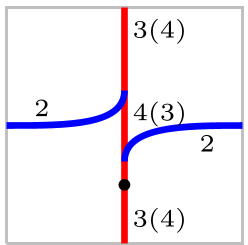 Figure 1: Illustration of Majorana modes moving across trivalent junctions, a key visual for the super-F-move analysis.
Key Results: The Anomaly Map
The authors discovered that the possible symmetries are classified by a trio of invariants .
- periodicity: The spin of states in the defect Hilbert space is quantized as .
- Consistency Table: They provided a comprehensive look-up table for these categories, categorized by their Frobenius-Schur (FS) indicators () and junction types.
| Case | Junction Type | FS indicator | Spin selection rule |
|---|---|---|---|
| $ | |||
| u_W=0, 4$ | |||
| $ | |||
| u_W=2, 6$ |
(Selection from the paper's results on m-type TDLs)
Real-World Applications: LG Models and Gapped Phases
This isn't just theory for the sake of theory. The authors applied their classification to Landau-Ginzburg (LG) models and N=1/N=2 minimal models.
By adding relevant deformations to these CFTs, they showed how these 't Hooft anomalies persist in gapped phases. For example, in the N=2 LG model deformed to have two vacua, they demonstrated that the solitonic states must carry fractional fermion numbers () because of the mixed anomaly between flavor symmetry and fermion parity.
 Figure 2: Representation of the fermionization process and the condensation of TDLs in the Dirac fermion theory.
Summary & Future Outlook
The paper provides a rigorous foundation for anybody working on 2D Condensed Matter physics or String Theory. It proves that the "super" framework is not just an elegant extension but a necessary tool for capturing the true degrees of freedom in fermionic systems.
Limitations: The study focuses primarily on , but many physical systems possess larger groups like or non-abelian symmetries. Expanding this "super" classification to more complex fusion rings is the next logical step in the "Fermionic Symmetry" roadmap.