
FastQSL 2: Breaking the Polar Barrier in High-Speed Magnetic Connectivity Analysis
FastQSL 2: A Comprehensive Toolkit for Magnetic Connectivity Analysis
FastQSL 2 is a major update to the high-performance magnetic connectivity analysis toolkit, now supporting spherical coordinates and arbitrary output mesh shapes. It introduces a dual-coordinate system to resolve polar singularities and enables the computation of quasi-separatrix layers (QSLs) and slip-squashing factors in solar and plasma physics.
TL;DR
In solar and plasma physics, "where" magnetic field lines reconnect determines the scale of solar flares and the speed of solar winds. FastQSL 2 is a comprehensive upgrade to a high-speed toolkit designed to map these regions—specifically Quasi-Sepatrix Layers (QSLs) and separators. By introducing a dual-coordinate system for polar regions and supporting arbitrary meshes, it effectively solves the numerical "singularity" problem at the poles while remaining significantly faster than existing SOTA solvers.
Background: The Topography of Magnetic Fields
Magnetic field lines aren't just invisible threads; their geometry dictates energy release in the solar corona. QSLs are regions where the magnetic "connectivity" changes drastically over a tiny distance. Think of them as the steep cliffs in a magnetic landscape where electric currents tend to build up and "snap," leading to reconnection.
While the first version of FastQSL brought speed, it was limited to Cartesian coordinates. The Sun, however, is a sphere, and traditional spherical math breaks down at the poles—a major roadblock for global solar modeling.
The Motivation: Why Spherical Math Fails at the Poles
Existing tools often treat the poles as singular points where longitude becomes undefined. This leads to numerical artifacts or "pseudo-structures" in magnetic maps. Furthermore, researchers need to analyze these fields on non-uniform surfaces, such as domes or arbitrary cross-sections perpendicular to the photosphere, which previous tools couldn't efficiently handle.
Methodology: Dual Coordinates and Hybrid Mapping
FastQSL 2 introduces several "Academic-Grade" innovations to solve these issues:
1. The Dual-Spherical Solution
To handle the poles, the authors introduced a second spherical coordinate system . When a field line enters the polar region (defined as ), the code seamlessly transforms the vectors into this secondary system, effectively moving the "equator" to the poles to maintain numerical precision.
2. Method Hybridization
The toolkit supports two ways to calculate the squashing factor :
- Method I (Finite Differences): Better for capturing extremely thin, zero-thickness separators.
- Method II (Analytical Vector Mapping): Avoids coordinate difference errors and is more robust for smooth regions. FastQSL 2 defaults to Method I but uses Method II to fill gaps where grids don't allow finite differences, offering the best of both worlds.
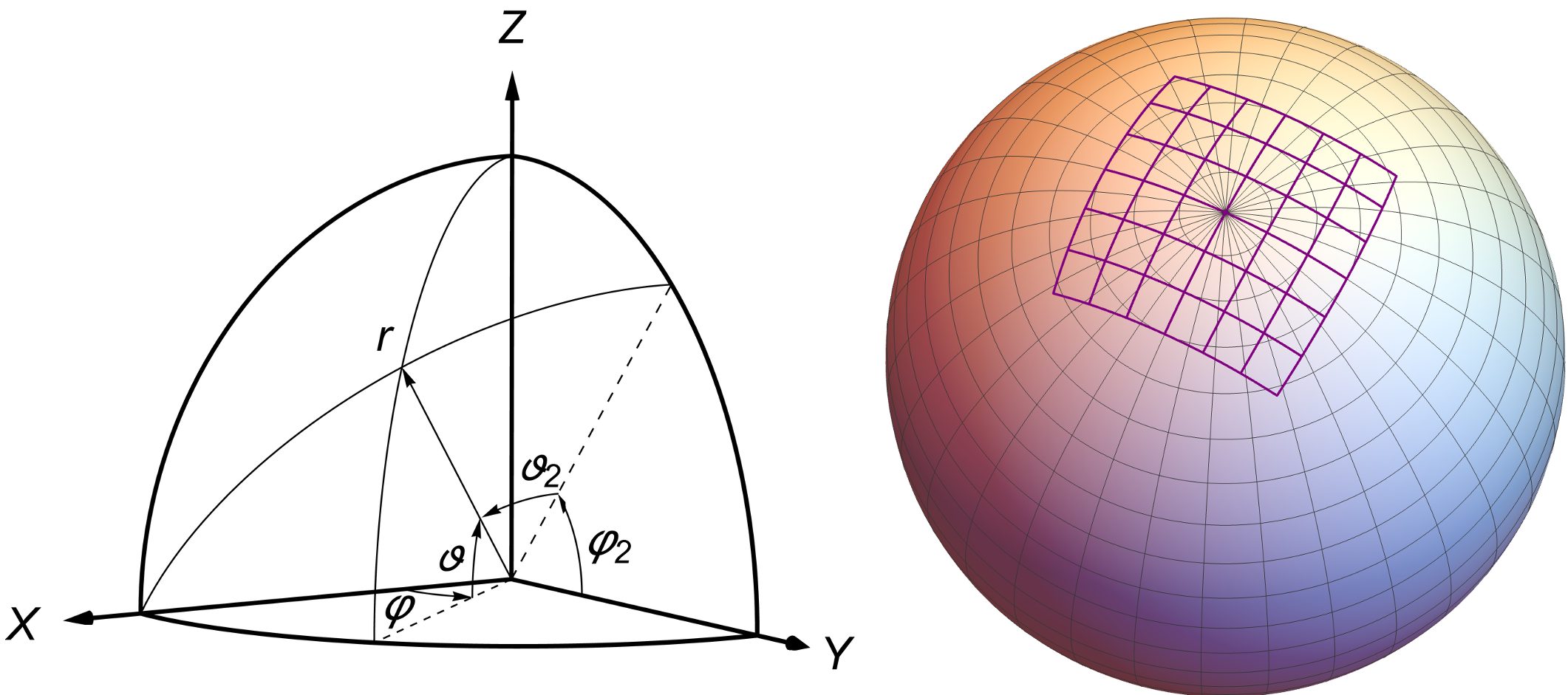 Figure 1: The dual-coordinate strategy used to resolve the polar singularity.
3. for Separator Location
A key insight in version 2 is the use of —calculating connectivity changes within a localized radius . This allows the tool to isolate the "spine" of the reconnection site (the separator) from the broader QSL structures.
Performance & Validation
FastQSL 2 was tested against SOTA tools like MapFL and UFiT using Potential Field Source Surface (PFSS) models of the solar corona.
- Speed: In a grid of 1441 × 721 points, FastQSL 2 completed the task in 1.15 seconds, compared to 6.09s for MapFL and 3.71s for UFiT.
- Accuracy: As shown in the comparison below, FastQSL 2 avoids the "noise" and artifacts seen in UFiT near the polar boxes (purple boxes in panel c).
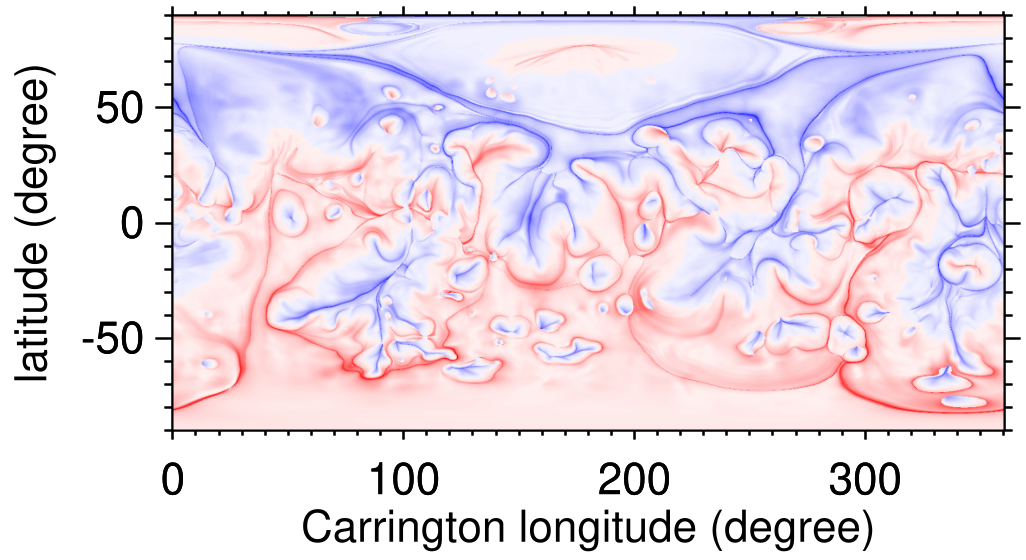 Figure 2: Q-map comparisons showing FastQSL 2’s superior handling of polar regions compared to UFiT.
Beyond Q-Maps: Slip-Squashing and Solar Winds
The toolkit isn't just for static maps. It now supports:
- Solar Wind Modeling: Deriving expansion factors () and angular distances () used in the Wang-Sheeley-Arge (WSA) model.
- Slip-Squashing Factors (): These quantify how fast magnetic field lines "slip" during an evolution, providing a direct measurement of the reconnection rate in 3D space.
Conclusion and Future Outlook
FastQSL 2 transforms from a specialized script into a comprehensive toolkit for magnetic topology. Its ability to handle global spherical data without polar glitches makes it an essential tool for the next generation of solar missions, such as the Solar Polar-orbit Observatory (SPO). While it currently lacks cylindrical coordinate support, its performance in Cartesian and Spherical domains sets a new standard for open-source astrophysical software.
Key Takeaway: For researchers in MHD and solar physics, FastQSL 2 offers the fastest path from raw magnetic data to high-fidelity topological insights, now with full-sphere coverage.