
MARCH: Emulating Clinical Hierarchies for High-Fidelity 3D Radiology Report Generation
MARCH: Multi-Agent Radiology Clinical Hierarchy for CT Report Generation
The paper introduces MARCH (Multi-Agent Radiology Clinical Hierarchy), a novel framework for 3D CT report generation that emulates a professional radiology department's workflow. It utilizes specialized agents (Resident, Fellow, and Attending) to transform "black-box" VLM generation into a collaborative, iterative verification process, achieving new SOTA results on the RadGenome-ChestCT dataset.
TL;DR
Researchers have developed MARCH (Multi-Agent Radiology Clinical Hierarchy), a framework that mirrors the professional structure of a hospital's radiology department. By assigning roles to "Resident," "Fellow," and "Attending" agents, the system replaces monolithic "black-box" generation with an iterative, collaborative process. This approach dramatically improves the accuracy of 3D CT reports, particularly in identifying subtle clinical abnormalities.
Background: The "Black Box" Problem in Radiology AI
While AI has made strides in interpreting medical images, 3D data like chest CT scans present a unique challenge. Standard Vision-Language Models (VLMs) often treat report generation as a straight line from pixels to text. However, in a real hospital, a report is rarely the work of one person. It involves a hierarchy: a Resident drafts, a Fellow reviews, and an Attending adjudicates.
Current AI models lack this iterative verification, leading to "clinical hallucinations"—where the AI describes findings that don't exist or misses subtle but critical pathologies.
Methodology: The Resident-Fellow-Attending Workflow
MARCH breaks the generation process into three distinct phases:
1. Initial Drafting (The Resident)
The Resident Agent (Ares) uses a 3D vision encoder (ViT3D) and a multi-region segmentation module to extract features from ten anatomical subregions (e.g., lungs, heart, bone). This ensures the model isn't just looking at the "big picture" but attending to specific anatomical entities.
2. Evidence-Based Revision (The Fellow)
The Fellow Agent (Afel) doesn't just look at the image; it looks at history. Utilizing Retrieval-Augmented Generation (RAG), it queries a database for similar cases based on images, text descriptions, and even diagnostic "logits" (predicted abnormality profiles).
3. Consensus Discourse (The Attending)
This is the most innovative part of MARCH. The Attending Agent (Aatt) orchestrates a "clinical meeting." If different Fellows suggest different findings, the Attending facilitates multi-round negotiation. Agents express their "stance" (agree/disagree) and confidence levels until a stable, clinically coherent consensus is reached.
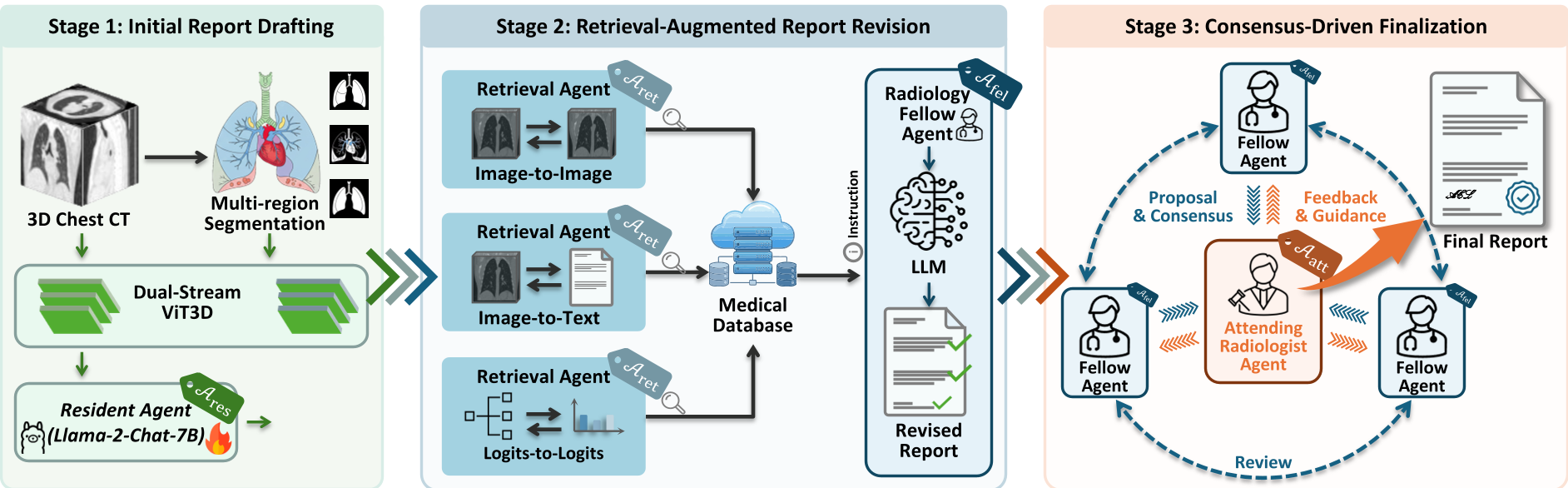 Figure 1: The MARCH framework architecture, showcasing the hierarchical flow from drafting to consensus.
Experiments and Unprecedented Clinical Fidelity
The researchers tested MARCH on the RadGenome-ChestCT dataset (over 25,000 scans). The results were striking:
- Linguistic Accuracy: MARCH outperformed all 2D and 3D baselines across BLEU, METEOR, and ROUGE-L metrics.
- Clinical Efficacy (CE): The model achieved an F1-score of 0.399, a massive leap over the previous SOTA (Reg2RG at 0.253).
- Subtle Detection: MARCH proved much more capable at identifying rare or minor findings like hiatal hernias and pericardial effusion.
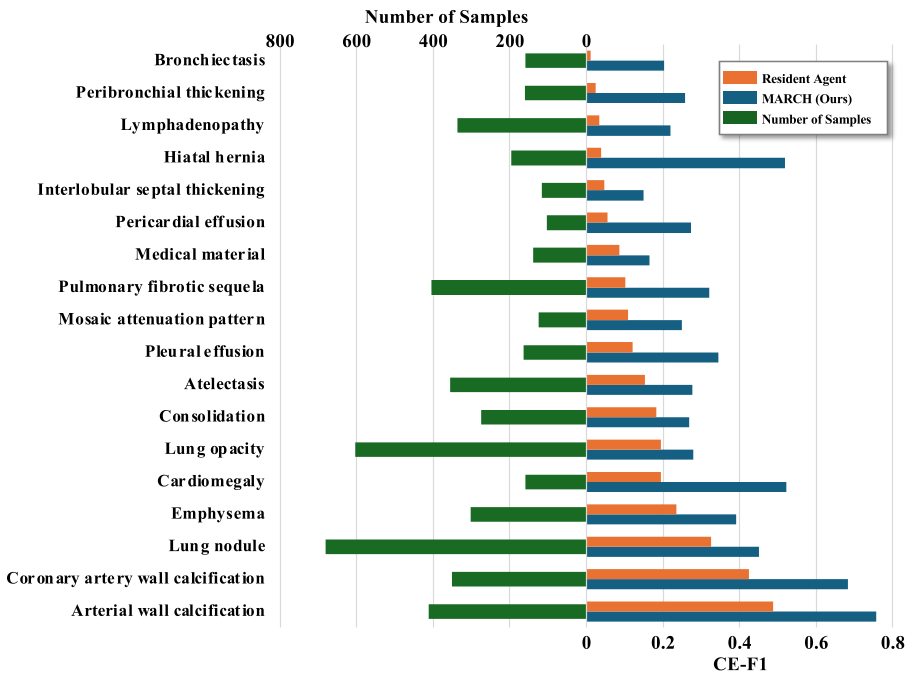 Table 1: MARCH consistently sets new benchmarks across both linguistic and clinical metrics.
Deep Insight: Why Multi-Agent Matters
The success of MARCH isn't just about having more LLMs; it's about the Consensus-Driven Finalization. Ablation studies showed that removing the finalization stage caused the largest performance drop. By simulating a "devil's advocate" role, the framework reduces the risk of single-reader misinterpretation—a common cause of diagnostic error in both humans and AI.
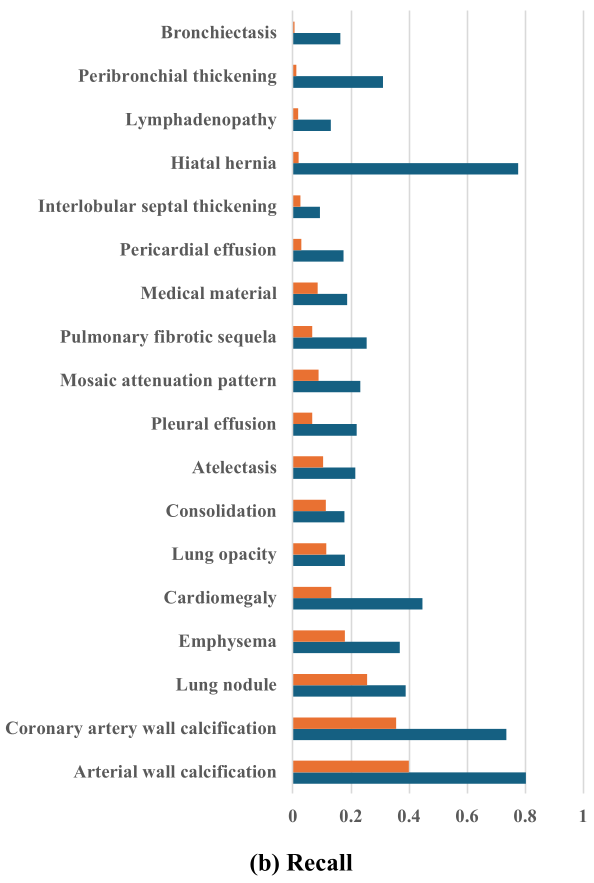 Figure 2: F1-score improvements across 18 clinical abnormalities compared to the Resident-only baseline.
Critical Analysis & Conclusion
Takeaway
MARCH proves that organizational inductive bias—designing AI agents to act like professional teams—is a powerful tool for reliability. It moves AI from a passive generator to an active participant in clinical reasoning.
Limitations & Future Work
- LLM Dependence: The framework currently relies heavily on the GPT-4 series; moving toward domain-specific or open-source medical LLMs is the next frontier.
- Human-in-the-Loop: While MARCH simulates a human hierarchy, it currently functions autonomously. Future versions should incorporate real-time feedback from human radiologists to act as a true decision-support tool.
By bridging the gap between raw data processing and professional collaborative standards, MARCH sets a new standard for AI's role in the future of radiology.