
From Quantum Fluids to Classical Information: Observing the Strong-to-Weak Symmetry Breaking
Observation of Strong-to-Weak Spontaneous Symmetry Breaking in a Dephased Fermi Gas
This paper reports the first experimental observation of Strong-to-Weak Spontaneous Symmetry Breaking (SW-SSB) in a dephased Fermi gas using a quantum gas microscope. By analyzing nonlinear Rényi-1 and Rényi-2 correlators, the authors demonstrate that a dephased Fermi liquid exhibits long-range order, achieveing a sharp phase transition to a symmetric state when driven into a band insulator via an optical superlattice.
TL;DR
Physicists have finally observed a long-predicted but "hidden" phase transition called Strong-to-Weak Spontaneous Symmetry Breaking (SW-SSB). By using a quantum gas microscope to image individual fermions and applying machine learning to reconstruct the density matrix, the team demonstrated that dephased quantum liquids possess a unique type of long-range order that vanishes when the system becomes a classical insulator.
Academic Context: This work moves beyond the Landau paradigm for pure states, providing an experimental framework for the "mixed state" physics crucial for understanding noisy intermediate-scale quantum (NISQ) devices.
The Problem: The Invisibility of Dephased Symmetry
In a pure quantum state, spontaneous symmetry breaking (SSB) is easy to spot—think of the alignment of spins in a magnet or the phase coherence in a superfluid. However, as a system decoheres (due to noise or measurement), it becomes a mixed state represented by a density matrix .
Recent theory suggests that every symmetry has two flavors:
- Strong Symmetry: The state has a definite charge (e.g., a fixed number of particles).
- Weak Symmetry: The state is an incoherent mixture of different charges.
The transition from strong to weak symmetry—the SW-SSB—is invisible to traditional linear measurements. If you only measure the average density, you see nothing. To find this transition, you must look at the "finer structure" of the density matrix through nonlinear Rényi correlators.
Methodology: Doubled Spaces and Machine Learning
The researchers tackled this by loading atoms into a 2D optical lattice. To diagnose the phase, they employed two sophisticated lenses:
1. The Choi Representation (Physical Intuition)
To understand why a dephased metal breaks symmetry, the authors used the Choi Map, which doubles the Hilbert space into "Left" (Ket) and "Right" (Bra) replicas. In this mathematical space, dephasing acts as an attractive interaction between the two replicas. Just as attraction in a metal leads to superconductivity (Cooper pairing), dephasing in a Fermi liquid leads to "inter-replica pairing," which is precisely what SW-SSB is.
2. The Quantum-Classical (QC) Estimator
Since measuring directly is exponentially difficult, the team used a Machine Learning approach. They trained a Gaussian (non-interacting) classical model to match the "snapshots" taken by the quantum gas microscope. By comparing experimental data to this "closest" classical state, they could estimate the Rényi-1 and Rényi-2 correlators.
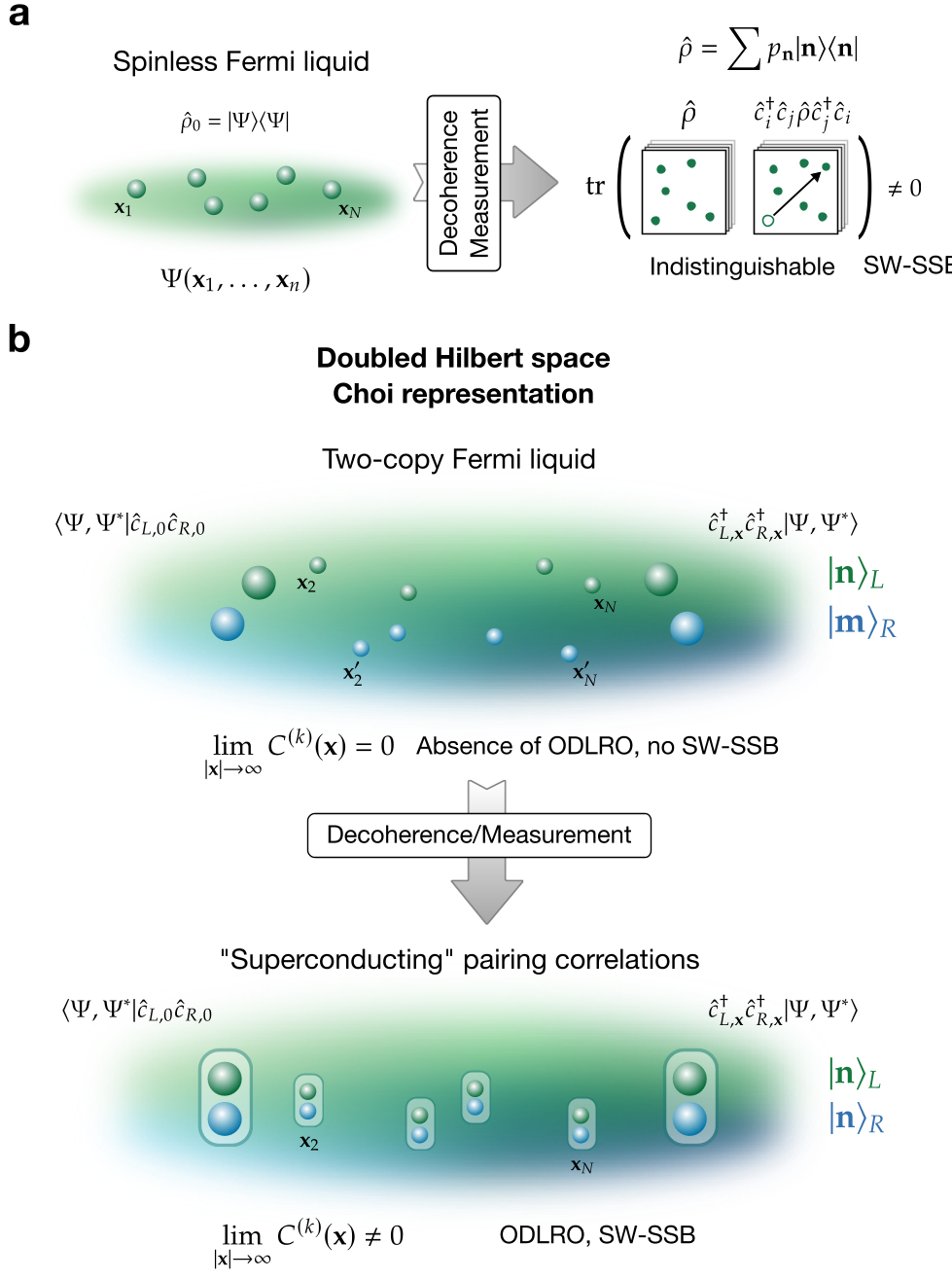 Figure 1: (a) Rényi correlators as statistical overlaps. (b) The mapping of dephasing to Cooper pairing in the doubled Choi space.
Experimental Milestones
The Dephased Fermi Liquid
The team first looked at a 2D Fermi liquid. Despite the "destruction" of quantum coherence through dephasing, the Rényi correlators and converged to finite values at long distances. This confirms long-range Rényi order. Interestingly, this order increases with temperature, as higher thermal noise makes density distributions more self-similar under particle displacement.
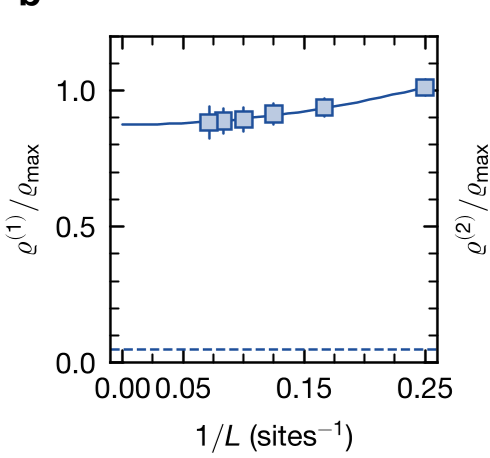 Figure 2: Observation of long-range order in dephased Fermi liquids across different temperatures.
The Metal-to-Insulator Transition
By introducing a superlattice potential (), the authors drove the fermions from a metal into a band insulator. In the metallic phase (), the dephased state shows SW-SSB. In the insulating phase (), where atoms are localized into a "charge crystal," the attraction in the doubled space fails to create a "superconductor." Consequently, the long-range Rényi correlations vanish, signaling a sharp phase transition.
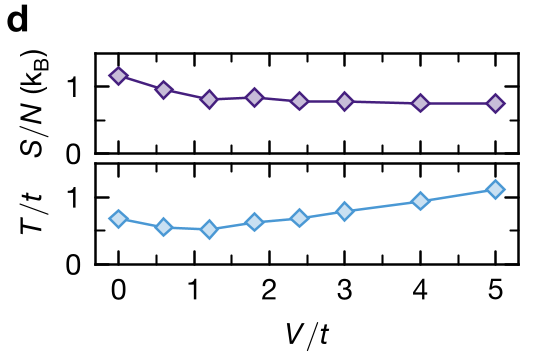 Figure 3: The vanishing of the Rényi condensate density at the critical potential .
Deep Insight: Why Does This Matter?
This discovery is more than a curiosity of atomic physics; it is a bridge to Quantum Information Theory.
- Decodability: SW-SSB is mathematically dual to the "decoding transition" in quantum error correction. When a system is in the SW-SSB phase, it signifies that information about the original state has been "scrambled" beyond recovery.
- Classical Hydrodynamics: The emergence of classical flow from quantum particles can be seen as an effective field theory of SW-SSB.
Conclusion & Outlook
The observation of SW-SSB in a dephased Fermi gas marks the expansion of Landau’s symmetry paradigm into the realm of mixed states. While this study focused on non-interacting fermions, the next frontier lies in interacting systems (like the Fermi-Hubbard model) and topological states, where dephasing is predicted to produce emergent gauge structures and exotic "Choi spin liquids."
Takeaway: We now have the tools to classify the "phases of noise," turning decoherence from an experimental nuisance into a rich landscape for new physics.