
Probing the Extremes: How the 3H_Λ Production Ratio Deciphers the Weakest Nuclear Bond
Sensitivity of the $^{3,4}$He($K^-$, $π^0$) production ratio to the $Λ$ binding energy of $^3_Λ$H
The paper investigates the production of light hypernuclei 3H_Λ and 4H_Λ using (K−, π0) reactions at 1.0 GeV/c. By employing the Distorted-Wave Impulse Approximation (DWIA), the authors demonstrate that the cross-section ratio R34 is highly sensitive to the Λ binding energy (BΛ), establishing a new benchmark for hypertriton binding.
TL;DR
Determining the binding energy of the hypertriton (3H_Λ)—the lightest "strange" nucleus—has become a central puzzle in nuclear physics. This paper demonstrates that the ratio of production cross sections between 3H_Λ and 4H_Λ in (K−, π0) reactions is an exceptionally sensitive "thermometer" for this binding energy. By matching theoretical DWIA models with J-PARC E73 data, the authors constrain the binding energy to a mere 0.05–0.15 MeV, supporting the image of a hypernucleus with a massive, diffuse Λ-cloud.
The "Hypertriton Puzzle": Small Scales, Huge Implications
In hypernuclear physics, the Λ binding energy () is the litmus test for our understanding of the YN (Hyperon-Nucleon) interaction. The hypertriton is uniquely challenging because it is extraordinarily weakly bound. On a nuclear scale, it acts more like a "halo" state where the Λ particle spends most of its time far away from the deuteron core.
The problem? Previous measurements have been inconsistent. Heavy-ion experiments (like STAR) have suggested stronger binding ( MeV), while traditional nuclear reactions suggest values closer to zero ( MeV). Because the physical size of the hypernucleus scales inversely with the binding energy, this discrepancy isn't just a number—it changes our entire picture of the nucleus's spatial structure.
Methodology: The Power of Ratios
The authors employ the Distorted-Wave Impulse Approximation (DWIA). This framework accounts for the fact that mesons (K− and π0) don't just pass through the nucleus; they are "distorted" by the nuclear medium.
The core of their approach lies in Equation (4) of the paper, which calculates the Form Factor . This factor depends on the Transition Density: This is the mathematical representation of the "spatial overlap" between the initial proton and the final Λ particle.
Why focus on the ratio ?
Absolute cross-section measurements are notoriously prone to systematic errors (beam intensity, detector efficiency, etc.). By calculating , the authors successfully:
- Cancel Systematic Uncertainties: Many experimental biases affect both 3H and 4H production equally.
- Isolate Spatial Dynamics: Since 4H_Λ is relatively well-understood and more tightly bound, it serves as a stable "anchor" against which the sensitive expansion of 3H_Λ is measured.
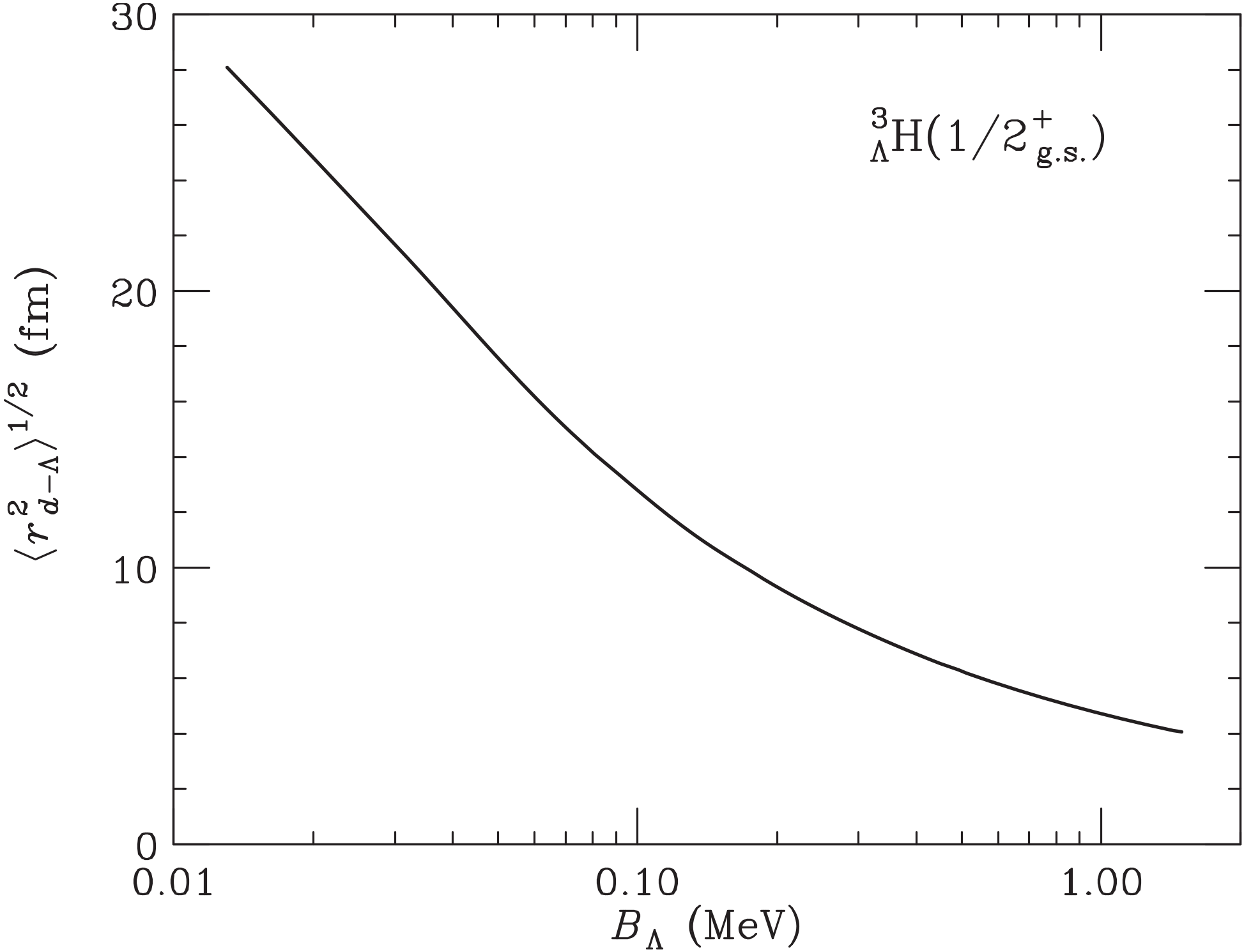 Figure 1: Notice the dramatic spike in the r.m.s. distance as the binding energy approaches zero. This "spatial explosion" is what the reaction ratio seeks to measure.
Key Results: Constraining the Weak Binding
The authors vary a strength factor to simulate different possible binding energies for 3H_Λ and track how the production cross-section responds.
- Sensitivity: As drops from 0.4 MeV down to 0.01 MeV, the cross-section σ(3H_Λ) plummets because the wave function becomes so extended that the spatial overlap with the compact 3He core nearly vanishes.
- Data Matching: The experimental ratio from J-PARC E73 () intersects the DWIA theoretical curve precisely at MeV.
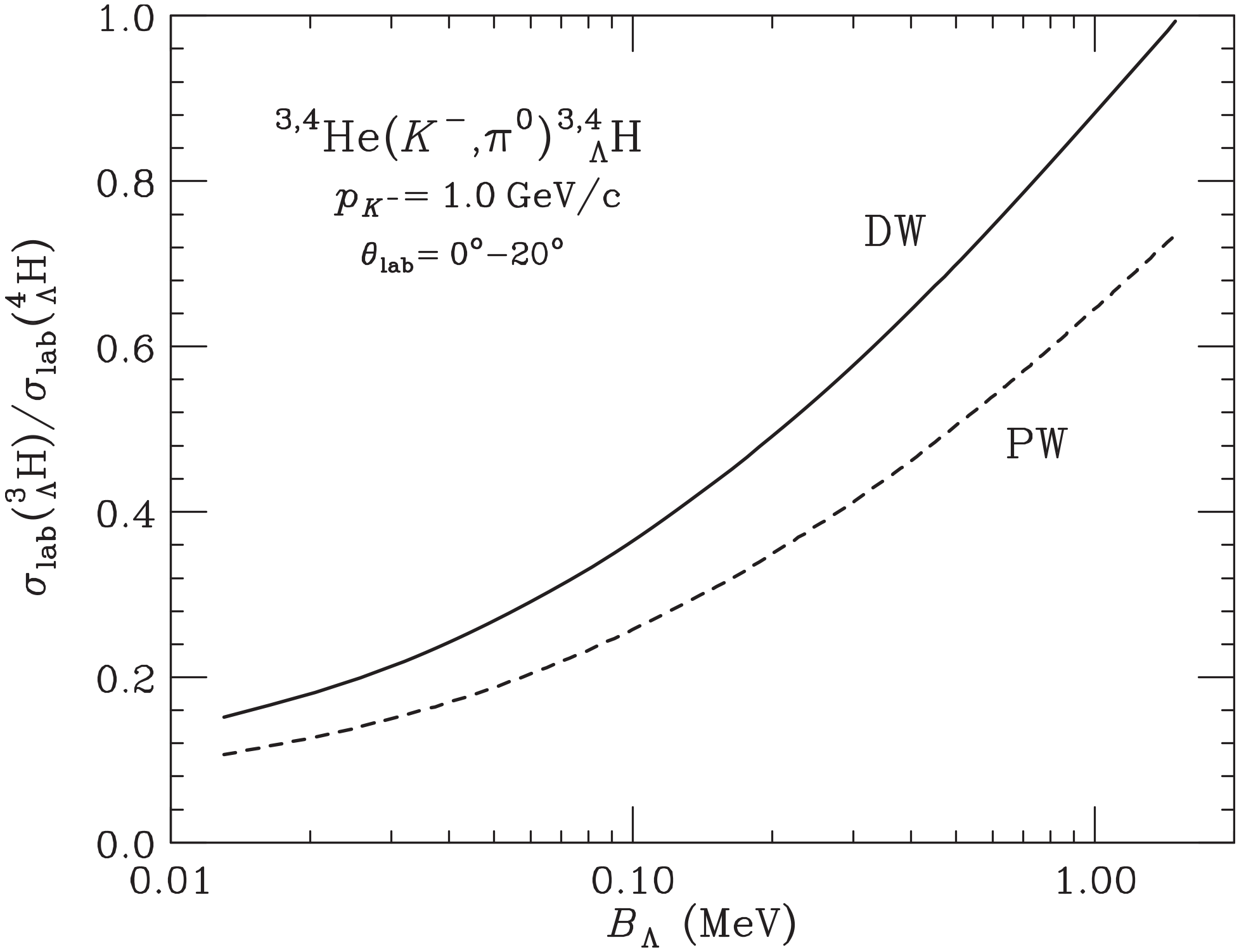 Figure 2: The calculated ratio as a function of . The intersection with experimental data provides the crucial constraint.
Critical Insight & Conclusion
This paper provides a robust argument against the "stronger binding" results recently reported by some heavy-ion collaborations. Within the established framework of reaction theory, a larger than 0.3 MeV would produce a much more compact hypernucleus and, consequently, a significantly higher production yield than what was observed at J-PARC.
Takeaway for the field: The 3He(K−, π0) reaction is essentially a "spatial measurement" tool. This study proves that the hypertriton is indeed a sprawling, loosely bound system. This not only refines our YN interaction models but also sets the stage for future experiments at MAMI and J-PARC to explore the limits of nuclear stability at the "strangeness" frontier.
Limitations: The analysis assumes the 4H_Λ binding energy is fixed (2.16 MeV). While the authors show that small variations in 4H_Λ binding only change the results by ~1.3%, the extraction of for 3H_Λ still depends on the accuracy of the underlying few-body wave functions used in the DWIA.