
Just Cast the Net: Why We "Overshare" Even When We Have a Specific Person in Mind
1006_Just Cast the Net, and Hopefully the Right Fish Swim into It Audience Management on Social Network Sites.
This study investigates how social network site (SNS) users manage their audiences, introducing the concept of "audience-reaching" strategies alongside traditional privacy-focused "audience-limiting" tactics. Through a mixed-methods diary and interview study, the authors demonstrate that users prioritize proactive engagement over technical exclusion, even when targeting specific sub-groups.
TL;DR
Most social media research treats us as defensive wall-builders, focusing on how we block and hide. This study flips the script, revealing that we are actually "active fishers." We use specific social and technical "nets"—like tagging, inside jokes, and timing—to reach our targets, but we almost never bother to exclude the rest of our network. The result? A "broadcast by default" culture driven by laziness, skill gaps, and the hope that the "right fish" will eventually swim into our net.
Contextualizing the Study
Published in CSCW '16, this work by Eden Litt and Eszter Hargittai is a foundational piece in understanding Audience Management. While earlier work focused on the "Privacy Paradox," this study introduces a more nuanced duality: Audience-Reaching vs. Audience-Limiting. It identifies that users are often more concerned with being seen by the right people than not being seen by the wrong people.
The Problem: The Myth of the "Privacy-Obsessed" User
Traditional HCI (Human-Computer Interaction) research assumes that if users have a target audience (e.g., "just my family"), they will use lists or privacy settings to hide the post from others. However, Litt and Hargittai found a disconnect: users frequently post to "Public" or "Friends" even when the content is only relevant to a tiny subset of people.
Why does this happen? The authors identify a lack of "post-level" management. Users settle for a "good enough" approach because the technical cost of exclusion is too high.
Methodology: The Core Insights
The researchers used a Diary Study to capture real-time intent. By asking users "Who were you thinking of when you wrote this?" immediately after a post, they identified the gap between the Imagined Audience and the Actual Audience.
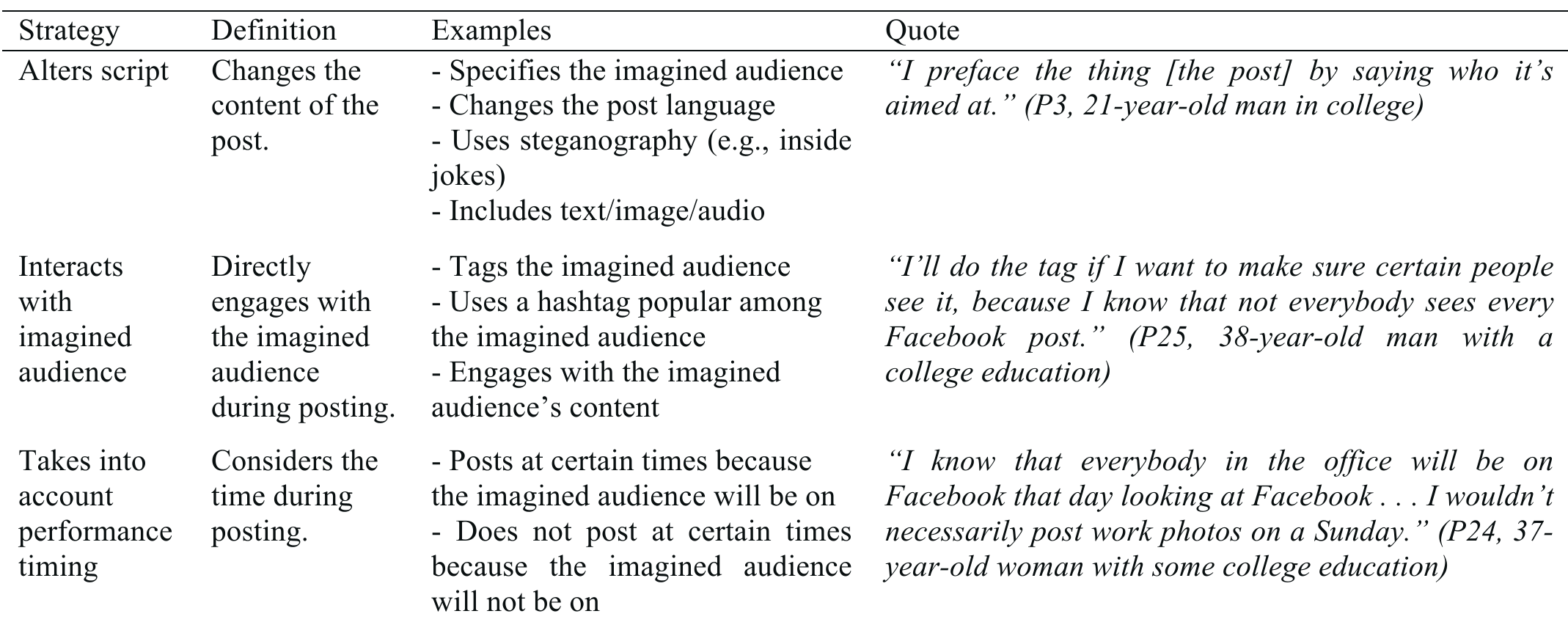
1. Audience-Reaching Strategies (The "Nets")
Users don't just post and pray. They use active strategies:
- Script Alteration: Using English for some, Portuguese for others, or "inside jokes" that act as a social filter.
- Interaction: Tagging is the "guarantee" that the target sees the post.
- Timing: Posting in the evening to maximize "traction."
2. Rationales for Broad Sharing
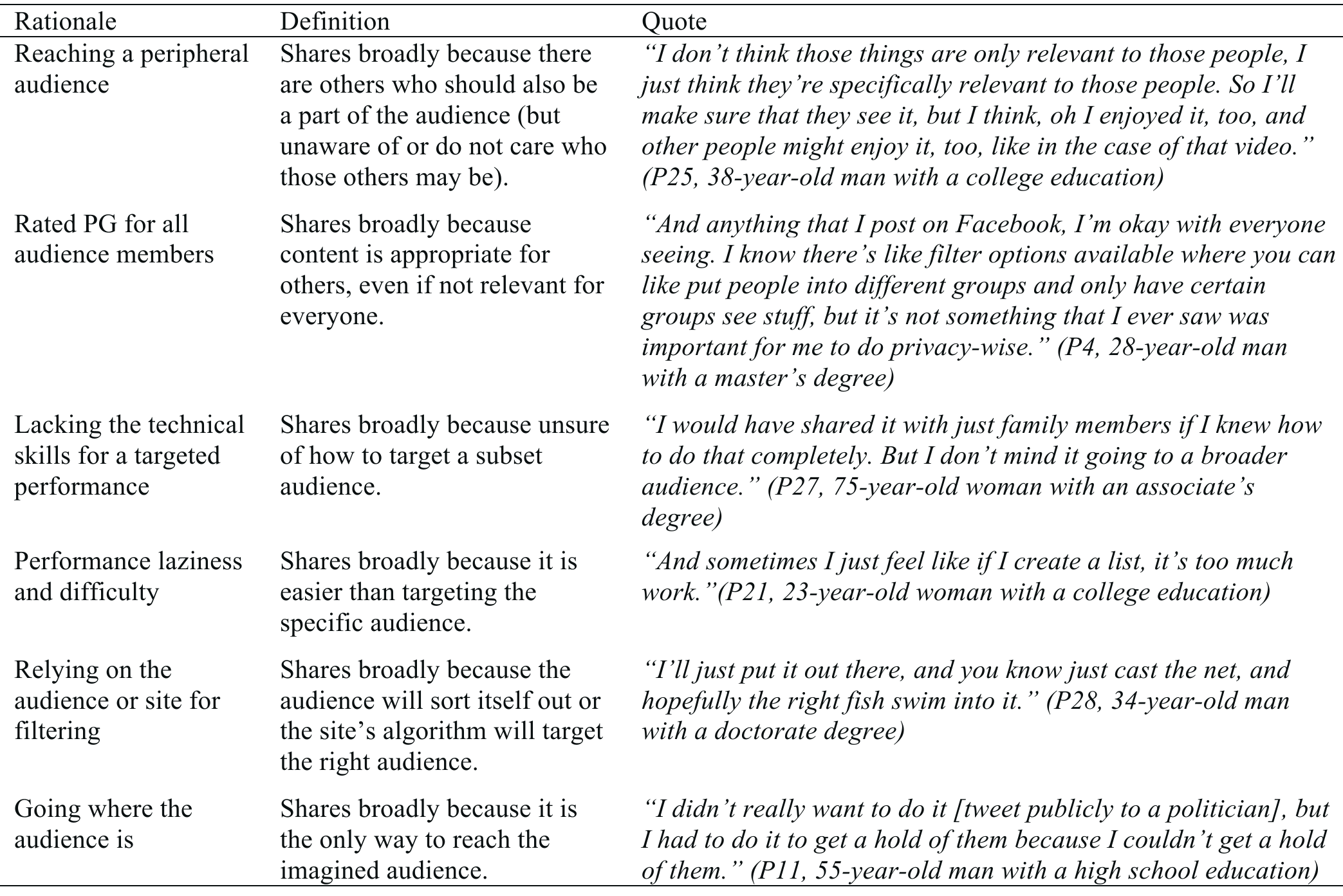
Why "cast the net" so wide? The study finds six main reasons:
- Peripheral Audience: "I want my brother to see it, but maybe someone else will find it interesting too."
- Self-Censoring (Rated PG): If the post isn't scandalous, why bother hiding it?
- Technical Skill Gap: Many users don't know how to use lists or circles.
- Performance Laziness: It’s simply too much work to segment an audience for a 10-second post.
Deep Insight: The "Irrelevance Quandary"
The most striking takeaway is the Irrelevance Quandary. By defaulting to broadcasting, we aren't necessarily violating our own privacy, but we are burdening our friends with irrelevant content. We rely on "social steganography" (encoded meaning) to keep things private in plain sight, but we expect the audience to "self-filter" and scroll past what they don't like.
Design Implications & Future Work
The study suggests that SNS platforms shouldn't just build better "privacy walls." Instead, they should build:
- Relevance Signals: Tools that allow users to tell the algorithm who should see a post (e.g., "Show this to my runner friends") without legally blocking others.
- Quiet Notifications: A "BCC" for social media—notifying a target without expanding the post's reach to the target's entire network via tagging.
Limitations
The study was conducted in 2014-2016, a time before the absolute dominance of TikTok-style algorithmic discovery-based feeds. Today’s "imagined audience" is even more abstract, often consisting of a global "Algorithm" rather than a known list of friends.
Conclusion: A Shift in Perspective
Litt and Hargittai remind us that audience management is an active, creative process of reaching out, not just locking down. As we continue to "cast our nets" into the digital sea, the challenge for future designers is ensuring the right fish swim in without cluttering the ocean for everyone else.