
Facebook Ride Connect: Leveraging Social Capital to Drive Sustainable Transit
1011_Facebook ride connect.
This paper introduces "Facebook Ride Connect," a social networking integration designed to coordinate transportation for events. By leveraging Facebook's existing event planning features, the tool provides user-generated public transportation (PT) options and social incentives to encourage sustainable travel habits among undergraduate students.
TL;DR
Facebook Ride Connect is a research prototype integrated into Facebook Events designed to combat environmental pollution by shifting college students' habits toward public transportation (PT). By showing users that their peers are riding the bus or train, the tool aims to dissolve social stigmas and make shared transit a preferred social activity rather than a solitary inconvenience.
Background & Motivation: The Stigma Barrier
In the mid-2000s, as social networking began to explode, authors from Indiana University identified a critical gap in environmental efforts. While pollution from motor vehicles was skyrocketing, public transportation remained underutilized—not due to a lack of routes, but due to social perception.
Undergraduate students, a key demographic for long-term habit formation, viewed PT as "just for poor people" or inherently unsafe. The authors realized that to change behavior, they needed to move PT from a hidden, solitary activity to a visible, shared social experience.
Methodology: Human-Generated Flexible Transit
The core innovation of Ride Connect is its rejection of rigid, computer-generated schedules in favor of collaborative human input.
The "PT First" Architecture
Instead of forcing users to visit external sites like MapQuest, Ride Connect intercepts the user at the moment of commitment (the RSVP).
- Social Integration: Once a user RSVPs "Yes" to an event, they are immediately shown who else is going and how they are getting there.
- Flexible Categories: Transportation is divided into Carpool, Train/Bus, Walking, and "Other."
- The Proof is in the Peer: By seeing a friend’s photo next to a "Bus" option, the "stigma" is replaced by an opportunity for socialization.
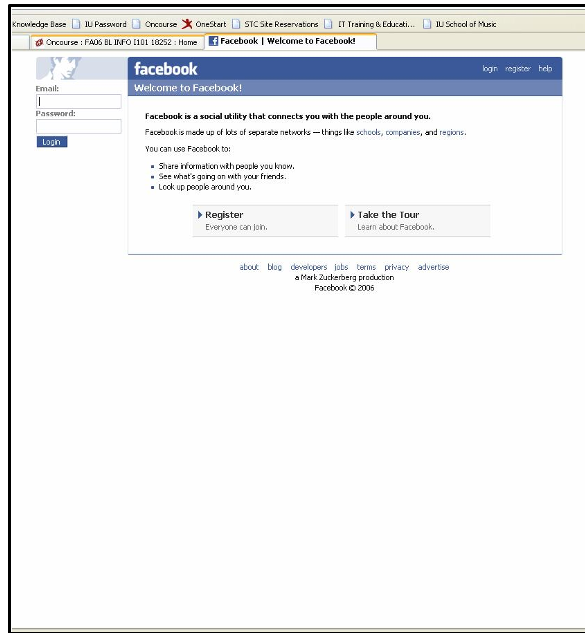 Figure: The integration of Ride Connect into the Facebook UI ecosystem.
Designing for Behavioral Shift
The authors utilized paper prototyping to focus on the logic of social interaction rather than visual polish. They identified that:
- Users want a "companion" on PT to make the experience enjoyable.
- Visibility of "common friends" using a specific transit option increases the user's sense of safety and connection.
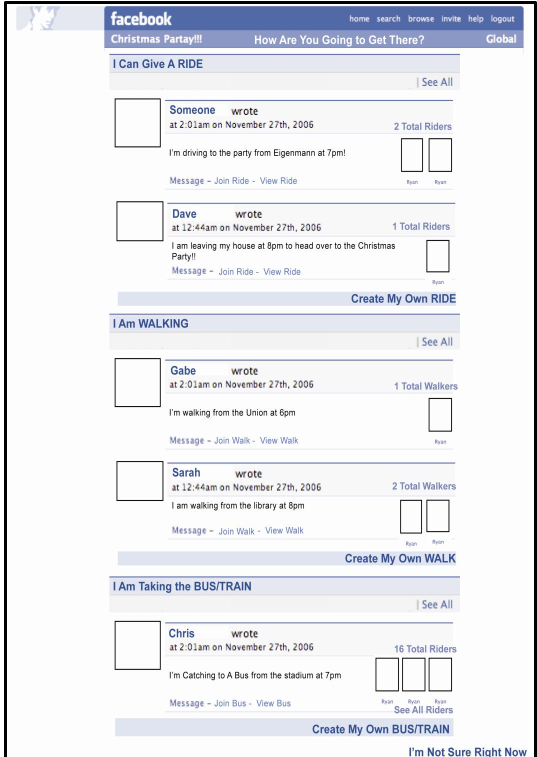 Figure: Early-stage prototype showing how users select peer-led transportation options.
Results & Academic Insights
Usability testing revealed a high level of enthusiasm. The subjects found that the interface simplified the "logistical nightmare" of group travel. Most importantly, the authors' scenario testing suggested that even if a student doesn't ride the bus immediately, repeated exposure to seeing peers use PT effectively erases the negative social stigma over time.
Key Quantitative/Qualitative Highlights:
- Usage Frequency: 6 out of 7 test subjects were daily Facebook users, ensuring high "touchpoint" potential for the intervention.
- Attitude Change: Users noted the tool was a "great idea for parties," suggesting its utility in safety scenarios (e.g., designated drivers) beyond just environmental goals.
Critical Analysis & Future Outlook
While the study was limited by a small sample size (n=7), its theoretical foundation—that Social Incentives outweigh Information Convenience—remains highly relevant in modern HCI.
Limitations:
- The 2007 prototype relied on manual "human-submitted" routes, which may lack the real-time accuracy of modern GPS-integrated apps like Uber or Transit.
- The confirmation process for ride-sharing was flagged as "inconvenient" by testers, highlighting the friction between social security (vetting who joins your ride) and ease of use.
Conclusion: Ride Connect serves as a foundational example of how social networks can be "choice architectures" for public good. It proves that sustainability isn't just about better buses; it's about making the bus the place where your friends are.