
SMCT: Bridging the Gap in Digital Mental Health Surveillance
13728_SMCT - An Innovative Tool for Mental Health Analysis of Twitter Data.
The paper introduces the Social Media Collection Tool (SMCT), an innovative framework designed to capture and analyze mental health-related data from Twitter. By integrating real-time streaming with a novel "re-poll" mechanism, the tool enables both cross-sectional and longitudinal analysis of user sentiments and social interactions.
TL;DR
The Social Media Collection Tool (SMCT) is a specialized diagnostic research instrument that automates the collection of mental health data from Twitter. Unlike previous tools that only provide static historical snapshots, SMCT introduces a re-poll capability, allowing researchers to perform longitudinal analysis by tracking how users' states of mind and social interactions evolve over time.
Background & Motivation: The Data Scarcity Problem
Mental health is a cornerstone of global well-being, yet our methods for measuring it are often archaic. Traditional clinical surveys (like the Global Health Estimate) are expensive and infrequent. We lack the "high-resolution" data needed to see how mental health fluctuates across seasons or even times of day.
Twitter presents a massive, real-time latent space of human emotion. However, the sheer volume of data makes it a "needle in a haystack" problem. Researchers need a way to filter noise (bots, news alerts) and focus on individuals expressing genuine distress.
Methodology: The SMCT Architecture
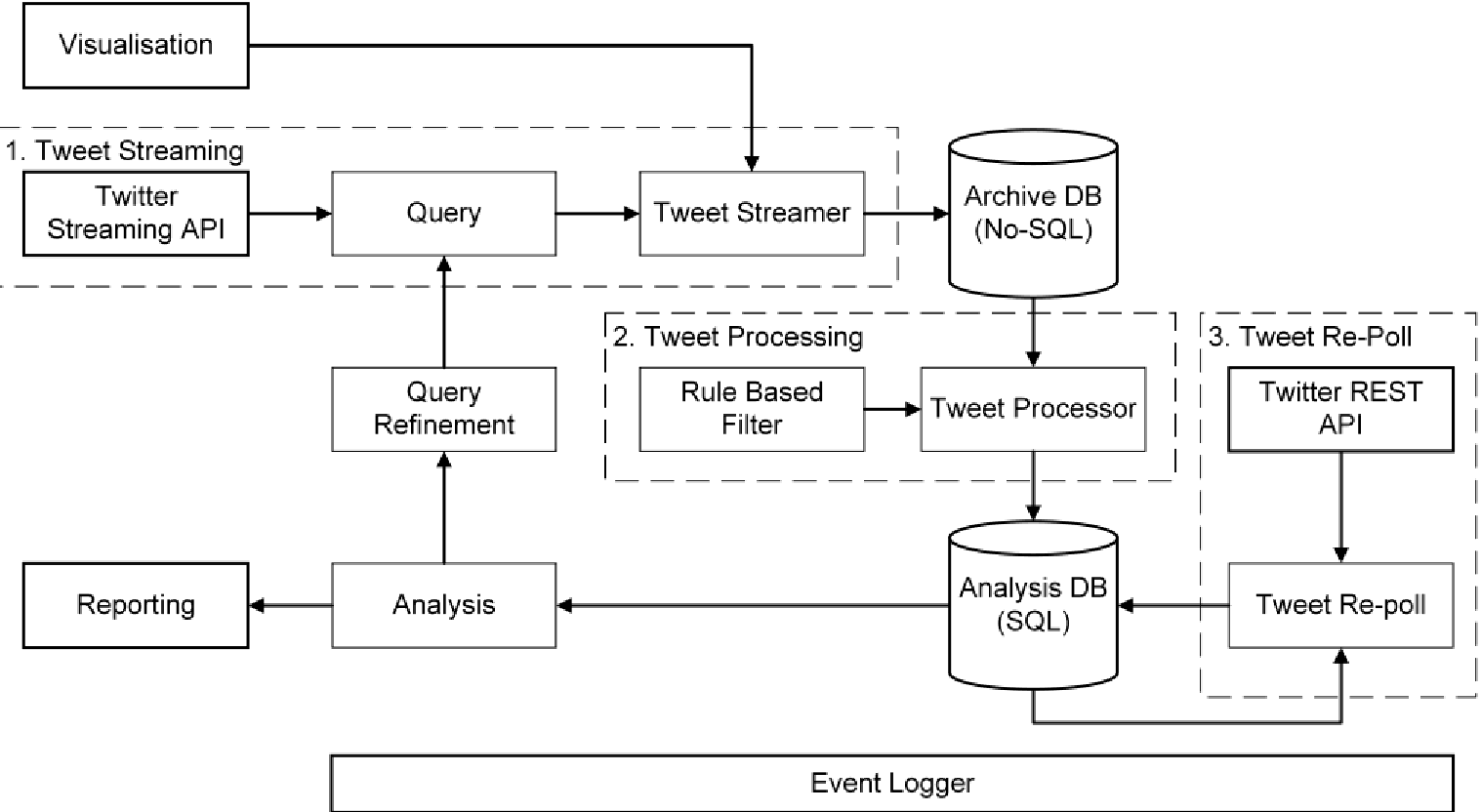
The researchers at UNSW developed a three-stage pipeline to transform professional social media noise into actionable clinical insights.
1. The Dual-API Strategy
The tool balances two different Twitter API protocols to maximize data depth:
- Streaming API: A broad net using 400+ keywords (e.g., "kill myself", "broken me") to capture a 1% global stream.
- REST API: A targeted "re-poll" mechanism that goes back to specific users to download their timelines and social responses.
2. Systematic Filtering
SMCT doesn't just store everything. It applies a sophisticated filtering logic:
- Bot Detection: Analysis of post frequency (excluding accounts posting >1 tweet/day) to filter out automated content.
- Classification: Utilizing Ripple Down Rules (RDR) to categorize tweets based on source, account description, and language.
Experimental Insights: The Viral Nature of Distress
The study’s demonstration phase analyzed over half a million tweets. The findings provide a chilling yet vital look at the digital dynamics of mental health:
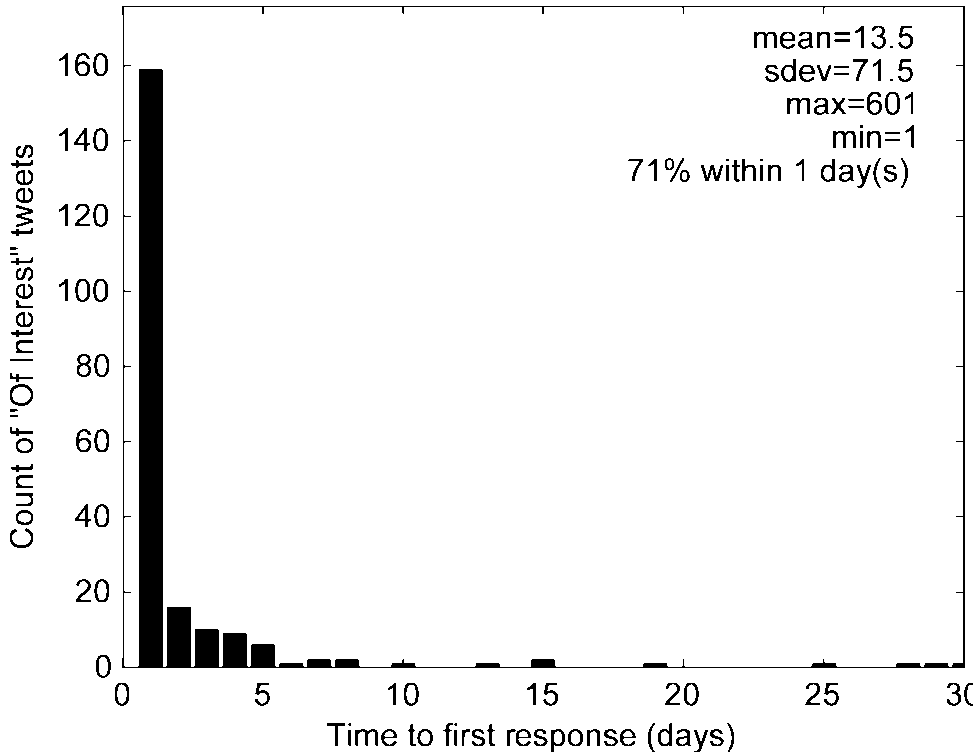
- The Response Window: Over 70% of first responses to a "tweet of interest" occur within the first 24 hours. This suggests that any digital intervention or support mechanism must operate in near real-time to be effective.
- Interaction Density: While some tweets receive massive attention (up to 141 responses), 80% receive 10 or fewer, suggesting many cries for help may still go largely unnoticed by the community.
Academic Perspective: Why This Matters
The core innovation of SMCT is its shift from Cross-sectional (a single point in time) to Longitudinal (tracking over time) analysis. By re-polling users, researchers can determine whether a tweet is a transient expression of frustration or a symptom of a deeper, chronic mental health decline.
Furthermore, by collecting the responses to these tweets, the tool provides a rare look at the social ecology of mental health online—whether a user is met with "stigmatizing" or "supportive" content.
Conclusion & Future Directions
The SMCT is a significant step toward "Digital Phenotyping." While the current version relies on keyword matching and basic bot detection, the authors acknowledge the need for:
- AI-Driven Classification: Moving beyond keywords to understand semantic context (e.g., sarcasm vs. genuine distress).
- Parallel Scaling: Expanding the re-poll capacity to handle larger cohorts.
- Ethical Refinement: Ensuring that while data is "public," the privacy and well-being of the subjects remain paramount.
Social media is no longer just a communication tool; through systems like SMCT, it becomes a critical diagnostic sensor for the global community.