
From Watts to Words: Bridging the Gap Between Smart Meters and Human Behavior
2016 IEEE International Conference on Smart Grid Communications (SmartGridComm) : Data Management and Grid Analytics and Dynamic Pricing Presenting User Behavior from Main Meter Data
The paper presents a unified open architecture for deducing user behavior from smart meter data using Non-Intrusive Load Monitoring (NILM). It integrates data recovery mechanisms, machine learning for appliance recognition, and a Model-to-Text (M2T) engine to translate complex energy consumption patterns into human-readable Natural Language reports.
TL;DR
As smart meters become ubiquitous, the challenge shifts from data collection to data interpretation. This paper introduces an open architecture that doesn't just disaggregate home electricity loads, but actually explains them. By combining gap-filling algorithms with NILM (Non-Intrusive Load Monitoring) and Model-to-Text (M2T) technology, the framework turns raw power signatures into human-readable behavioral reports.
Background: The Hidden Value in Your Meter
Modern smart grids are generating petabytes of consumption data. While engineers look for peak loads and frequency stability, there is a hidden layer of information: User Behavior. Knowing when an elderly patient uses a kettle or when a family watches TV can provide critical insights for healthcare and demand-response programs. However, two obstacles stand in the way:
- Data Corruption: Wireless networks (like ZigBee) are lossy, leading to data gaps.
- Complexity: Disaggregated data is too complex for a doctor or a grid operator to manually analyze.
Methodology: The Intelligence Pipeline
The authors propose a modular, RESTful architecture that separates data concerns through a specific four-step pipeline.
1. Data Recovery (The "Healer")
Because raw meter data is often incomplete, the framework evaluates several reconstruction methods. The authors found that Linear, Papoulis-Gerchberg (P-G), and Wiener algorithms outperform more complex methods like Empirical Mode Decomposition when preserving frequency spectra in household data.
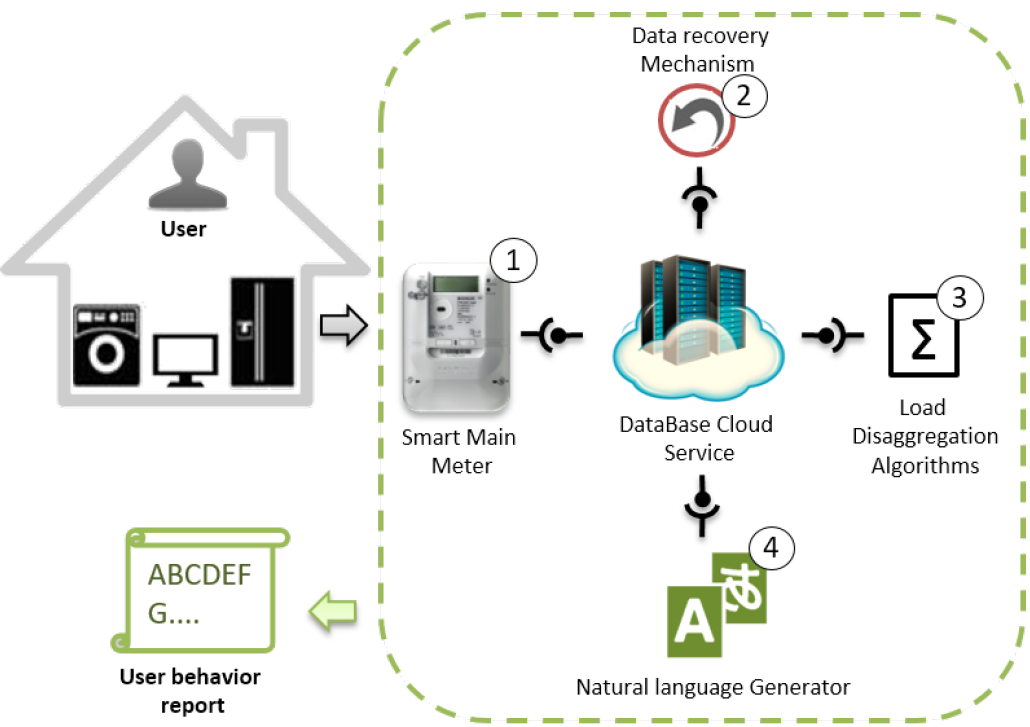 Fig 1: Conceptual view of the data flow from meter to natural language report.
2. Load Disaggregation (The "Detective")
Once the data is "healed," NILM algorithms act as detectives. They match consumption "fingerprints" against a database of known appliance signatures. The paper evaluates FHMM, Parson, and Weiss algorithms using F1-scores and total accuracy.
3. Model-to-Text (The "Translator")
This is the core novelty. Instead of outputting a CSV of timestamps, the system maps disaggregated results onto a UML Class Diagram. Using Acceleo (an Eclipse-based M2T tool), it parses these models to generate sentences like: "Peter was watching TV from 18:00 to 20:45 on 01 May 2015."
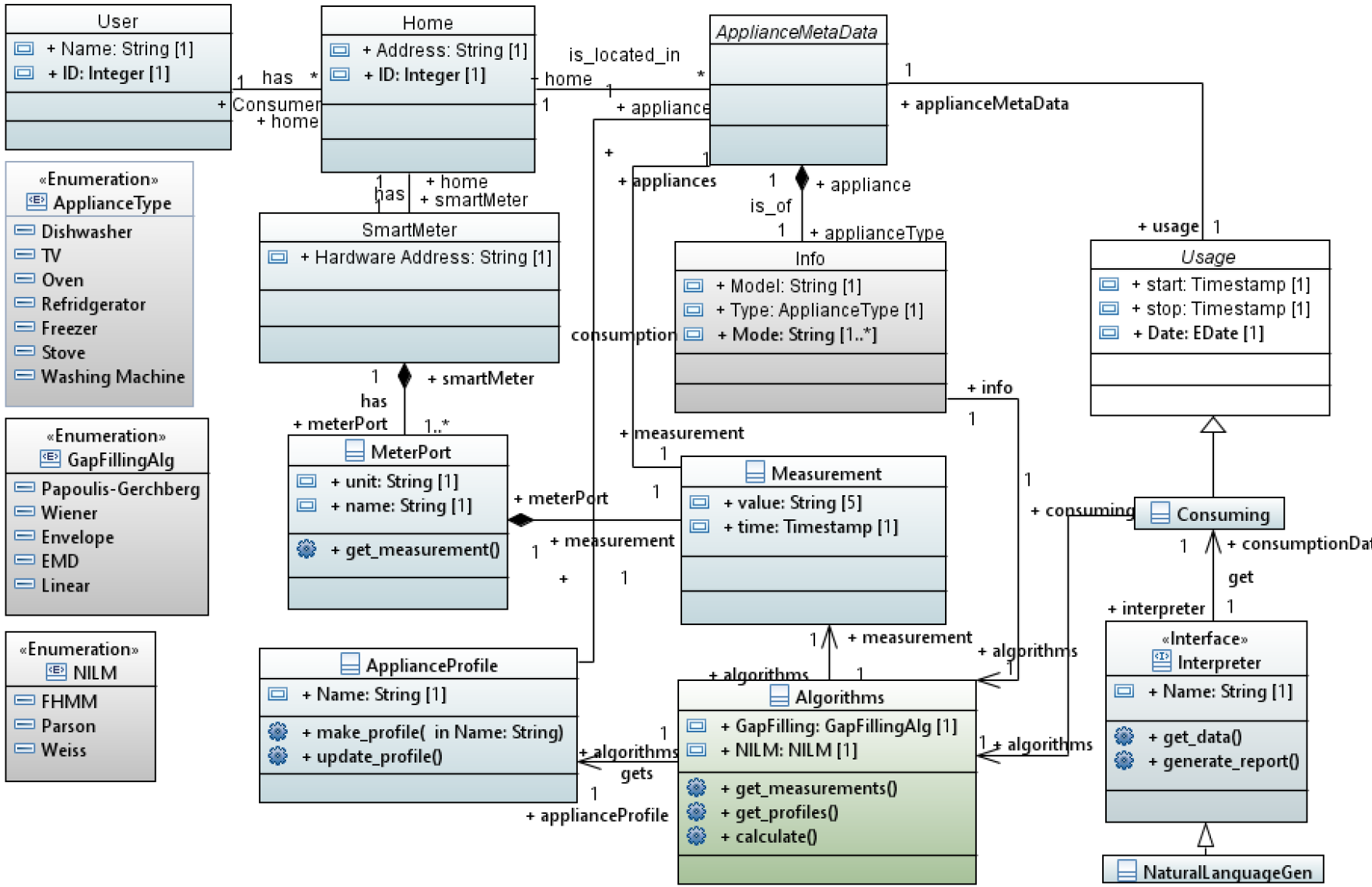 Fig 2: UML class diagram serving as the semantic bridge between data and language.
Experimental Validation: Results from the SmartHG Project
The framework was deployed in 25 households in Denmark over eight months. The results yielded a critical technical insight: the Parson algorithm combined with Linear interpolation gap-filling provided the most robust performance, particularly when the data error rate rose above 5%.
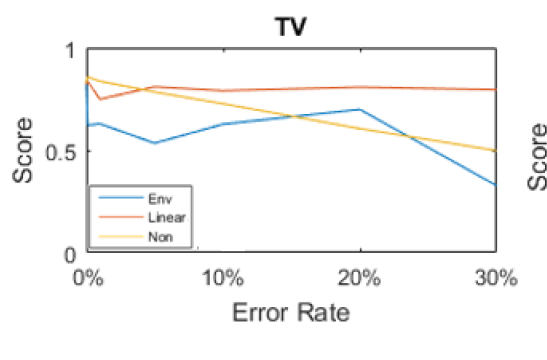 Fig 3: Comparison of F1 scores across different NILM methods and gap-filling techniques.
The study proved that without data recovery, the accuracy of appliance detection (especially smaller appliances) drops significantly. By "filling the gaps," the framework ensures the reliability of the final behavioral report.
Deep Insight & Conclusion
The true value of this work lies in its Standardization. By using RESTful interfaces and open-standard protocols (ZigBee), the authors have built a modular "Lego-like" system where a researcher can swap out a specific NILM algorithm or gap-filling method without rebuilding the entire stack.
Takeaway for the Future: While this paper uses template-based text generation, the foundation it lays for "semantic energy monitoring" is perfect for the next generation of AI. Imagine an LLM-powered assistant that doesn't just say "TV was on," but provides a holistic summary: "Energy consumption was 15% lower this week as the user shifted laundry to off-peak hours."
Limitations: The authors acknowledge that privacy remains a significant concern—as behavior reports are intrinsically personal. Future research must balance the convenience of remote monitoring with robust data anonymization.