
Beyond Echo Chambers: How Diverse Agent Motives Shape Social Networks
2020 IEEE/ACM International Conference on Advances in Social Networks Analysis and Mining (ASONAM)
This paper investigates opinion diffusion dynamics using an Agent-Based Model (ABM) that incorporates three distinct archetypes: Homogeneous (HOM), Heterogeneous (HET), and Adversarial (ADV). By simulating interactions tailored by homophily/heterophily and conformity/contrarianism, the authors demonstrate how diverse agent goals significantly alter network topology and the achievement of consensus.
TL;DR
In social network theory, we often assume everyone wants to be around people like themselves. This paper challenges that "homophily-only" view by introducing three agent archetypes: HOM (Similarity-seekers), ADV (Antagonists), and HET (Diversity-seekers). The study reveals that "Diversity-seekers" are the invisible glue holding networks together; once they are pushed out, the network shatters into polarized, isolated fragments.
Background: The Limits of Uniformity
Most traditional models (like the DeGroot or Bounded Confidence models) view social networks through a lens of conformity. They assume that if you are connected to someone, you want to become more like them. However, real digital societies are messy. We have trolls who want to disagree (Adversarial) and moderators or bridge-builders who appreciate a mix of viewpoints (Heterogeneous). This paper investigates how the interplay of these various "human" archetypes affects not just what we think (opinion space), but who we talk to (topology).
Methodology: The Three Archetypes
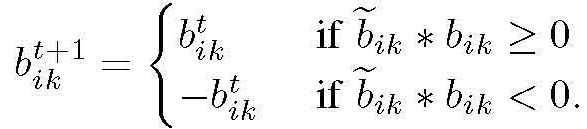
The researchers developed a k-dimensional binary opinion space where agents update their beliefs based on their neighbors. The core innovation lies in the definition of the archetypes via Update Rules (how I change my mind) and Reward Functions (who I want to be friends with):
- HOM (Homogeneous): Prefers similar neighbors; moves toward the majority opinion.
- ADV (Adversarial): Prefers dissimilar neighbors; moves away from the majority opinion (contrarian).
- HET (Heterogeneous): Prefers a 50/50 balance of opinions; moves toward the majority opinion (conforming).
Crucially, agents possess the power of strategic unfriending—the ability to sever a connection if the reward falls below a certain threshold.
Key Insights: The "Social Glue" Effect
The experiments produced several striking results regarding network stability:
- The HET Cascade: In mixed networks, HET agents act as the bridge between HOM clusters and ADV clusters. However, as the network evolves, HET agents often find their neighborhood balance disturbed. Once one HET agent leaves the network, it often triggers a "cascading effect" where all HET agents exit, causing the entire network to fracture into disjoint components.
- Polarization is Structural: Fragmentation isn't just about opinions; it's about agent types. Agents naturally segregate into "camps" based on their goals, even if their opinions are secondary.
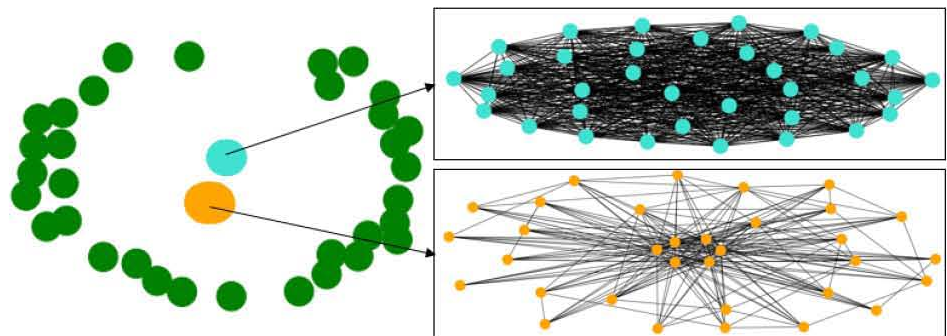 Fig 1: A network separating into disjoint groups: HOM (blue), HET (green), and ADV (orange).
Resistance and Fluidity
One of the paper's most significant findings involves Resistance to Influence. When HET agents were given a "stubbornness" factor (requiring 75% disagreement before changing their minds), they successfully prevented the network from reaching a stagnant consensus.
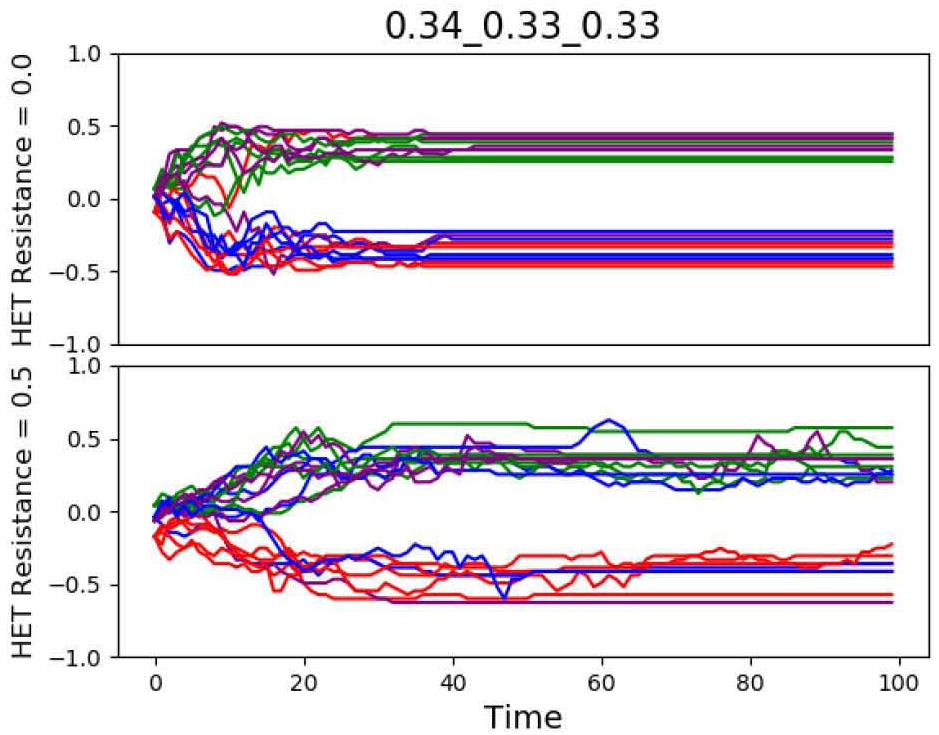 Fig 2: Top panel (Low Resistance) shows quick consensus. Bottom panel (High Resistance) shows ongoing opinion fluidity.
While a world without consensus might sound chaotic, the authors argue it represents opinion fluidity. Stubborn diversity-seekers prevent the "echo chamber" effect where every node eventually adopts the same binary state.
Critical Analysis & Conclusion
Takeaway
This work demonstrates that polarization is not merely a result of "bad actors" (ADV) but a byproduct of the disappearance of balance-seeking individuals (HET). To maintain a connected society, the network needs agents who are resistant to total conformity and who find value in disagreement.
Limitations
- Edge Creation: The model focuses on "unfriending" but lacks a robust mechanism for "refriending" or discovering new links, which might limit its long-term topological realism.
- Binary Opinions: Real-world opinions are rarely binary (-1 or 1); a continuous opinion space might yield different equilibrium points.
Future Outlook
The next step for this research is to introduce learning agents—nodes that use Reinforcement Learning to adapt their strategies over time. This would move us closer to modeling the algorithmic nature of modern social media platforms.