
Pervasive Computing: Empowering the Care Network for Autism
2659_Pervasive Computing and Autism Assisting Caregivers of Children with Special Needs.
This paper explores the design and deployment of pervasive computing systems (Abaris, CareLog, and wearable sensors) to assist caregivers of children with Autism Spectrum Disorder (ASD). By automating data capture and analysis, these systems facilitate collaborative decision-making and provide insights into a child's internal state through behavioral monitoring.
TL;DR
Caring for children with Autism Spectrum Disorder (ASD) is an intensive, data-driven process often crippled by manual recording and subjective bias. Researchers from Georgia Tech have introduced a suite of pervasive technologies—Abaris, CareLog, and wearable sensors—that automate the capture of therapeutic progress and behavioral incidents. These tools transform raw environmental data into actionable insights, helping caregivers make faster, more accurate treatment decisions.
Problem: The Data Burden in Special Needs Care
Autism is a complex spectrum where "if you’ve seen one child with autism, you’ve seen one child." This variability makes treatment a process of trial and error. Caregivers—parents, teachers, and therapists—must track minute changes across pharmacological, behavioral, and dietary interventions.
The existing bottleneck is manual data collection. Traditional methods rely on memories of therapy sessions or hurried notes taken during a behavioral crisis. This leads to:
- Inconsistency: Different therapists interpret progress differently.
- Missing Context: Understanding the "Antecedent" and "Consequence" of a behavior is nearly impossible when the caregiver is busy managing the child.
- Communication Gaps: Data is often siloed within individual specialists, preventing a holistic view of the child's development.
Methodology: Bridging the Gap with Pervasive Tech
The authors suggest that technology shouldn't replace the caregiver but should act as an "invisible assistant." They present three specialized solutions:
1. Abaris: Supporting Collaborative Decisions
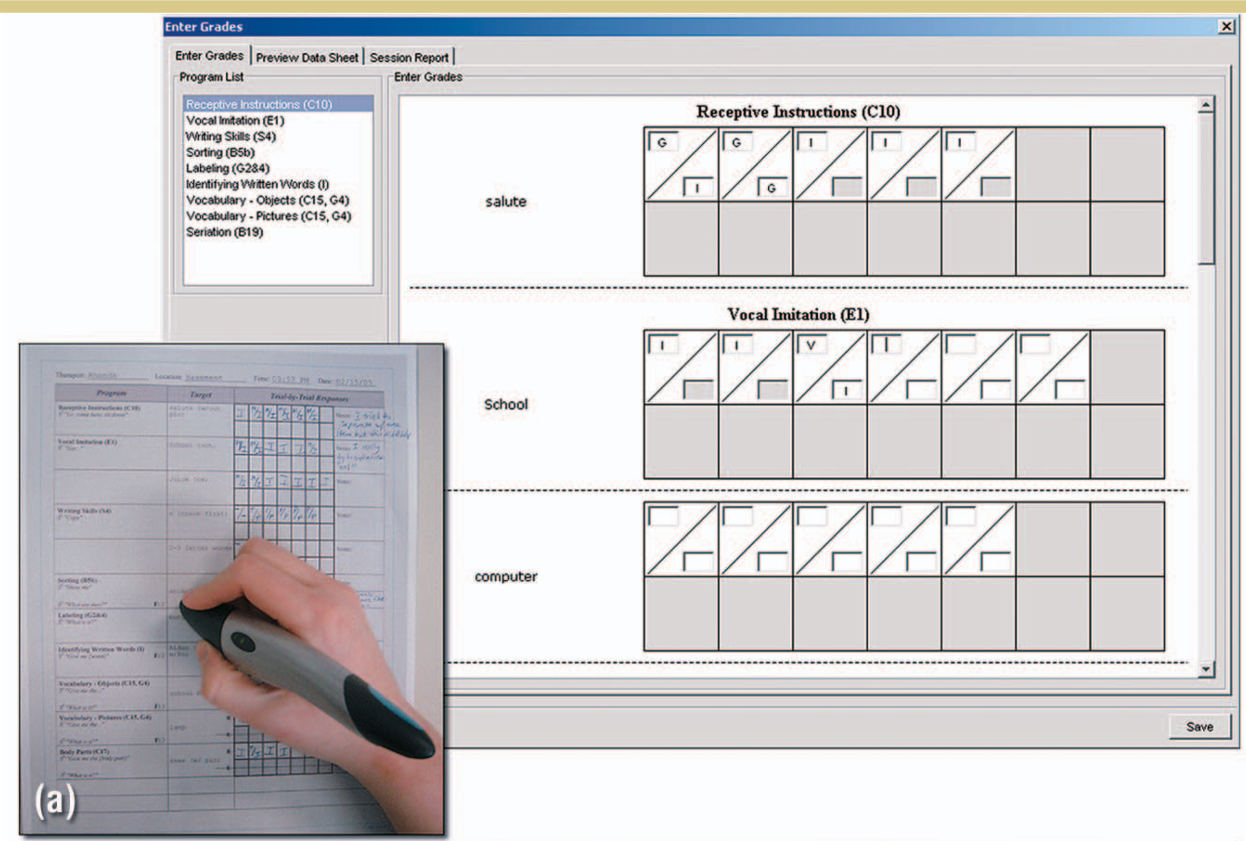
Abaris digitizes Discrete Trial Training (DTT). By using an Anoto digital pen and voice recognition, the system automatically indices video recordings of therapy.
- Physical Intuition: Instead of searching through hours of video, therapists click on a specific data entry on a digital sheet to jump to the exact moment in the video.
2. CareLog: Functional Behavior Assessment (FBA)
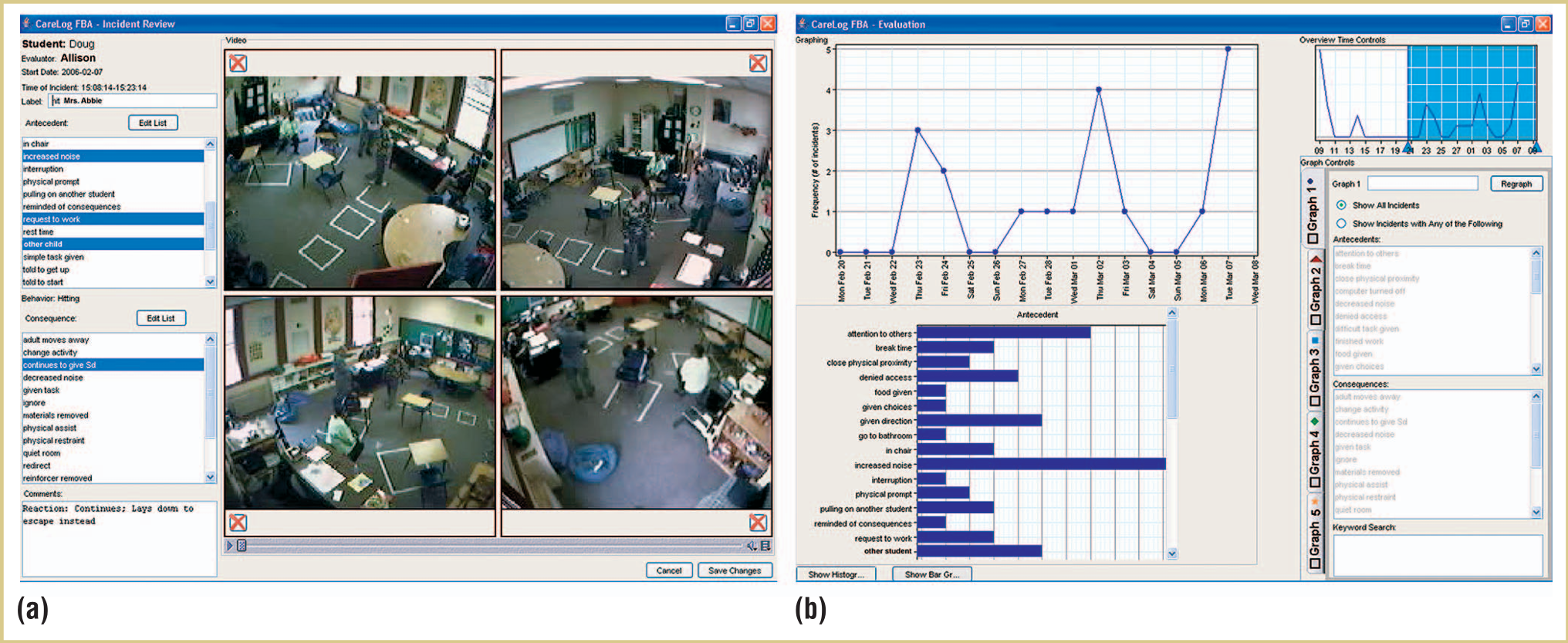
CareLog addresses the difficulty of capturing unplanned, disruptive behaviors. It uses a selective archiving mechanism—a video buffer that constantly records but only saves the last few minutes when a caregiver hits a wireless trigger.
3. Wearable Sensors: Detecting "Stimming"
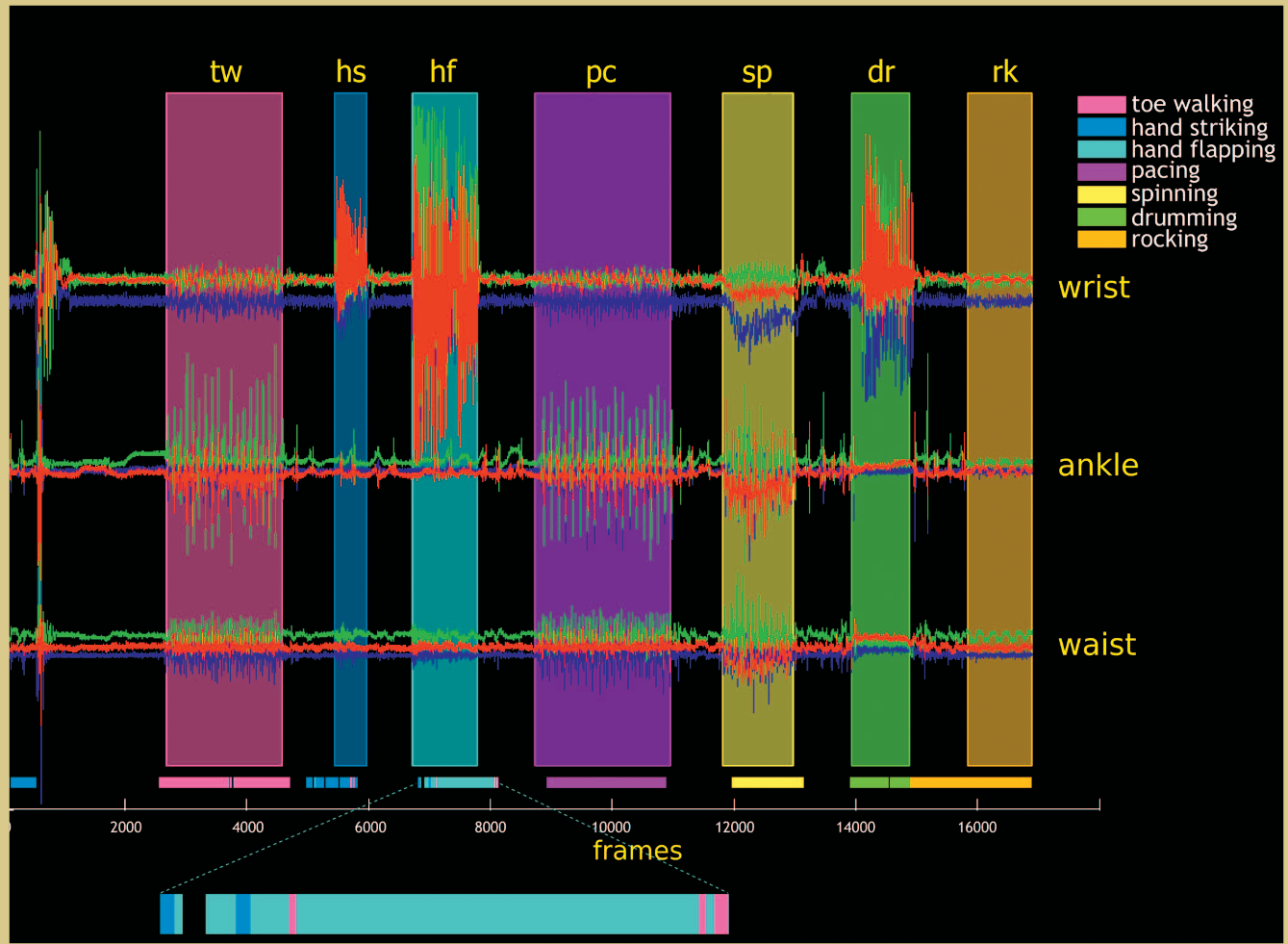
For non-verbal children, self-stimulatory behaviors (like hand flapping or rocking) are often indicators of internal stress. The researchers used Bluetooth accelerometers on the wrist, waist, and ankle to recognize these patterns.
Experiments & Results: Objective Evidence Over Anecdote
The deployment of these systems provided clear quantitative and qualitative benefits:
- Accuracy and Efficiency: In school classroom trials, teachers using CareLog conducted assessments with higher accuracy and reported feeling more confident in the results compared to pen-and-paper methods.
- Collaboration: Abaris encouraged therapists to use video evidence in meetings, moving away from subjective recollections to objective data analysis.
- Detection Feasibility: The wearable sensor pilot demonstrated that while exact labeling of different "stims" is challenging, the detection of an event occurring is highly reliable, providing a digital marker for caregivers to investigate potential stressors.
Critical Insight: The Design Pillars of Assistive Tech
The authors highlight several "Inductive Biases" that researchers in this field must adopt:
- Invisible Changes: Children with autism often crave routine. Any new technology (like a camera or a headset) must be as unobtrusive as possible to avoid becoming a distraction or a stressor.
- The "One Child" Rule (Customizability): Because ASD is a spectrum, software must be highly modular. A "one-size-fits-all" UI will fail in this domain.
- Privacy as a Priority: Continuous recording is a privacy nightmare. The "Selective Archiving" approach in CareLog is a brilliant compromise between data needs and the rights of the children and staff.
Conclusion & Future Outlook
This work serves as a foundational blueprint for Computer-Supported Cooperative Care. While the hardware mentioned (Bluetooth 1.0, 2D accelerometers) may feel dated, the underlying philosophy remains cutting-edge: using pervasive sensing to bridge the communication gap between individuals with cognitive impairments and their care networks. The next frontier, according to the authors, lies in early detection—using smart toys and environmental sensors to flag developmental delays before they become lifelong challenges.