
In Tags We Trust: Decoding Reliability in Social Multimedia Networks
2754_In Tags We Trust Trust modeling in social tagging of multimedia content.
This article provides a comprehensive survey of trust modeling techniques designed to combat noise and spam in social tagging systems for multimedia content. It classifies current state-of-the-art approaches into content-based and user-based models, highlighting the shift toward machine-learning-driven reliability assessment in online communities.
TL;DR
The explosion of multimedia content on platforms like Flickr, YouTube, and Facebook has made social tagging indispensable for search and retrieval. However, "tag pollution"—noise and malicious spam—threatens the utility of these systems. This survey explores how Trust Modeling serves as a surgical tool to separate reputable users and legitimate content from the noise, significantly enhancing the accuracy of automated systems like geotagging.
The "Pollution" Problem in Social Tagging
In an ideal world, collaborative tagging provides a rich, multi-perspective metadata layer for images and videos. In reality, users make mistakes, or worse, engage in self-promotion and advertisement spam.
A critical baseline study on Flickr revealed a startling truth: only about 50% of user-provided tags are truly relevant to the image content. Traditional prevention methods like CAPTCHAs and tagging quotas (e.g., Flickr’s 75-tag limit) are no longer sufficient. Spammers have evolved, and computers can now solve CAPTCHAs with up to 90% accuracy. The challenge is no longer just blocking bots, but distinguishing "trustworthy" human contributions from "polluters."
Methodology: The Two Pillars of Trust
The survey divides the solution space into two primary architectures: Content Trust and User Trust.
1. Content Trust Modeling
This focuses on the resource itself (the image, video, or bookmark). The goal is to filter or demote spam results in search queries.
- TrustRank Logic: Based on the principle that "good pages seldom point to bad ones," trust is propagated from a set of reputable "seed" pages through the network graph.
- Coincidence-based Models: A piece of content is ranked higher if it is tagged identically by multiple "reliable" users—leveraging the wisdom of crowds.
2. User Trust Modeling
This focuses on the author's reputation. It’s a more popular approach because it's computationally efficient and adapts quickly to changing environments.
- Social Honeypots: Using "decoy" accounts to log spammer behavior (e.g., account longevity, follower/following ratios).
- Dynamic Trust (SocialTrust): Unlike static models, dynamic trust evolves. A user who builds a "good" reputation over years but suddenly starts spamming will see their score "defect" rapidly.
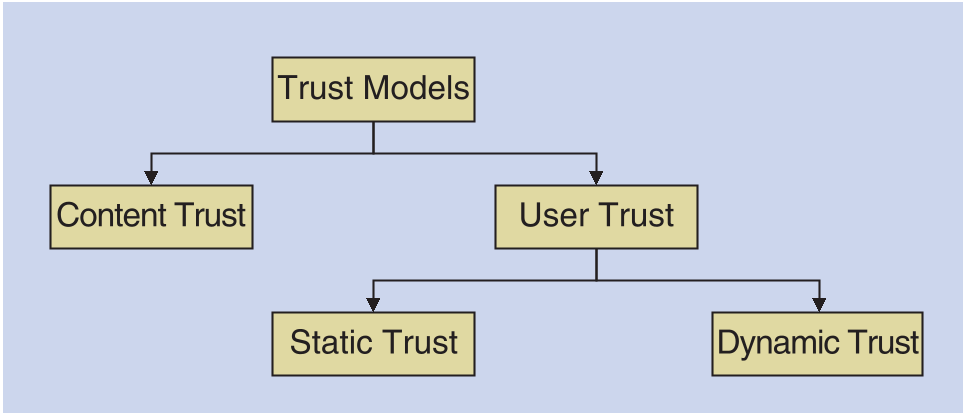 Figure 1: The taxonomy of trust modeling, highlighting the distinction between User and Content targets.
Real-world Impact: Case Study in Geotagging
To illustrate the power of these models, the authors examine a Geotag Propagation System. Many travel photos lack location data. By matching an untagged photo of a landmark (like the Eiffel Tower) to a tagged one, the system can "propagate" the tag.
However, if the source tag is "spam," the error ripples through the database. By integrating a User Trust Model based on user feedback (agreement/disagreement), the system's recognition rate jumped from 46% to 65%.
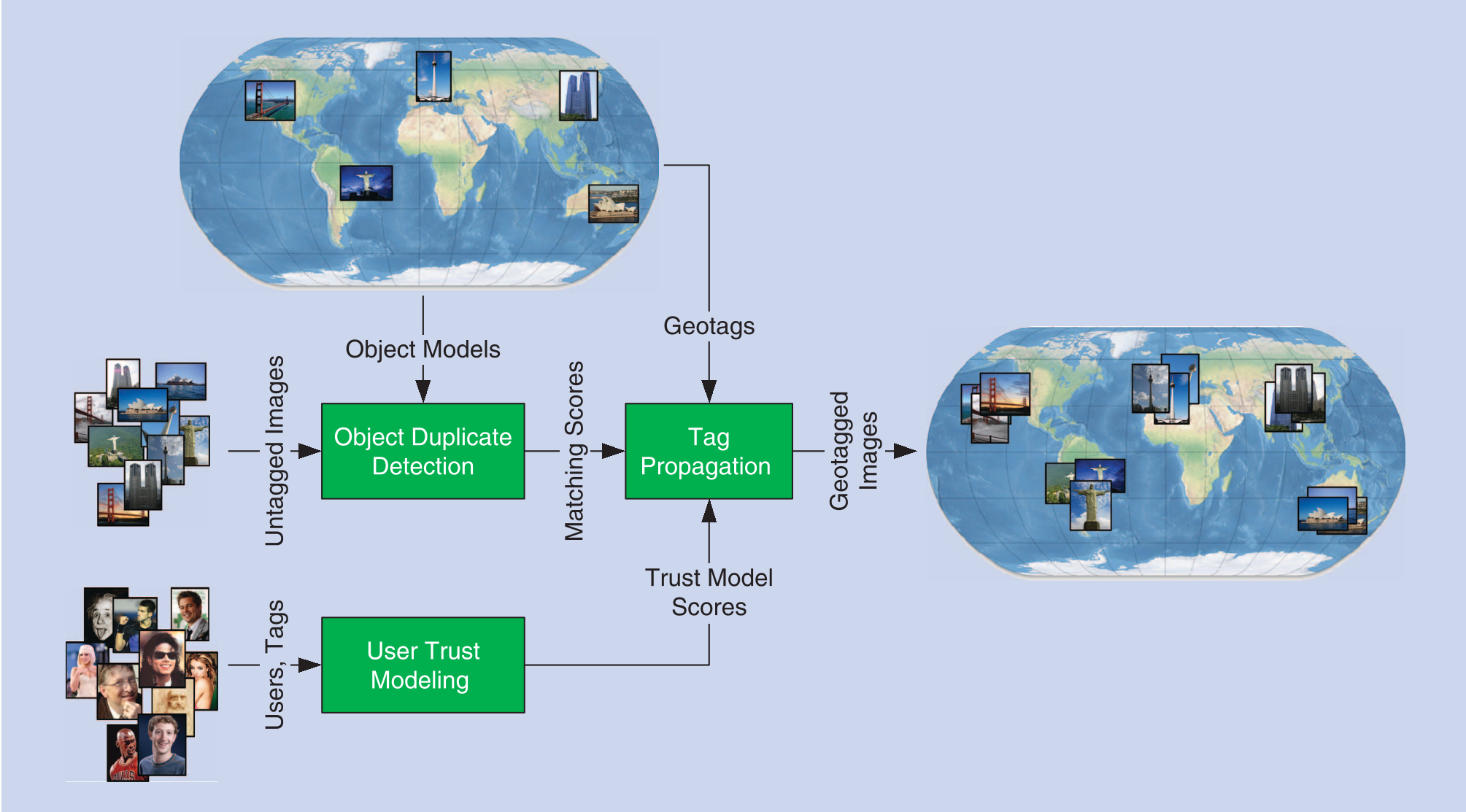 Figure 2: Workflow of a geotagging system where user trust acts as a gatekeeper for tag propagation.
Critical Insights & Future Frontiers
While these techniques are effective, the survey identifies several "Open Issues":
- The Subjectivity Trap: What is "spam" to one user (e.g., a specific advertisement) might be relevant to another. Global trust models struggle with this nuance.
- Multilingualism: Tags are often in different languages. Current models may incorrectly flag a foreign-language tag as "noise" simply because it doesn't match the majority vocabulary.
- Cross-Domain Trust: As we use Facebook or Google IDs to log into multiple services, how can a user's "trust score" follow them across the web?
Conclusion
The phrase "In Tags We Trust" is aspirational. To make it a reality, social platforms must treat trust not as a static filter, but as a dynamic, multifaceted signal. By combining Multimedia Content Analysis (e.g., using CV to detect text in images) with Social Graph Analysis, we can move toward a cleaner, more searchable social web.