
Engineering Accessibility: Transforming Smart Cities through Mobile CrowdSensing (MCS)
3311_Data Quality Improvement in Crowdsourcing Systems by Enabling A Positive Personal User Experience.
This paper presents a comprehensive literature review and conceptual framework for a Mobile CrowdSensing (MCS) system aimed at identifying urban obstacles for people with reduced mobility. It synthesizes research on motivation, data quality, and reputation to propose <b>PCM4DE</b>, a system designed to improve smart city accessibility.
TL;DR
Static maps are insufficient for inclusive urban mobility. This research establishes a roadmap for PCM4DE, a Mobile CrowdSensing system that leverages the collective power of smartphones to identify temporary urban obstacles. By synthesizing motivation psychology and data reputation algorithms, the paper addresses how to turn opportunistic city-dwellers into reliable "human sensors" for accessibility.
The Dynamic City Problem: Why Static Data Fails
For a person in a wheelchair or with visual impairments, a "permanent" map only tells half the story. The real danger lies in the dynamic obstacles: a rogue electric scooter on the sidewalk, a sudden construction pit, or an icy patch of pavement.
Current systems fail because:
- Data Stale-ness: Municipal databases are updated yearly, not hourly.
- The Truth Problem: In crowdsourcing, how do you know a user isn't accidentally (or maliciously) reporting a "ghost" obstacle?
- Participant Fatigue: Most users stop contributing data once the novelty of the app wears off.
Methodology: The Three Pillars of Persistent Sensing
The paper proposes a conceptual model that shifts the burden from dedicated surveyors to the general public through a structured MCS framework.
1. Motivation & Context-Awareness
Instead of a one-size-fits-all approach, the authors advocate for Situated Crowdsourcing. Using the concept of Habitsourcing, the system prompts users based on their context—for instance, asking a jogger to verify a sidewalk's condition while they are already on their route.
2. The Reputation Engine
To solve the "noise" problem, the paper highlights a Reputation Framework. By using a peer-review system (inspired by ancient worker guilds) and "anchor participants" (trusted users with high historical accuracy), the system can calculate a reliability score for every data point without needing an expensive "ground truth" verification.
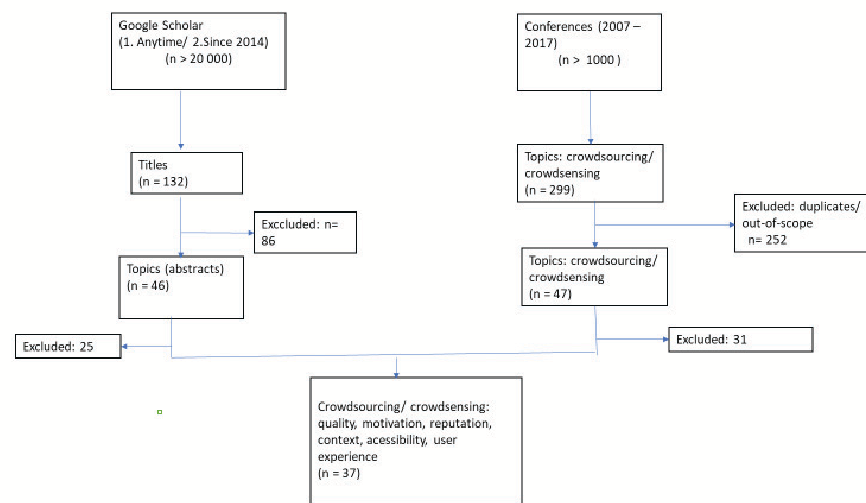 Figure 1: The systematic approach taken to synthesize existing literature into the PCM4DE framework.
3. Data Fusion & Quality Control
The research emphasizes that data quality isn't just about the sensor (GPS/Accelerometer) but about the human-sensor interaction. By combining traditional signal processing with "Gold Questions" (tasks with known answers to test users), the system filters out low-quality contributions before they reach the public map.
Key Competitive Landscape (Prior Work Analysis)
The paper categorizes current research into a matrix that highlights the "Future Work" (FW) gaps that PCM4DE aims to fill:
| Relevance | Addressing Trends | Insight |
|---|---|---|
| Quality | Passive vs. Active Learning | Active strategies (payment/rewards) lead to higher precision. |
| Reputation | Anchor Participants | Using high-reliability nodes (anchors) significantly stabilizes the network. |
| Motivation | Gamification | While games like Ingress increase coverage, they can sometimes trade off data precision for engagement. |
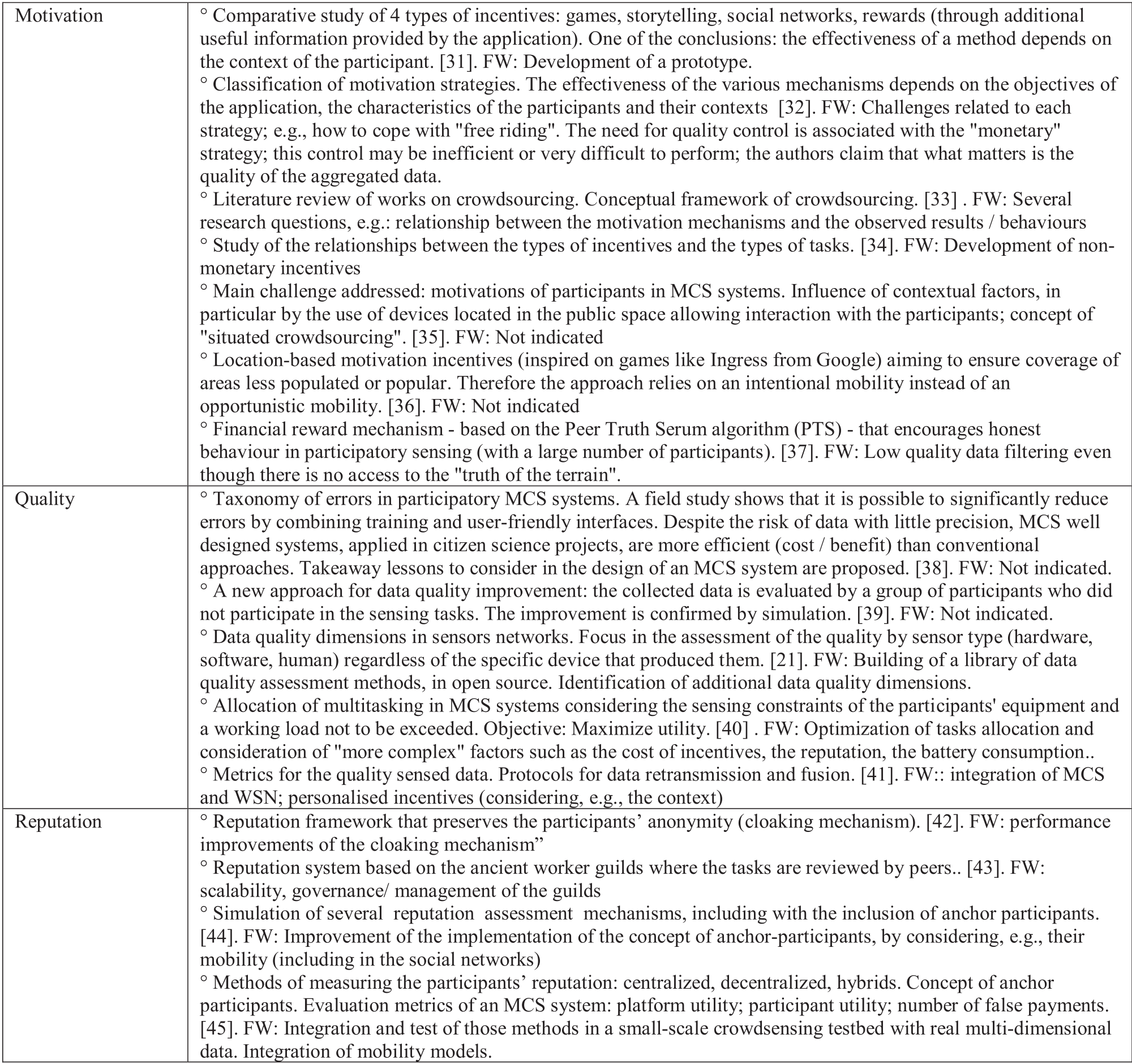 Table 1: Comparison of Motivation, Quality, and Reputation strategies in current SOTA.
Critical Insights & Future Outlook
The most profound takeaway from this work is that accessibility is a data-timeliness problem, not just a mapping problem. The authors correctly identify that the missing link in Smart Cities isn't the number of sensors, but the orchestration of human incentive and data trust.
Limitations:
- The paper remains primarily conceptual/theoretical.
- It does not fully address the battery-drain issues inherent in continuous accelerometer/GPS sensing.
- Privacy concerns regarding "cloaking mechanisms" for participant anonymity require more empirical testing.
The Road Ahead: The next step for this field is the implementation of a "proof of concept" that uses Machine Learning models to measure the influence of financial vs. social incentives in real-time, potentially creating a "Gig Economy for Good" where urban accessibility is maintained by the people, for the people.
Takeaway
If you are building Smart City infrastructure, your most valuable assets aren't the fixed cameras on the poles—they are the smartphones in the pockets of the citizens, provided you can build the reputation bridge to trust their data.