
Globalization by Chunking: A Mathematical Blueprint for Distributed Engineering
3385_Globalization by Chunking A Quantitative Approach.
This paper introduces "Globalization by Chunking," a quantitative framework for optimizing distributed software development. It leverages version control data to identify "chunks"—tightly coupled code modules—minimizing multisite coordination overhead and project delays.
TL;DR
Distributing software development across the globe isn't just a logistics challenge—it’s an architectural one. This seminal work from Bell Labs and Avaya Laboratories introduces a quantitative method to partition code into "chunks" based on historical change patterns. By minimizing the coupling between geographic sites, the authors present a way to slash the "multisite penalty" that delays projects by weeks.
The Hidden Cost of "Going Global"
In the era of globalized R&D, companies often move work to where the talent is. However, as Conway’s Law suggests, software structure eventually mirrors organizational structure. When these two are misaligned—specifically when developers at different sites must collaborate on the same "Modification Request" (MR)—productivity plummets.
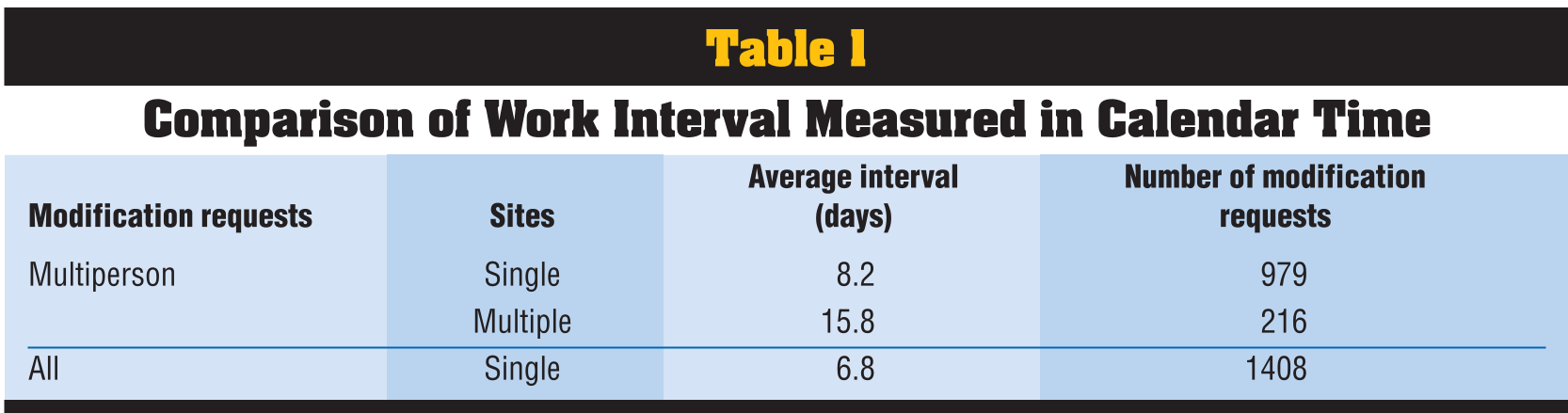
The authors found that MRs involving multiple sites are not just slightly slower; they incur an average penalty of 7.6 days per task. For a large-scale project, this translates to dozens of person-years lost to "coordination overhead." The core problem is that traditional work distribution (by feature or lifecycle stage) often ignores the independent changeability of the underlying code.
Methodology: Quantifying the In-Between
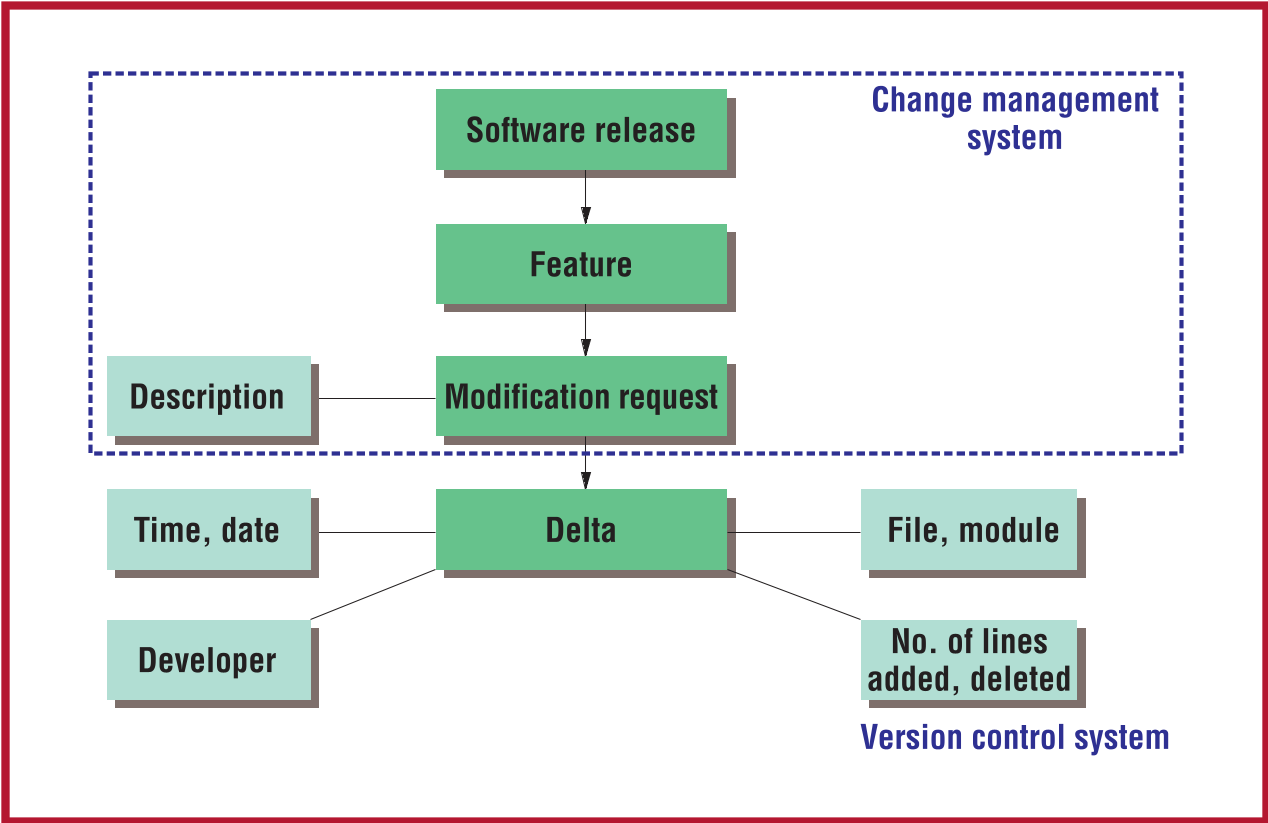
The authors move beyond qualitative management theory into hard data. They define:
- Work Items: From individual code deltas to full releases.
- Absolute Coupling: The number of MRs that require changes to two different entities (A and B).
- Chunks: Sets of code files that are frequently changed together but rarely changed with the rest of the system.
Identifying the Optimal Boundary
To solve the "Globalization Problem," the authors treat work distribution as an optimization task. They use a Simulated Annealing algorithm to find the best candidate files for transfer.
The algorithm balances three competing factors:
- Coupling Minimization: The transferred chunk should have minimal "hooks" into the primary site’s code.
- Effort Matching: The chunk must provide enough work to keep the remote team busy (e.g., 10-20 Person-Years) without exceeding their capacity.
- Existing Multisite Reduction: If a chunk is currently being touched by both sites, moving it entirely to the remote site turns those slow "multisite MRs" into fast "single-site MRs."
Experimental Evidence & The "Learning Curve"
The study analyzed two years of data from a major telecommunications project. The metrics confirmed a harsh reality: multisite collaboration is expensive.
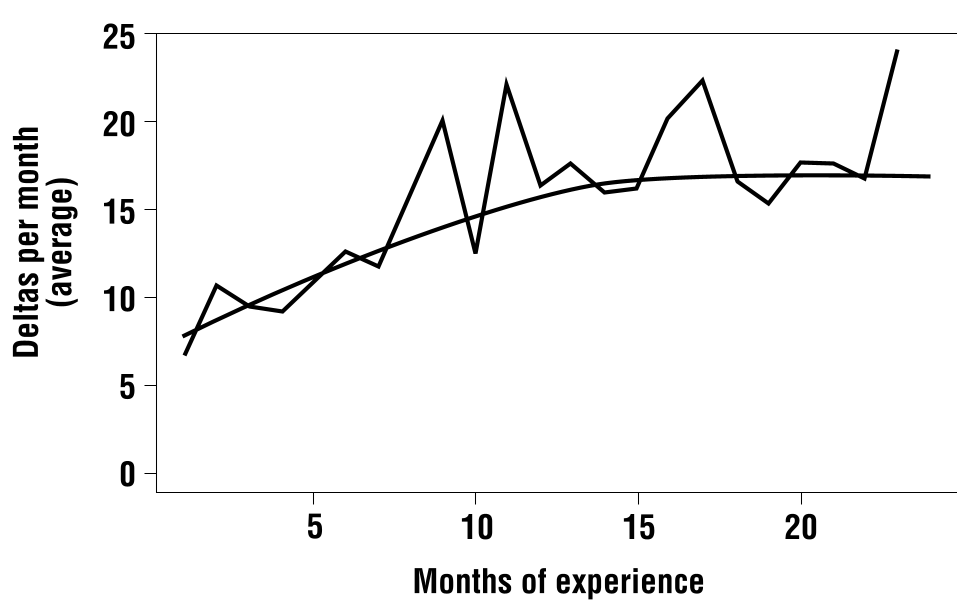
Crucially, the authors also quantified the Learning Curve. When code is moved to a new team, productivity doesn't hit 100% on day one. By tracking the "delta per month" of 50 developers, they found it takes roughly 15 to 18 months for a remote team to reach the speed of the original site.
Critical Insight: Architecture as Memory
The most profound takeaway is that evolution drives the formation of chunks. As a system evolves, decisions become "intertwined." Modern architects shouldn't just look at a static class diagram; they must look at the history of changes.
If two files are always changed together, they are a single "chunk" in reality, regardless of what the folder structure says. The goal for a globalized organization is to ensure that these "empirical chunks" align with geographic boundaries.
Conclusion & Limitations
While "Globalization by Chunking" provides a rigorous mathematical framework, it relies on high-quality historical data. In "greenfield" projects where no history exists, the model is less effective until the first few months of development are captured. Furthermore, it assumes that "effort per delta" is relatively uniform across a team—a simplification that may not hold for highly specialized tasks.
However, for enterprises managing legacy systems and massive global teams, this paper offers a vital lesson: Don't just move teams; move the right chunks of code.