
3PRS: Bridging the Gap Between DVB-T Broadcasting and Personalized Social Recommendation
3PRS: a personalized popular program recommendation system for digital TV for P2P social networks
The paper introduces 3PRS, a personalized program recommendation system for DVB-T digital TV within P2P social networks. It utilizes Information Retrieval (IR) to weight user interest based on watching duration and employs K-means and K-Nearest Neighbor (kNN) to group similar users and recommend popular content.
TL;DR
With the explosion of digital TV channels, users are often overwhelmed by choice. This paper presents 3PRS, a system that transforms the passive Electronic Program Guide (EPG) into an active, social-aware recommender. By analyzing watching duration through a P2P social network and applying K-means and kNN algorithms, the system accurately predicts user preferences and identifies popular programs within specific social clusters.
Problem & Motivation: The Limitations of Static EPG
Digital Video Broadcasting (DVB-T) provides hundreds of channels, yet the standard tool for navigation—the Electronic Program Guide (EPG)—is functionally limited.
- Prior Work Issues: Most existing systems rely on text-based filtering. However, TV program metadata is often inconsistent or lacks textual depth, making traditional Information Retrieval (IR) difficult.
- The Popularity Void: Static EPGs cannot tell a user what is "trending" or "popular" among peers with similar tastes.
- The Insight: The authors realized that watching duration is the ultimate indicator of interest. If a user stays on a channel for 40 minutes, it carries significantly more weight than a 2-minute "channel surf."
Methodology: The Architecture of 3PRS
The system architecture is bifurcated into the Digital Television Client (DTC) and the Ratings Sharing Server (RSS).
1. Data Collection & Preprocessing
The system captures a "User Behavior Profile" containing channel IDs, timestamps, and duration. A critical threshold is applied: programs watched for less than 20 minutes (single view) or 40 minutes (multiple views) are discarded as "uninteresting" noise.
2. Double-Layer Clustering (K-means)
The RSS uses K-means to group users into interest-based clusters.
- User Clustering: Groups users into categories (e.g., Geography, Comedy).
- Cluster Relationship: A second K-means pass finds similarities between the clusters themselves (e.g., linking "Comedy" fans with "General Entertainment" fans).
3. Real-time Prediction (kNN)
When a new user starts watching, their immediate habits are converted into a vector. The kNN (k-Nearest Neighbors) algorithm performs a "max-win" mechanism to classify the user into the most appropriate pre-existing cluster.
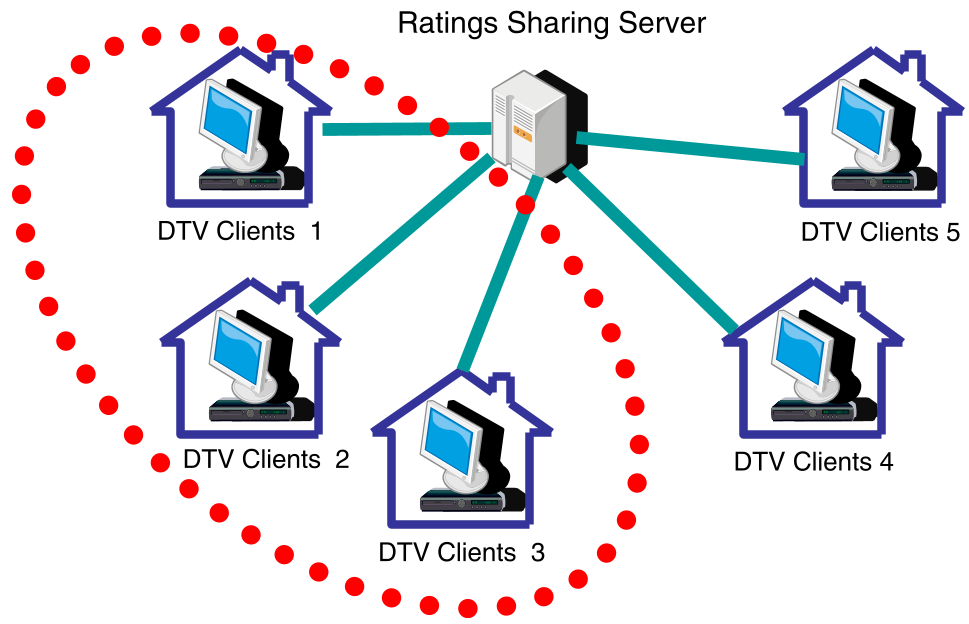 Figure 1: The dual-layered architecture connecting Clients to the Rating Sharing Server.
Experiments & Results
The authors validated the system using simulated user profiles. The experiments proved that the system could not only recommend programs within a user's cluster but also perform effective cross-recommendation.
| Cluster ID | Dominant Interest | Sample Recommendations |
|---|---|---|
| Cluster 2 | English Learning | Speak English with Gong-Shi, Kong-Chong Classroom |
| Cluster 0 | Comedy | Let's tell jokes, JiangHu.com |
| Cluster 3 | Entertainment | Variety Big Brother, Guess Guess Guess |
Because the Cluster Relationship module identified a link between Cluster 0 and Cluster 3, a user interested in "Let's tell jokes" was successfully recommended "Variety Big Brother," demonstrating a sophisticated understanding of content overlap.
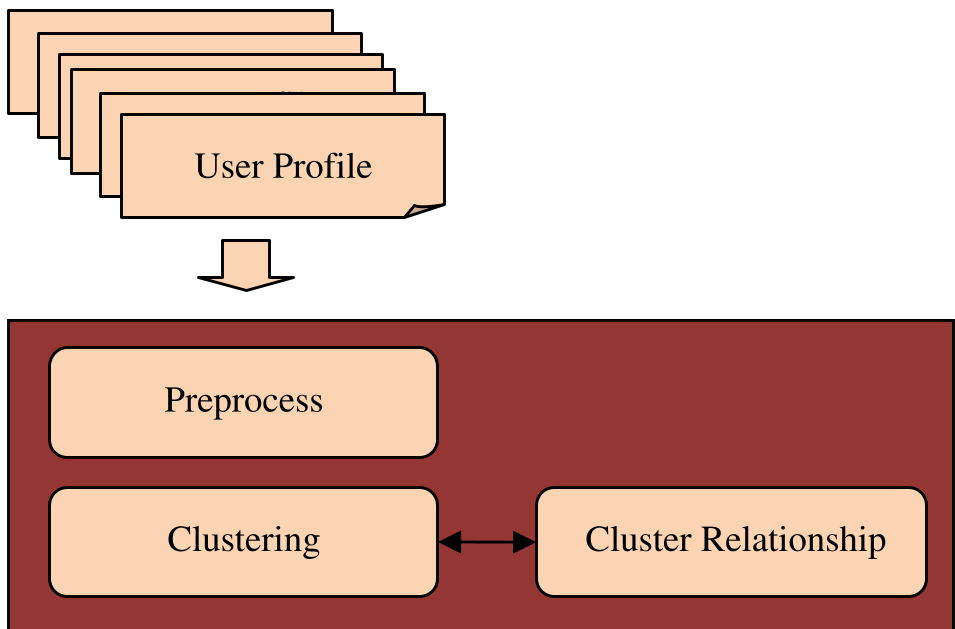 Figure 2: The logic flow of the Ratings Sharing Server (RSS) identifying popular trends.
Deep Insight & Conclusion
The 3PRS system represents an early yet robust attempt to inject "intelligence" into hardware-constrained environments like Set-Top Boxes (STBs). It intelligently uses P2P social networks to distribute the load of data sharing, avoiding the bottlenecks of centralized content-based systems.
Takeaways for Modern Research:
- Implicit vs. Explicit: The reliance on duration (implicit) over ratings (explicit) is a precursor to modern "watch time" algorithms used by platforms like YouTube and TikTok.
- Limitations: The system requires a pre-defined 'k' for its algorithms and faces challenges with "cold-start" users who have zero history.
- Future Path: Integrating semantic EPG analysis (Natural Language Processing) with this duration-weighted model could further refine recommendation accuracy.