
Dawn: Simulating the Invisible Ripple of Social Influence in Water Conservation
4367_Social influence and water conservation an agent-based approach.
The paper introduces "Dawn" (Distributed Agents for Water simulatioN), an Agent-Based Modeling (ABM) framework designed to simulate how social influence and word-of-mouth communication affect urban water conservation. By integrating a multi-agent influence-diffusion mechanism with traditional econometric models, the study demonstrates that public awareness campaigns can be as effective as price hikes in reducing water consumption.
TL;DR
Can a conversation with your neighbor save more water than a 5% increase in your utility bill? According to the research behind the Dawn (Distributed Agents for Water simulatioN) platform, the answer is a resounding yes. By merging traditional economics with Agent-Based Modeling (ABM), this study proves that "word-of-mouth" is a measurable, programmable force that can drive large-scale environmental change.
Problem & Motivation: The Failure of Linear Models
In the world of urban planning, "Price" has long been the only lever for managing demand. If water is scarce, raise the price. However, water is a unique commodity—a natural resource with high emotional and environmental stakes.
Existing econometric models suffer from a granularity problem:
- The Passive Receiver Fallacy: They assume mass media reaches everyone with the same impact.
- Ignoring the Grid: They overlook the "Two-Step Flow" of communication, where "Opinion Leaders" filter information for others.
- Uniformity Bias: They treat all consumers as a single "average," ignoring that some people are environmentally conscious while others are socially apathetic.
Methodology: Building a Virtual Society
The authors moved beyond the standard (where consumption is a function of Price and other variables) to a hybrid model: Here, represents the Social Variable, a dynamic value generated by the Dawn multi-agent system.
1. The Social Grid
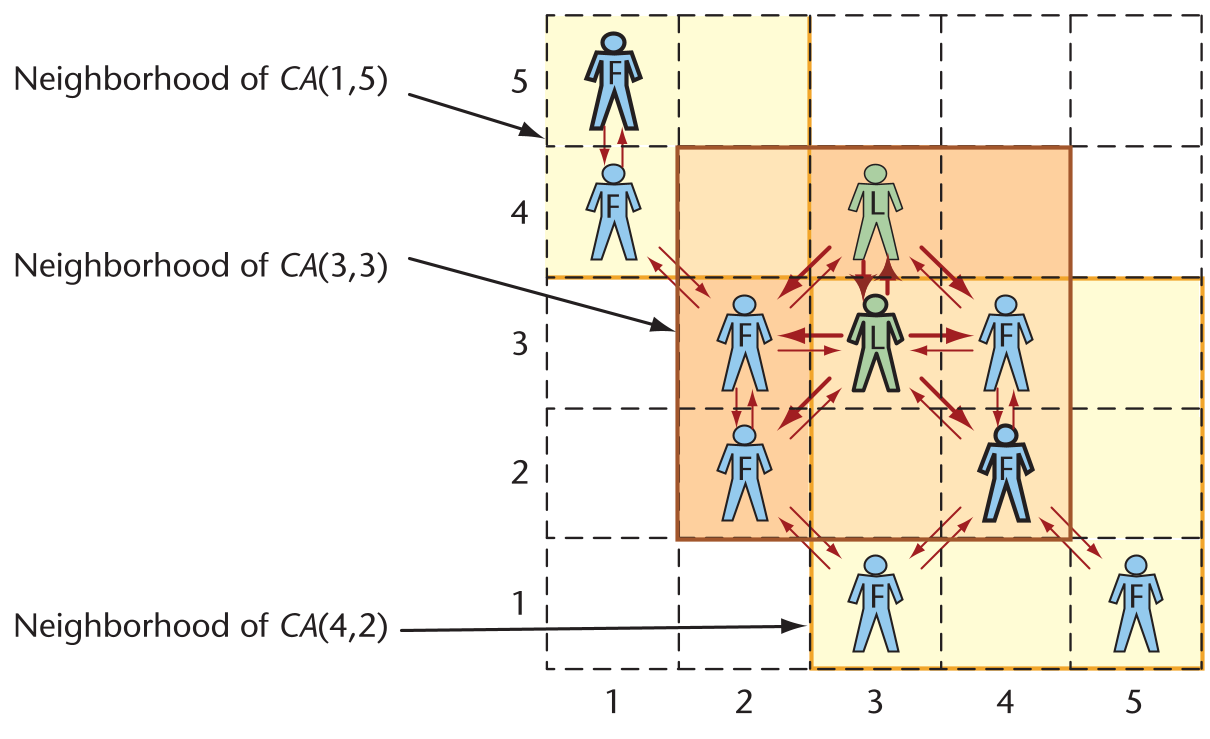
The simulation places agents on a square lattice (a "Social Grid"). Proximity here doesn't mean living next door; it means being part of the same social circle.
2. The Influence-Diffusion Mechanism
Each agent calculates its social pressure using the following formula:
- (Social Weight): The "persuasion power" of a neighbor. Opinion leaders have high weights; others have low.
- (Diffraction Function): This acts as a "filter." A "Seeker" has a high-slope diffraction function (receptive to change), while "Apathetic" agents have a zero-slope function (immune to influence).
3. Four Types of Consumers
The population is split into four distinct behavioral personas:
- Type A (Opinion Leaders): Persuade others but are rarely influenced.
- Type B (Apathetic): Neither give nor receive signals.
- Type C (Seekers): Highly receptive to environmental messages.
- Type D (Receivers): Passive consumers who only change if heavily pressured by their peers.
Experiments: Thessaloniki as a Case Study
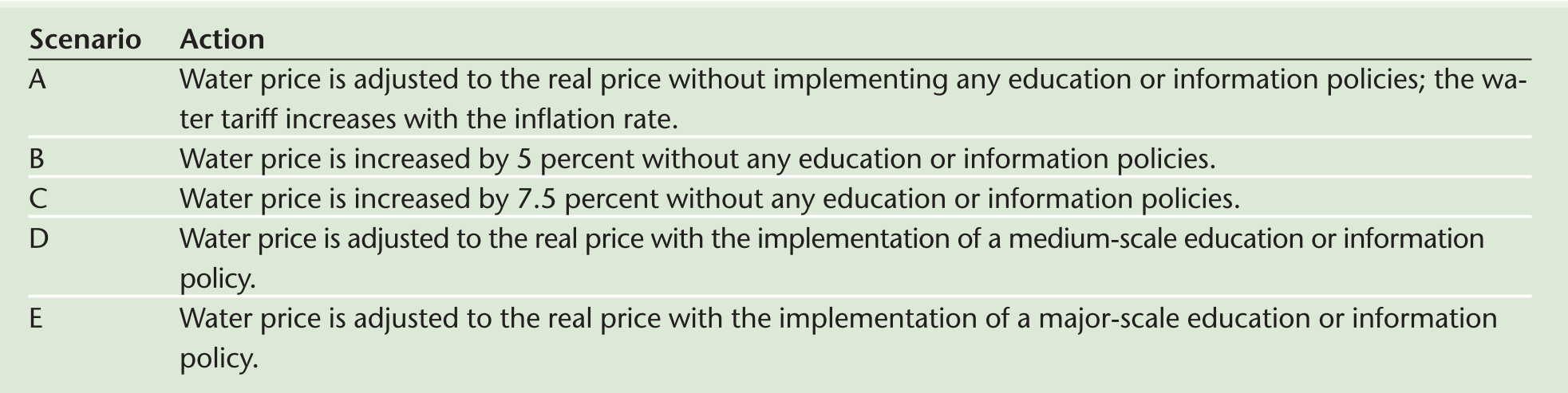
The researchers simulated five scenarios for Thessaloniki, Greece, comparing price hikes to information campaigns over a six-year window.
Key Findings
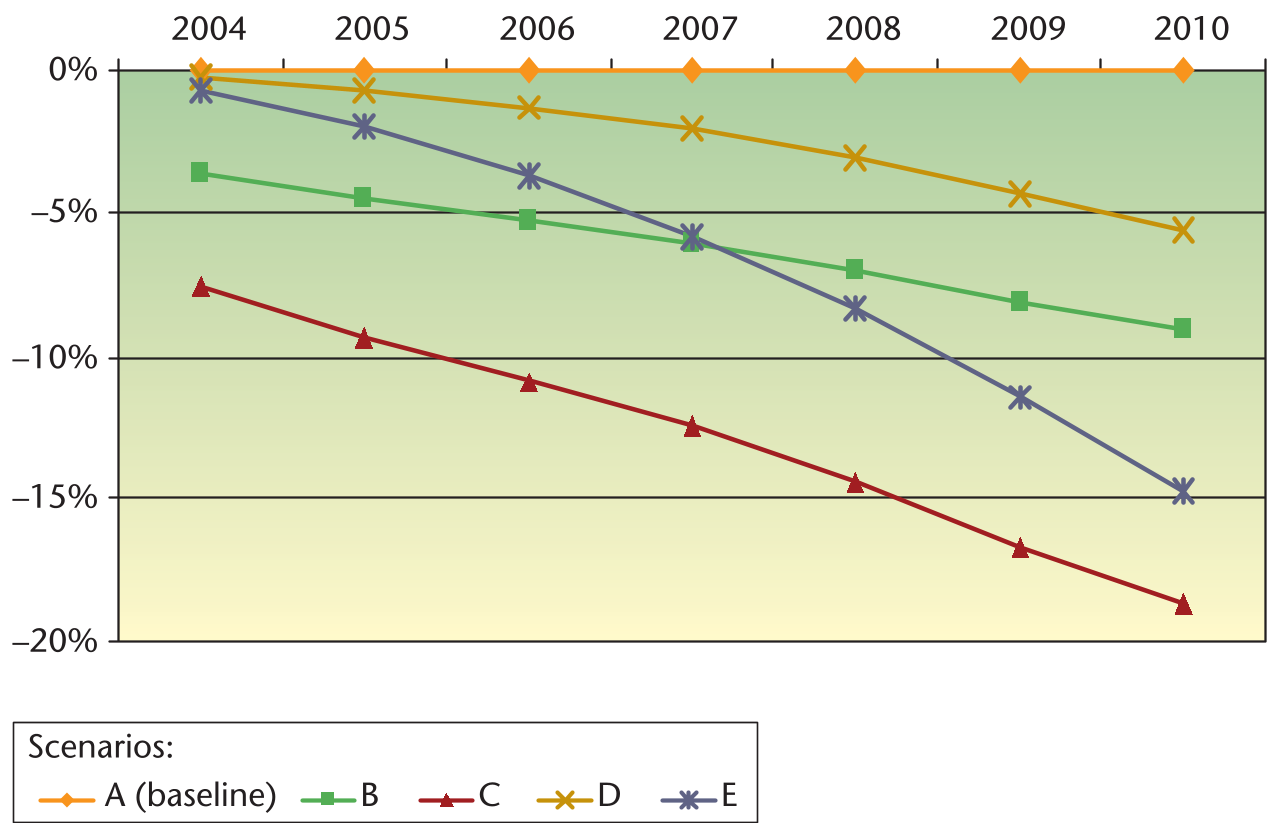
The results showed a clear Lag and Leap effect:
- Price Hikes (Scenarios B & C): Show immediate but linear reductions in water use.
- Awareness Campaigns (Scenarios D & E): Take longer to gain traction (the "incubation" phase), but once the influence begins to diffuse through the social grid, the reduction in water demand accelerates and eventually outperforms price adjustments.
Takeaways & Future Outlook
The "Dawn" platform demonstrates that social influence is a compounding asset. While price changes are felt immediately, they often face political resistance and social inequity. Awareness campaigns, when focused on "Opinion Leaders," utilize the existing infrastructure of human relationships to create a "virus of conservation" that grows more effective over time.
Moving Forward: The future of this research lies in moving from 2D grids to Scale-Free Networks (modeling real-world social media structures) and implementing more complex agent behaviors that mimic the nuanced psychological responses of human beings. For policy-makers, this means that investing in "education" isn't just about brochures—it's about activating the influential nodes in our social networks.