
Z-Source Matrix Converters: Beyond the 0.866 Gain Limit of AC-AC Conversion
4398_A Family of Z-Source Matrix Converters.
This paper introduces a novel family of Z-Source Matrix Converters (ZS-MCs) that integrate the Z-source network into AC-AC matrix topologies. By leveraging a "shoot-through" switching state, the proposed system achieves both buck and boost voltage conversion with fewer switches than traditional multi-stage solutions.
TL;DR
Voltage-source matrix converters have long been "stuck" in buck mode with a theoretical gain limit of 0.866. This paper breaks that ceiling by introducing the Z-Source Matrix Converter (ZS-MC). By embedding an LC impedance network and utilizing "shoot-through" states, the authors achieve single-stage buck-boost AC-AC conversion with high efficiency and lower switch counts.
The "Legacy" Problem: Gain Limitation and Switch Complexity
The Matrix Converter (MC) is often hailed as the "ideal" converter because it lacks the bulky DC-link capacitors found in back-to-back inverters. However, it has two major flaws:
- Voltage Limitation: VS-MCs cannot output a voltage higher than 86.6% of the input.
- Hardware Overhead: Previous buck-boost attempts required 18 switches and complex two-stage logic, which killed reliability and increased costs.
The authors' insight was to adapt the Z-source concept—originally designed for DC-AC inverters—to the unique world of direct AC-AC matrix conversion.
Methodology: The Power of the "Shoot-Through"
The core innovation lies in the Simplified Voltage-Fed ZS-MC. Instead of 18 switches, it uses a standard MC bridge preceded by a Z-source network and a single input switch ().
1. The Architecture
The Z-source network acts as a buffer. During normal operation (Non-shoot-through), the system behaves like a standard MC.
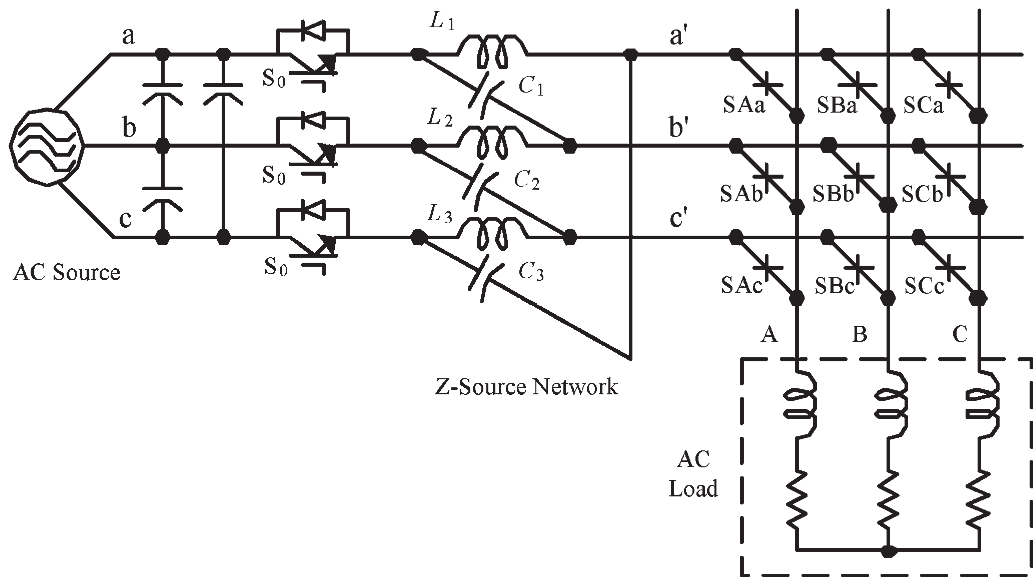 Fig 5: The simplified voltage-fed ZS-MC structure.
2. The Logic of Boosting
Boosting occurs by short-circuiting (shooting-through) the converter arms. In traditional converters, this would cause a catastrophic failure. In ZS-MCs, the impedance network inductors limit the current and store energy. When the shoot-through state ends, this energy is released to the load, effectively boosting the output voltage.
The boost factor () is defined by the shoot-through duty ratio (): At , the voltage amplitude can be doubled compared to the source.
Control Strategy: Simple vs. Maximum Boost
The authors explored different PWM methods:
- Simple Boost Control: Uses constant shoot-through intervals. It produces high-quality waveforms but has limited gain.
- Maximum Boost Control: Turns all "zero" states into shoot-through states. This maximizes gain but introduces some ripples in the output current.
Experimental Validation
The team built a prototype using RB-IGBTs (Reverse Blocking IGBTs). The results were clear: the ZS-MC could seamlessly switch from a buck state to a boost state.
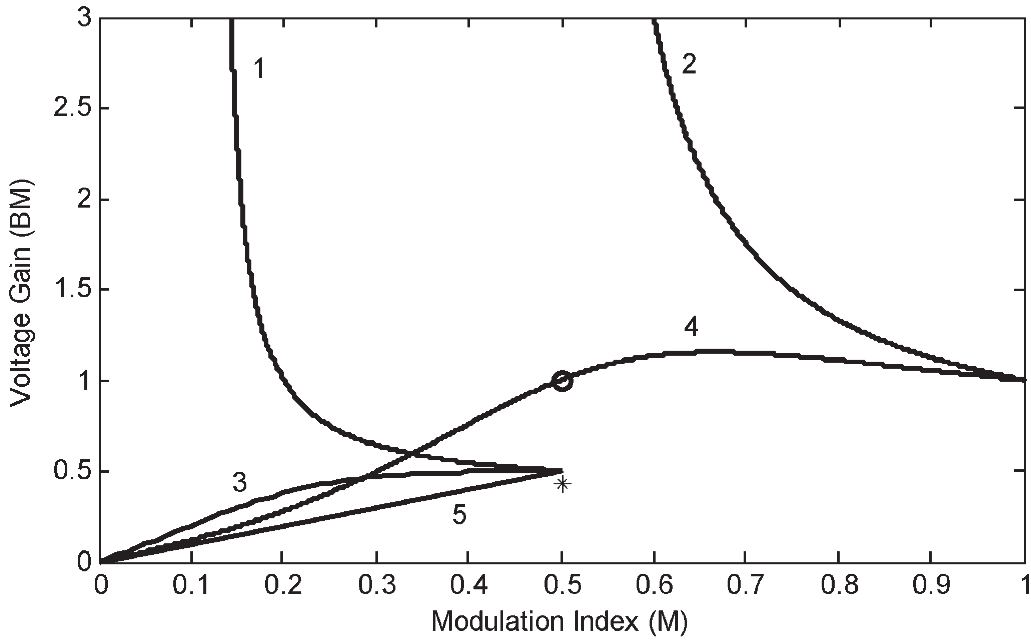 Fig 15: Comparison of voltage gains. The ZS-MC variants (Traces 1-4) drastically outperform the traditional MC (Trace 5).
In the boost test (), the system achieved a voltage gain of 0.992, nearly matching the theoretical prediction of 1.0, whereas a traditional MC would be trapped at a gain of ~0.43 at that modulation index.
Critical Insight & Future Outlook
The beauty of the ZS-MC is its robustness. It can handle shoot-through states that would destroy a standard converter, making it inherently more reliable.
Limitations:
- Current Ripples: Maximum boost control leads to higher THD (Total Harmonic Distortion).
- Complexity: While it uses fewer switches than two-stage converters, it still requires advanced CPLD/DSP logic to manage the high-frequency shoot-through states.
Takeaway: For industries requiring high-frequency, compact AC-AC conversion (like aerospace or high-end motor drives), the Z-Source Matrix Converter represents a significant step toward a "universal" power converter that ignores the traditional boundaries of buck and boost.