
Efficient JSSP Solving: Speeding Up Hopfield Networks via Smart Initialization
4489_A Suitable Initialization Procedure for Speeding a Neural Network Job-Shop Scheduling.
The paper introduces a novel heuristic initialization procedure for Hopfield Neural Networks (HNN) to solve Job-Shop Scheduling Problems (JSSP). By optimizing the initial starting times of operations, the method significantly accelerates convergence and improves makespan results compared to previous HNN implementations.
TL;DR
Solving the Job-Shop Scheduling Problem (JSSP) usually feels like a battle against exponential complexity. This paper provides a tactical shortcut: instead of letting a Hopfield Neural Network (HNN) start from a random mess, it initializes the network using a "resource-independent" heuristic. This simple shift reduces iteration cycles by over 90% and consistently hits near-optimal makespans in just one run.
Background: The JSSP Bottleneck
In manufacturing, JSSP involves scheduling n jobs on m machines. It is notoriously NP-complete because you must satisfy two conflicting constraints simultaneously:
- Sequence Constraints (SC): Job A's Step 2 cannot start until Step 1 finishes.
- Resource Constraints (RC): Machine X cannot process Job A and Job B at the same time.
Traditional HNNs struggle because they try to "learn" both constraints from scratch using random starting times. This often leads to invalid schedules (overlaps) or extremely slow convergence.
The Core Insight: Starting with Order
The authors identified that the "random initialization" used in previous work (like Willems et al.) is the primary reason for failure. They proposed a deterministic preprocessing step:
- The Heuristic: Assume every machine is always available for a single job.
- Result: Each job starts its sequence perfectly (Step 1 at time 0, Step 2 at time , etc.).
By doing this, the Sequence Constraints are satisfied at . The Neural Network's job is reduced from "solving everything" to merely "shifting operations slightly" to resolve Machine overlaps.
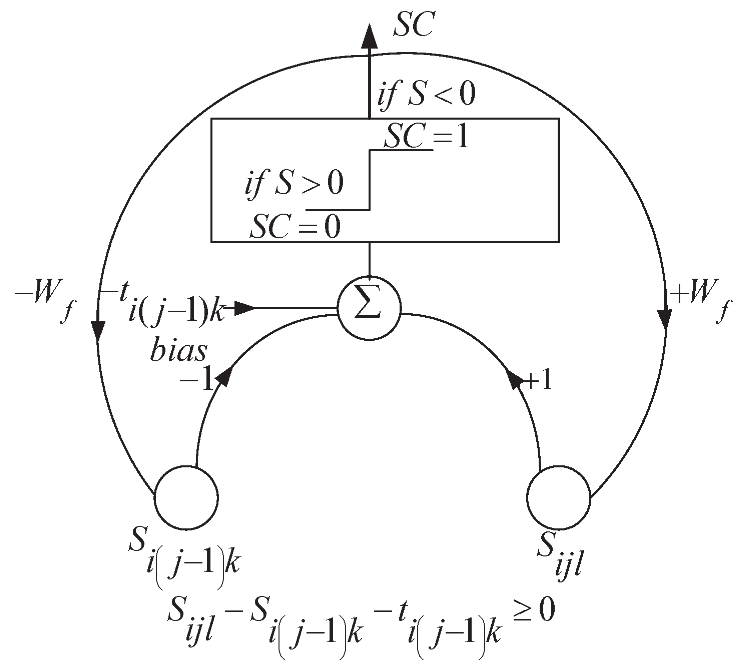 Fig 1: The HNN architecture designed to handle Resource Constraints (RC).
Methodology: From Formulas to Neurons
The paper translates the JSSP into an Integer Linear Programming (ILP) problem, mapped onto a neural grid:
- S-units: Represent the starting times.
- SC-units: Penalize violations of job sequences.
- RC-units: Penalize resource overlaps using an "indicator variable" to decide which job goes first.
The proposed workflow follows this logic:
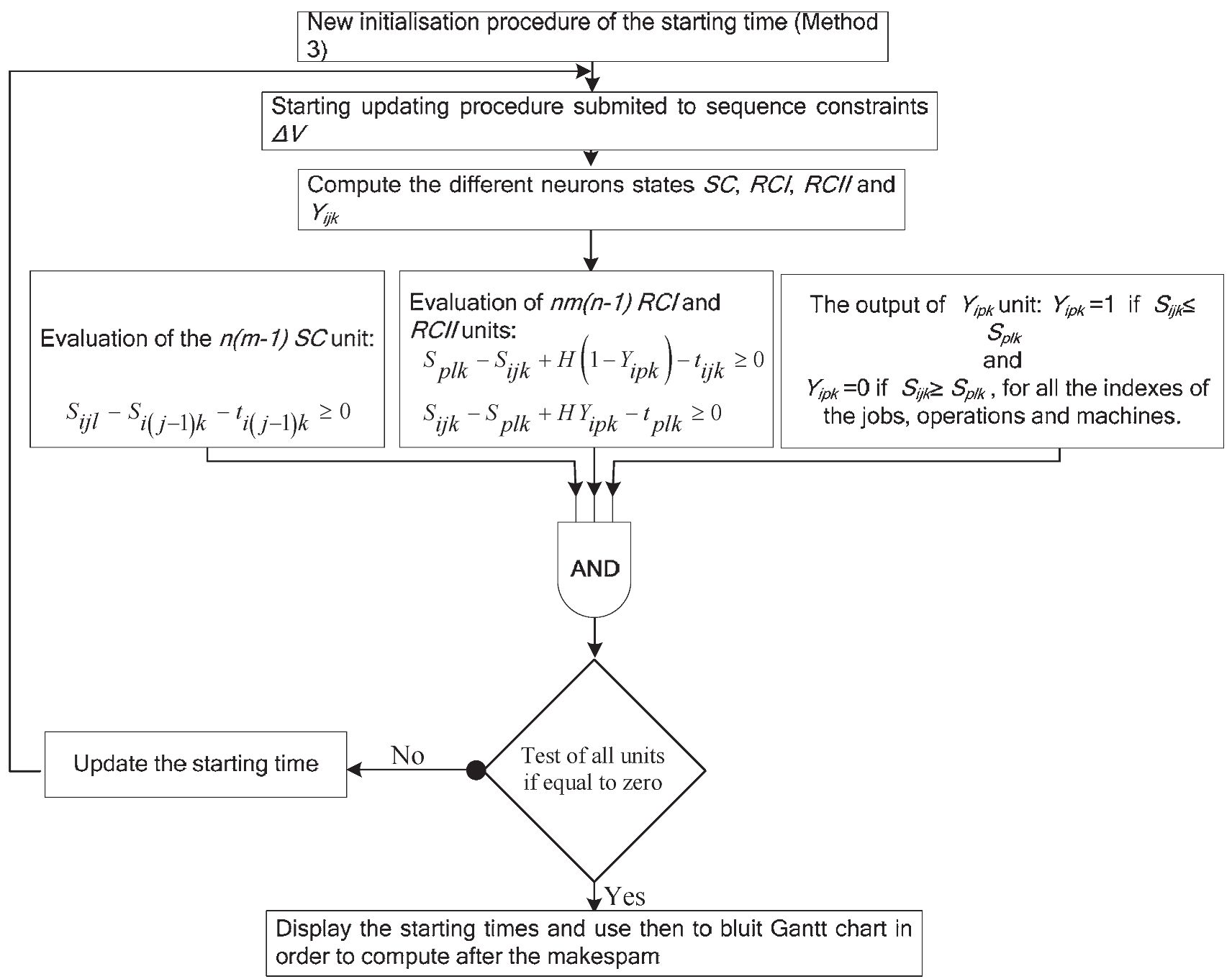 Fig 2: The iterative improvement cycle utilizing the new initialization logic.
Performance Benchmarks
The results are striking when comparing the New Heuristic (Method 3) against Random (Method 1) and Fixed-value (Method 2) starts:
| Metric | Method 1 (Random) | Method 2 (Fixed) | Method 3 (Proposed) |
|---|---|---|---|
| Cycles (NC) | 83 | 325 | 32 |
| Makespan () | 20.4 | 28.1 | 14.3 (Optimal) |
| CPU Time (s) | 4.5 | 10.75 | 1.07 |
Data for 4/3 JSSP benchmark.
In the 10x10 Muth and Thompson benchmark—a problem that famously remained unsolved for 20 years in the late 20th century—the proposed method reached a makespan of 107 in a single trial. While specialized Adaptive Neural Networks (CSANN) achieved slightly lower scores (95), they required significantly more complex implementations and multiple trials.
Critical Analysis & Conclusion
The brilliance of this work lies in its simplicity. By understanding that the Sequence Constraint is a "hard" local constraint and the Resource Constraint is a "soft" global conflict, the authors "partially solve" the problem before the AI even takes its first step.
Limitations: While the method is exceptionally fast for small-to-medium problems, for massive-scale industrial scheduling (e.g., hundreds of machines), the HNN may still face scalability issues compared to modern Genetic Algorithms or GNN-based Reinforcement Learning. However, as a deterministic, low-latency solver for Integrated Manufacturing Systems, this initialization technique is a masterclass in combining domain knowledge with neural optimization.
Final Takeaway
If you are building an optimization model, don't just feed the machine raw data. Pre-align your initial state with the path of least resistance.