
From Control to Cooperation: 15 Years of the Internet Governance Evolution
5 YEARS OF WAYS OF INTERNET GOVERNANCE: TOWARDS A NEW AGENDA FOR ACTION
This paper provides a 15-year historico-critical review of Internet Governance, tracing the evolution from the 1993 US "Agenda for Action" to the 2008 Internet Governance Forum (IGF). It analyzes how policy shifted from state-centric economic strategies to a complex, global "multistakeholder" approach involving civil society and international bodies like WSIS.
TL;DR
This article deconstructs 15 years of Internet policy history, moving from the 1993 US "National Information Infrastructure" (NII) to the 2008 "Internet Governance Forum" (IGF). It argues that while early policies were essentially economic tools for national competitiveness, the arrival of the World Summit on the Information Society (WSIS) catalyzed a shift toward a "multistakeholder" model—though true global democracy in digital spaces remains an unfinished project.
The Economic Engine: Policies of the 1990s
In the early 1990s, the Internet was viewed primarily as a frontier for economic expansion. The US Agenda for Action (NII) and the European Bangemann Report were essentially blueprints for market-driven revolutions.
The author points out a critical flaw in these early frameworks: they were "infrastructure-first." In Europe, for instance, only a tiny fraction of policy focus was dedicated to social and European values, while over 40% was obsessed with regulatory and legal frameworks to ensure market competition. The "Information Society" was being built for consumers, not necessarily for citizens.
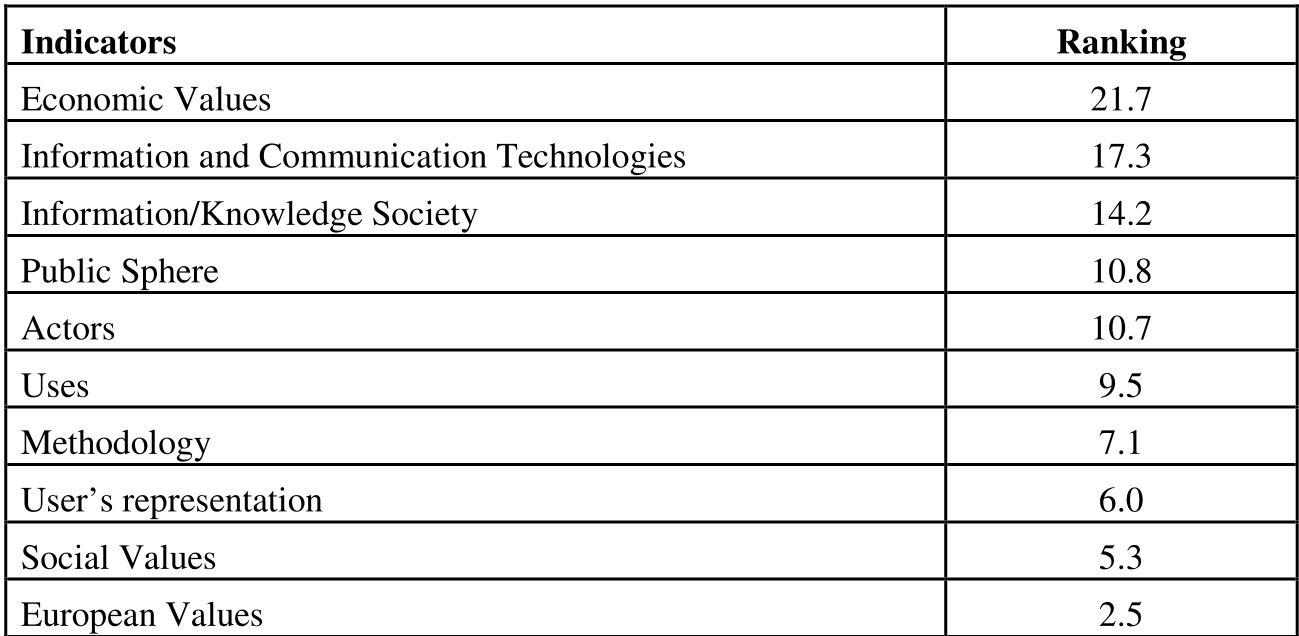 The table above highlights the Stark imbalance: Economic values dominated the agenda, while social and European values ranked at the very bottom.
The WSIS Pivot: Toward Multistakeholderism
By the early 2000s, it became clear that the Internet's impact exceeded the bounds of any single nation's commerce department. The World Summit on the Information Society (WSIS) marked a turning point. Here, "Internet Governance" was redefined as a collaborative effort between:
- Governments: For public policy and sovereignty.
- Private Sector: For technical innovation and investment.
- Civil Society: For community-level engagement and rights protection.
This period saw the birth of the Working Group on Internet Governance (WGIG), which faced a major diplomatic battlefield: the pre-eminent role of the US government and ICANN over critical Internet resources.
The Methodology of Power
The paper analyzes how governance decentralized through the creation of the Internet Governance Forum (IGF). Unlike previous top-down agendas, the IGF was designed as a "multistakeholder policy dialogue" without a final decision-making power, intended to foster "deliberative democracy."
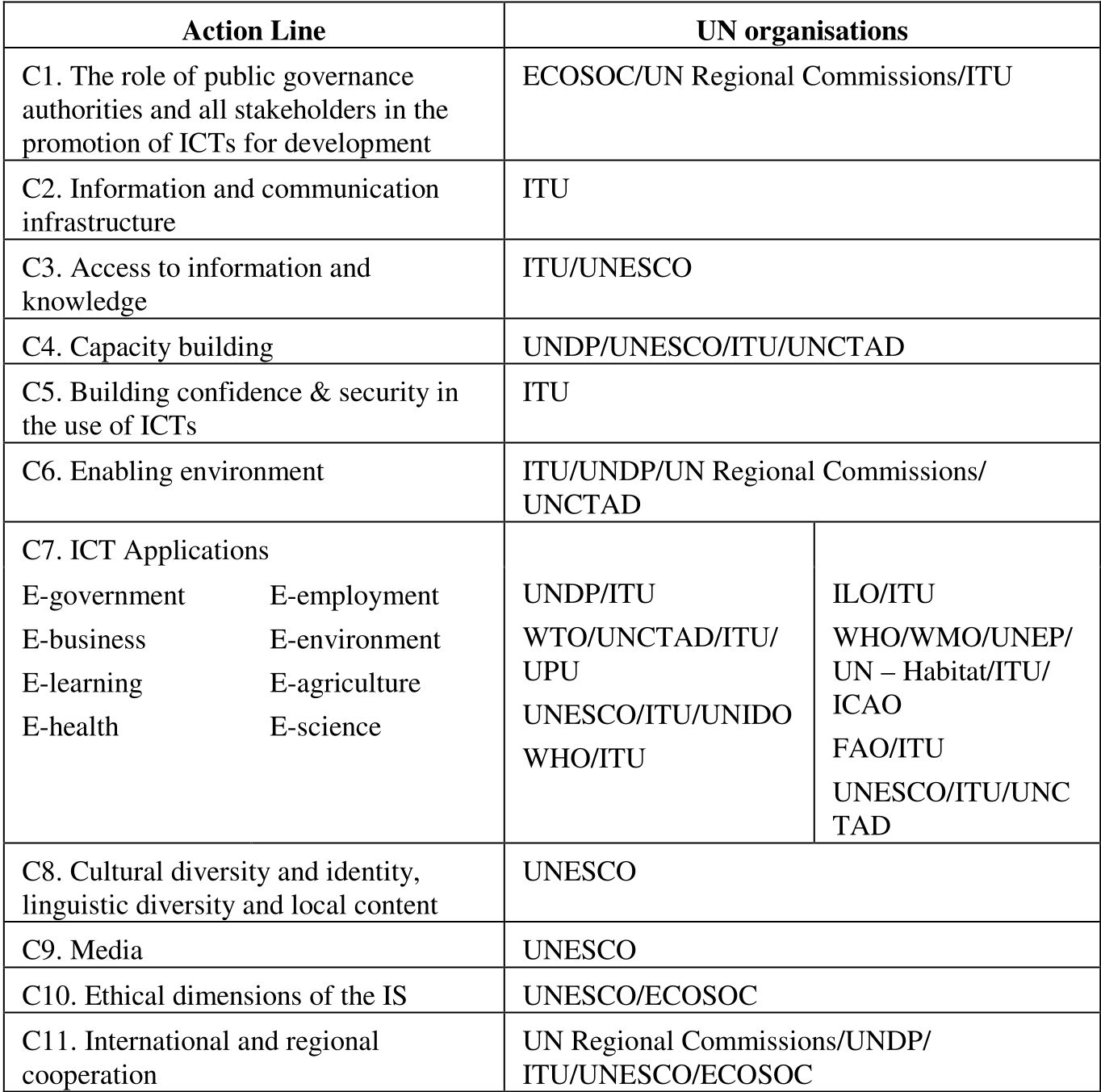 Following the Tunis Agenda, ICT responsibilities were distributed across various UN agencies, marking a shift toward institutionalized global oversight.
Critical Analysis: The Unfinished Agenda
Despite the progress, Jacques Berleur identifies several persistent "pain points" that still resonate today:
- The Digital Divide: While infrastructure costs dropped, "access to knowledge" (education and capacity) remained a barrier.
- The ICANN Controversy: The paper highlights the tension of having a private non-profit under Californian law managing global identifiers—a "Monroe Doctrine" for the digital age.
- The Human Factor: The "multistakeholder" term is often used as an "empty shell" if it doesn't lead to genuine participation from the 85% of the population (at the time) still excluded from networks.
Conclusion and Future Outlook
The journey from 1993 to 2008 shows a transition from national economic policy to global social governance. Berleur concludes that for a "New Agenda for Action" to succeed, we must move beyond liberalized market slogans and toward a "bill of rights" for the Internet. The goal is a participative democracy that treats the Internet not just as a marketplace, but as a fundamental tool for "living together" in a globalized society.
Key Takeaways for Today's Researchers:
- Governance vs. Government: The move toward "Governance" reflects the inability of traditional state structures to manage borderless technology alone.
- The Civil Society Gap: There is an urgent need to clarify and empower the "third pillar" of the multistakeholder model to ensure it isn't just a dialogue between big business and big government.