
Beyond Connectivity: Maximizing User Satisfaction in Vehicular Social Networks
510_Content dissemination in vehicular social networks
This paper provides a comprehensive taxonomy and evaluation of content dissemination in Vehicular Social Networks (VSNs), introducing a new "User Satisfaction" metric. It proposes an interest- and contact-duration-aware framework that outperforms classic epidemic and local-interest-based forwarding strategies.
TL;DR
Vehicular Social Networks (VSNs) are no longer just about moving packets from A to B; they are about moving the right information to the right person. This paper argues that existing dissemination methods fail because they ignore what users actually want. By introducing a "User Satisfaction" metric and a scheduling framework that considers both user interests and the fleeting nature of vehicle contacts, the authors achieve a 20% improvement in data utility over standard epidemic protocols.
The "15-Second Window" Problem
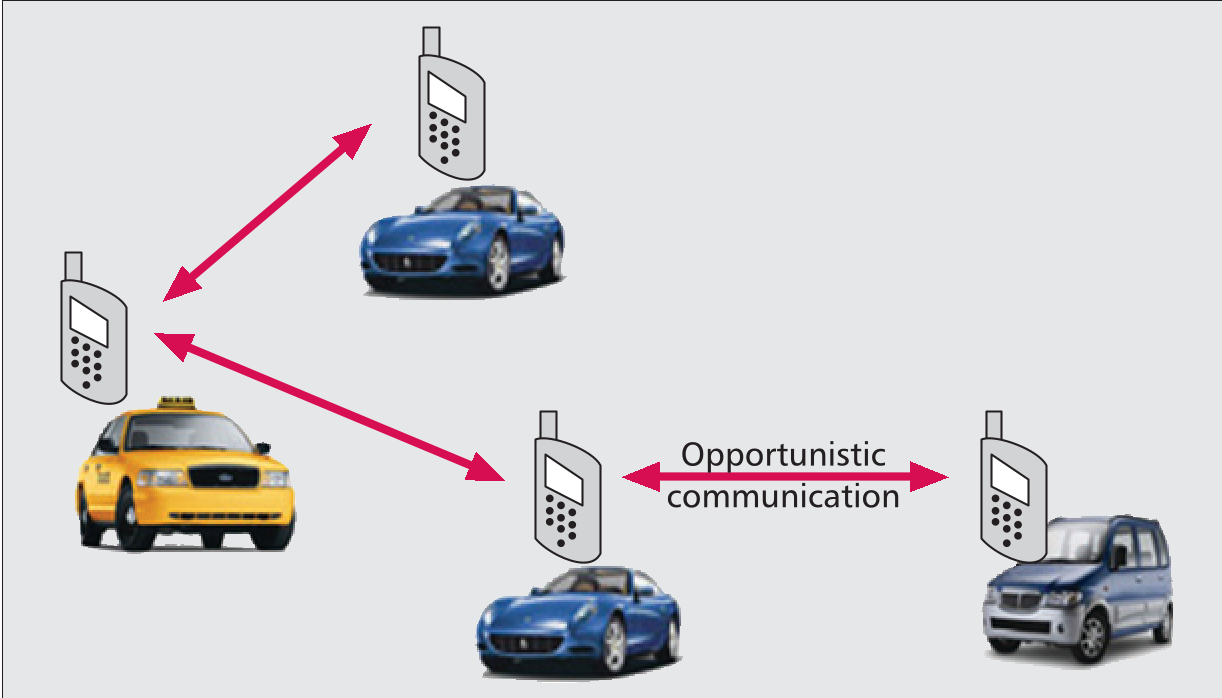
The fundamental challenge in VSNs is the "contact duration gap." While human-carried devices in Mobile Social Networks (MSNs) stay in range for minutes, vehicles traveling at 50 km/h often have a communication window of a mere 15 seconds.
Previous SOTA methods focused on Blind Delivery (broadcasting everything) or Relevance Estimation (based on vehicle direction). The authors point out a critical flaw: if a vehicle can only download 2 out of 10 available files before driving out of range, sending "relevant" but "uninteresting" files (like traffic data for a road the driver has already passed) results in zero user utility.
Methodology: Taxonomy and the Satisfaction Framework
1. The VSN Taxonomy
The paper organizes the VSN landscape into three dimensions:
- Information Processing: How the data is perceived (Black Box vs. User Preferences).
- Content Delivery: The mechanism of relay (Blind vs. Utility-based).
- Performance: The goal of the network (Delay/Ratio vs. the new User Satisfaction).
2. The Interest-Duration Framework
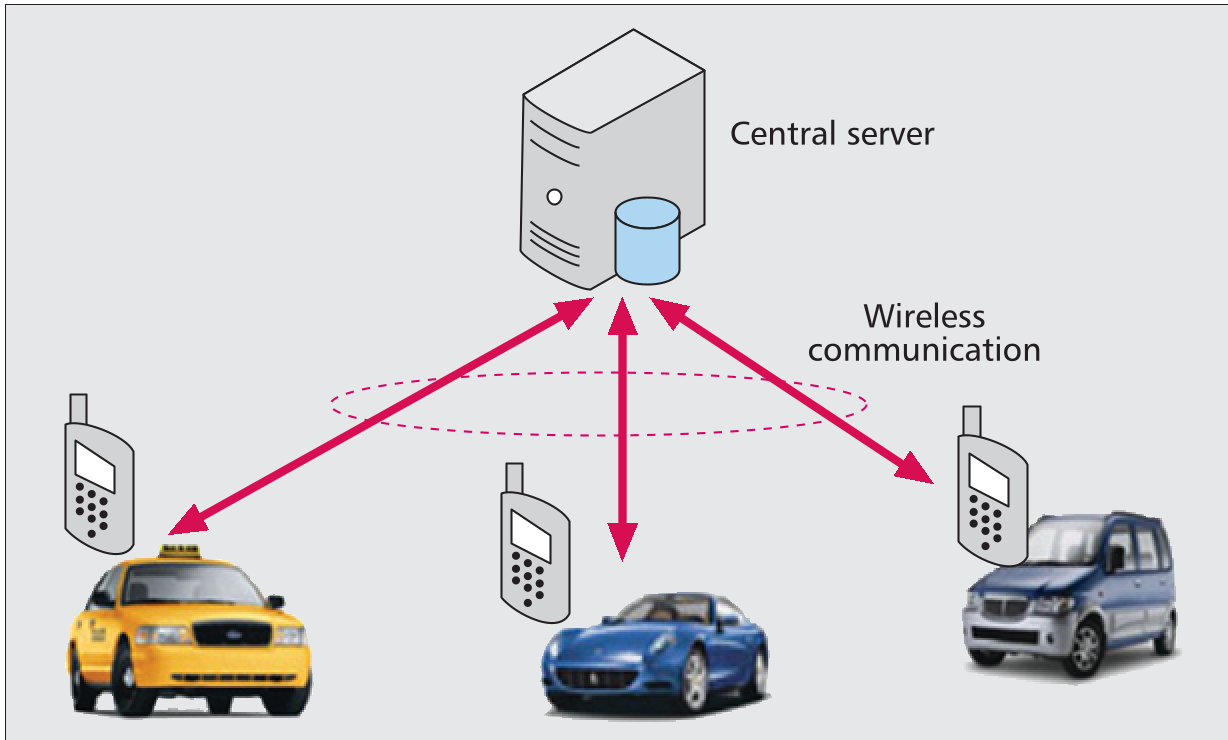
The core contribution is a scheduling algorithm for the "Forwarder" node. Instead of random broadcasting, the forwarder calculates a Data Utility Flow based on:
- Heterogeneous Interests (): Different users have different weights for genres (e.g., Music vs. Gas Prices).
- Contact Duration (协同): Estimating how many objects can be successfully fit into the predicted encounter time.
The logic is simple but powerful: If is in range for and is in range for , the system prioritizes the most "valuable" objects for first, as the window of opportunity is smaller, while can afford to wait.
Experimental Validation
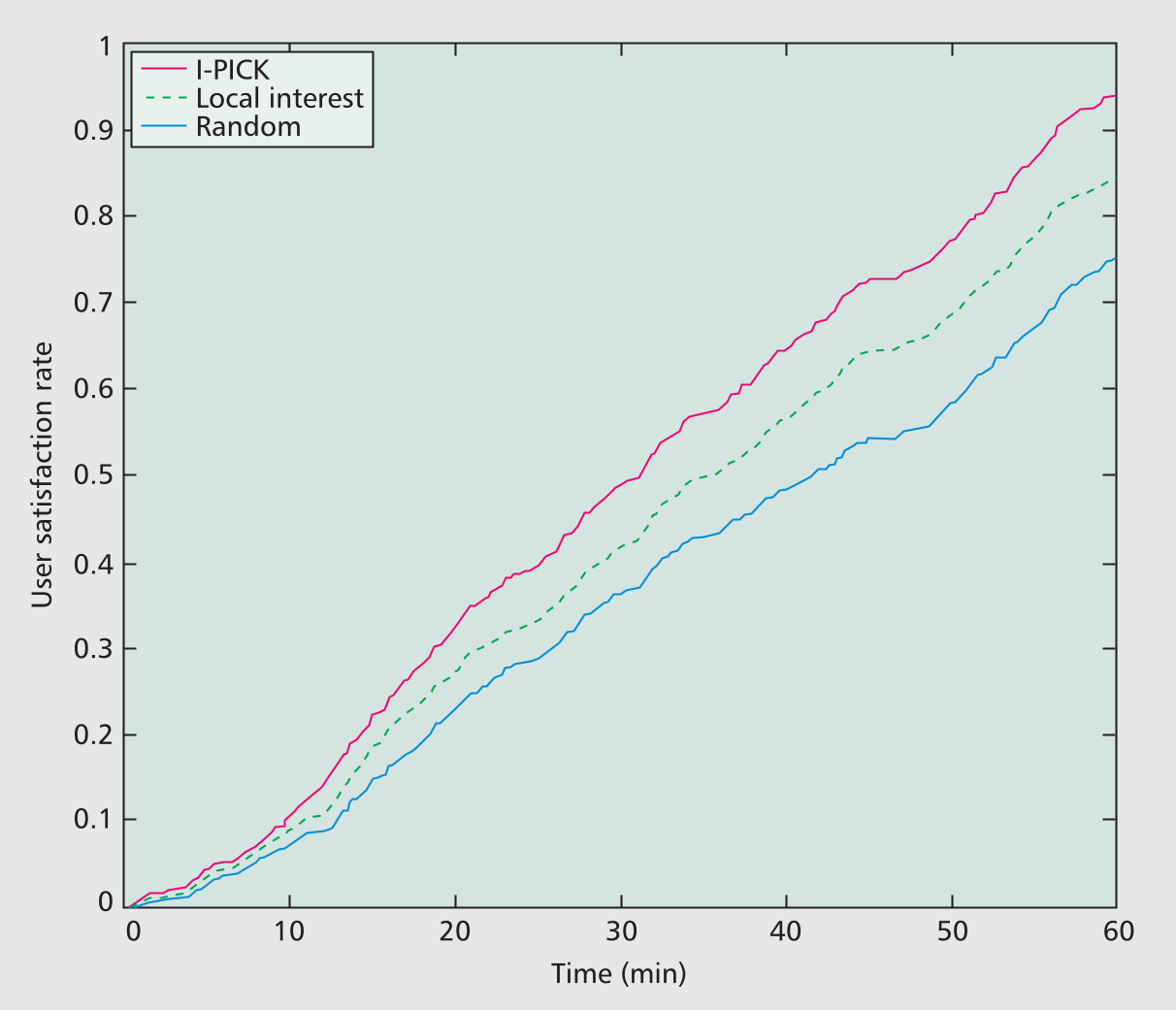
Using a scenario of 100 vehicles and 1,000 unique content objects, the authors compared three strategies:
- Epidemic: Random data scheduling.
- Local Interest: Sorting data based solely on what the neighbor likes.
- Interest + Contact Duration: Optimal scheduling based on "urgency" and "desire."
Key Result:
The Interest + Contact Duration method reached a 0.94 satisfaction rate, whereas the Epidemic approach plateaued at 0.747. This proves that in resource-constrained, high-mobility environments, "Social-Awareness" is the most effective form of congestion control.
Critical Insight & Future Outlook
The paper marks a shift from Physical Topology to Social Topology. However, it leaves some doors open:
- Selfishness: What if users refuse to relay information they aren't interested in? The paper suggests "Social Selfishness" (nodes only help those in their community) as a future study area.
- Hardware Heterogeneity: Most current models assume OBUs (On-Board Units), but the reality is a mix of smartphones and vehicle sensors.
Takeaway: As we move toward autonomous driving, the vehicle becomes a third living space. Success in this domain will be measured not by how fast we can move bits, but by how well those bits serve the human experience.