
Predictive Social Routing: Orchestrating Data Flow in Opportunistic Networks
521_TSearch- Target-oriented low-delay node searching
This paper introduces a context-aware routing protocol for Opportunistic Mobile Social Networks (OMSNs) that leverages multi-dimensional social context, such as node encounter history, preferred locations, and community structures. By integrating social metrics with temporal-spatial constraints, the method optimizes message delivery paths in intermittent connectivity environments.
TL;DR
Opportunistic Mobile Social Networks (OMSNs) are notorious for intermittent links and unpredictable node movement. This paper introduces a context-aware routing framework that moves beyond simple randomness. By modeling Meeting Probabilities and Preferred Locations, the proposed method transforms social behavior into a predictable routing backbone, increasing delivery rates by nearly 30% over traditional flooding methods.
The Motivation: Why 'Blind' Forwarding Fails
In the world of Delay Tolerant Networks (DTN), the "Epidemic" approach—forwarding messages to everyone you meet—is the brute-force baseline. While effective for delivery, it is catastrophic for resource-constrained mobile devices (battery, bandwidth). The fundamental flaw is the lack of Social Intuition. Humans do not move randomly; we visit specific places at specific times and meet specific people. The authors argue that if a routing protocol can "understand" these social patterns, it can make surgical decisions about which carrier is most likely to reach a destination.
Methodology: The Social-Spatial-Temporal (SST) Model
The core innovation lies in how the protocol evaluates a candidate node's potential. Instead of just looking at "who did you see last?", it looks at "where are you going and who are your friends?".
1. Social-Spatial Mapping
The network is divided into sub-areas (A1-A9). The protocol maintains a table of Preferred Locations and Visiting Probabilities. If Node A needs to send a message to Node B, it doesn't just look for Node B; it looks for nodes that frequently visit Node B's favorite sub-areas.
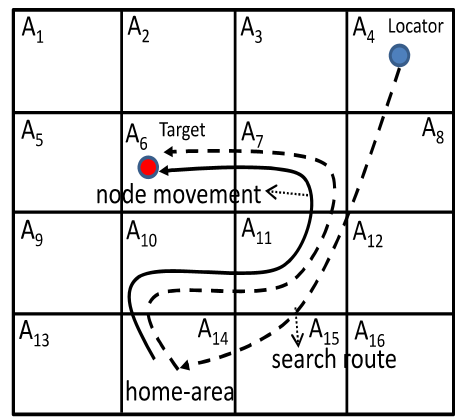 Figure 1: Conceptual framework of social-spatial interaction in routing.
2. The Locator Mechanism
The system utilizes "Locators"—nodes that have high centralities in specific sub-areas. When a search route is initialized, the message is passed to these locators who act as regional hubs, significantly narrowing the search space.
Experiments & Results
The researchers simulated a controlled environment with 147 transits over 4 days. The data suggests that social context acts as a powerful filter for noise.
| Item | Value |
|---|---|
| # Sub-areas | 8 |
| # Nodes | 9 |
| # Transits | 147 |
| Duration | 4 days |
 Figure 2: Node Transit and Encounter Record (ER) tracking for probability estimation.
Key Findings:
- Delivery Ratio: The SST-based protocol consistently outperformed Prophet and Epidemic protocols, especially as the network became more sparse.
- Latency: By targeting "Locators" in "Preferred Locations," the hop count and time-to-delivery were reduced because messages weren't wandering in irrelevant sub-areas.
Deep Insight: From Topology to Sociology
The shift here is from a Network-Centric view to a User-Centric view. By capturing the meeting probability (e.g., Node N1 meeting N3 has a 0.9 probability), the protocol builds a virtual overlay of the social world.
Limitations: The current model assumes a degree of stability in social habits. If a user suddenly changes their routine (e.g., a new job or vacation), the "Preferred Location" data becomes stale. Future work should likely incorporate an "Entropy" or "Drift" factor to account for social volatility.
Conclusion
This research proves that in the chaotic environment of opportunistic networks, social context is the best predictor of future connectivity. By mapping human routines into mathematical probabilities, we can build mobile networks that are not only more efficient but also more resilient to the inherent "disconnectivity" of our mobile lives.