
Crowdsourcing in Russia: Bridging the C2G Gap via Collective Intelligence
5487_Crowdsourcing and the effectiveness of C2G interaction in Russia.
This paper explores the conceptual framework and practical development of crowdsourcing in Russia, specifically focusing on Citizen-to-Government (C2G) interactions. It introduces process models for managing social crowdsourcing projects and evaluates the effectiveness of existing platforms like "Active Citizen" and "Planeta.ru" within the Russian e-government ecosystem.
TL;DR
This research dissects the Russian crowdsourcing landscape, revealing a dual-track system: government-led "idea generation" (Crowdvoting) and citizen-led "resource raising" (Crowdfunding). While the technical infrastructure is robust, the study identifies a lack of awareness and a need for a unified system to transform individual initiatives into state-supported social improvements.
Background: From Information Society to Smart Society
In the transition toward a Smart Society, national wealth is no longer measured solely by capital, but by Collective Network Competence. The authors position crowdsourcing not just as a business tool (B2C), but as a fundamental mechanism for C2G (Citizen-to-Government) interaction. In Russia, this manifests in platforms like "Active Citizen," though the study highlights a significant disconnect between technical availability and actual citizen adoption.
Problem & Motivation: The Fragmentation of Participation
The authors identify a core disparity: while Moscow's e-government services rival or exceed those of New York in technical capability, the human element remains underutilized. Most citizens still rely on private sponsor meetings (25%) or grants (14.5%) rather than the specialized crowdsourcing platforms designed for them. This fragmentation leads to a high failure rate for social projects due to a lack of visibility and trust.
Methodology: The Process Approach to "The Crowd"
The core contribution of this paper is the application of the IDEF0 function modeling methodology to distinguish how different crowdsourcing projects should be managed.
1. Society-Initiated Projects (Mono-projects)
These focus on resource attraction (capital, labor, ideas). The risk here is a binary "success or failure" based on funding thresholds.
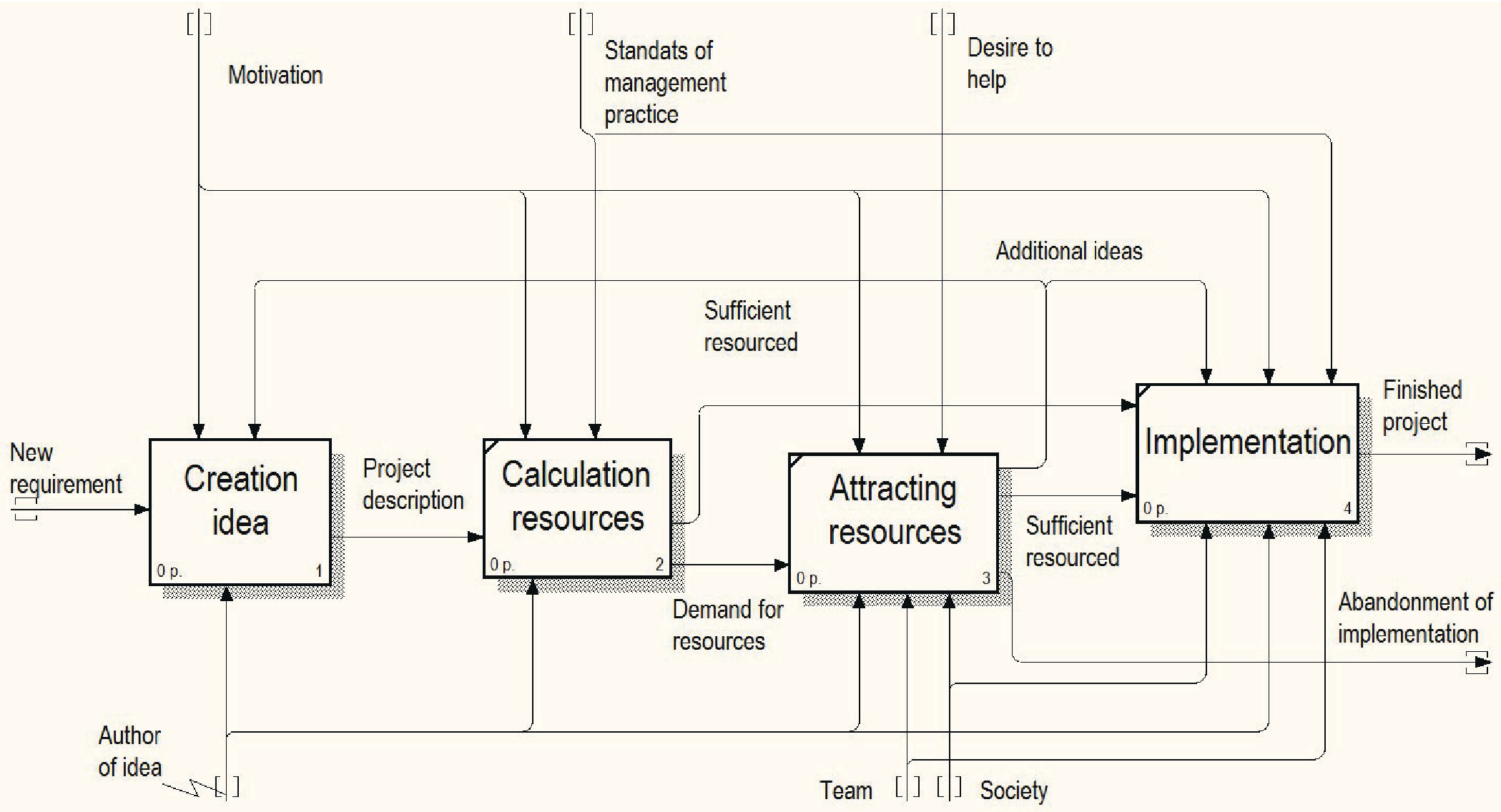
2. Government-Initiated Projects (Mega-projects)
These prioritize intellectual resources. Success depends on expert filtering and the "literacy" of the crowd's contributions.
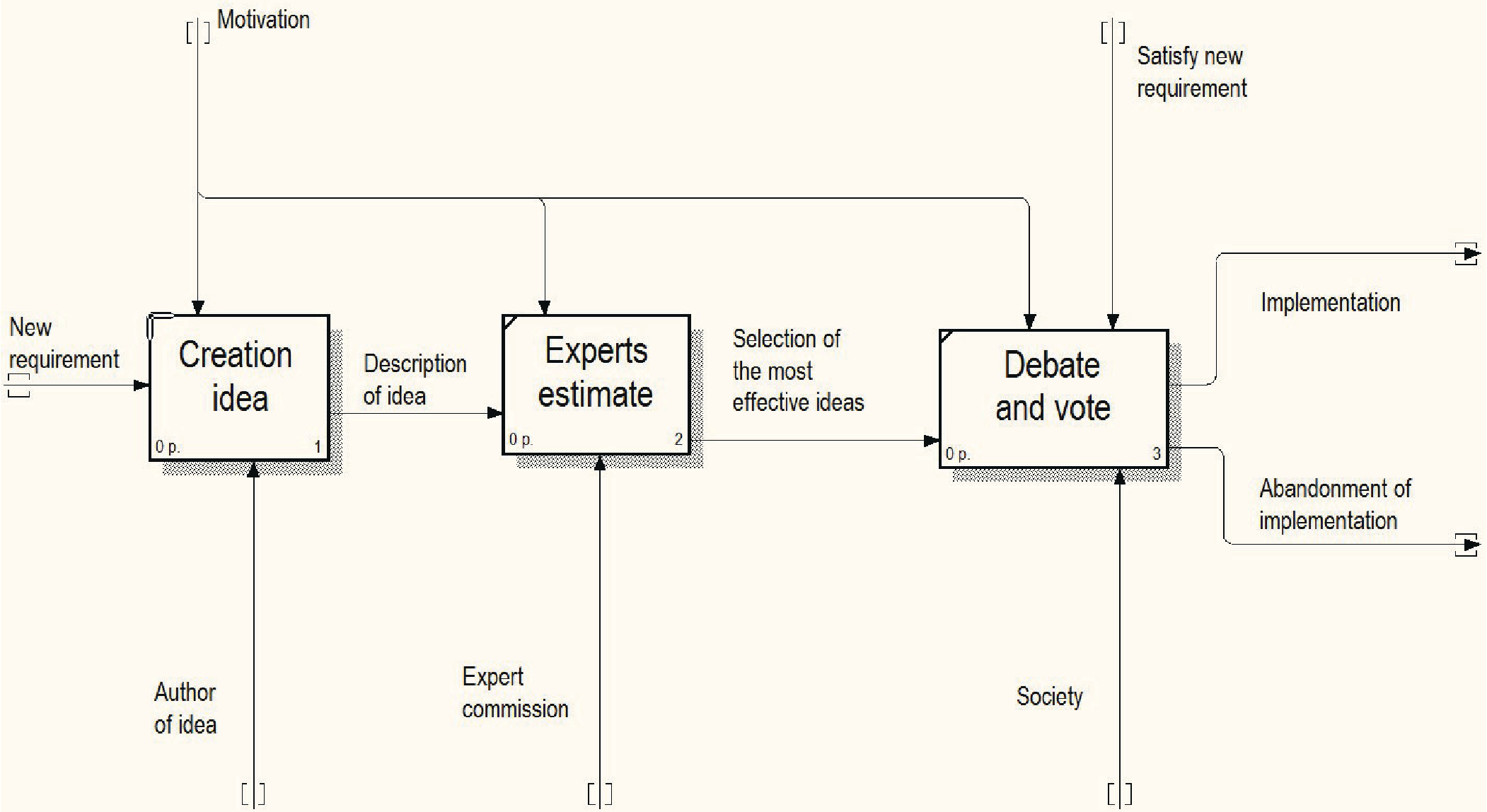
Experiments & Results: What Makes a Project Succeed?
The study analyzed the dynamics of successful vs. failed projects on the Planeta.ru platform. A critical insight is the "Success Trajectory":
- The 50% Rule: If a project reaches 48.9% of its goal by the first quarter of its duration, its success probability surges.
- Content is King: Unlike commercial projects, social project success correlates strongly with the quality of video presentations and external web presence.
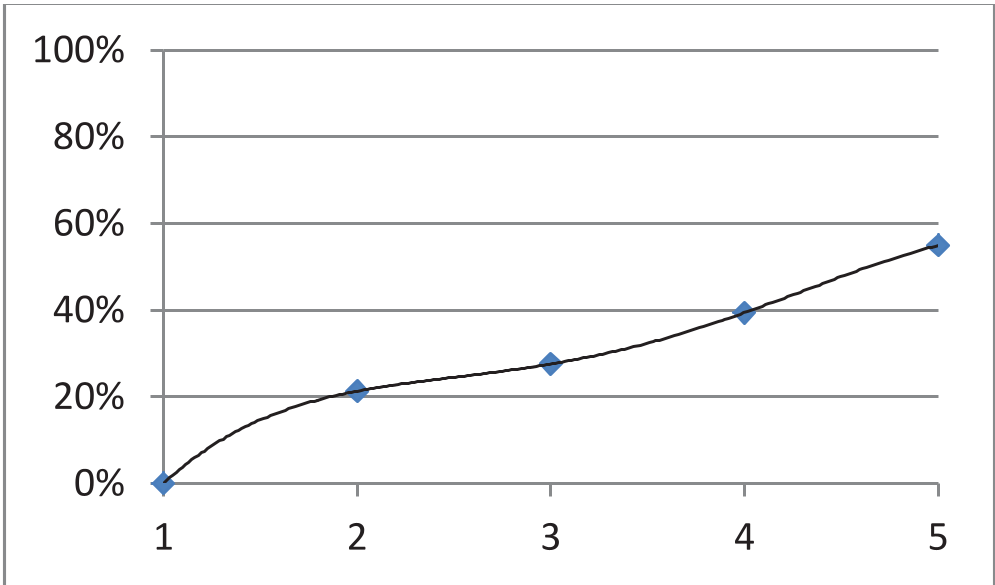 Note: The chart illustrates that failed projects typically stagnate long before the deadline, highlighting the importance of early viral momentum.
Critical Analysis & Conclusion
The Future of C2G: The Unified Portal
The authors argue that the current state of Russian crowdsourcing is one of "silos." To reach the "Dream Society," they propose a Unified Crowdsourcing System that would:
- Unify governmental, administrative, and private platforms.
- Incorporate AI to analyze citizen requests and assign them to relevant expert forums.
- Establish a direct charity payment system without mediators.
Final Takeaway
Crowdsourcing in Russia is at a crossroads. While the platforms are technologically advanced, the next leap requires shifting from passive voting to active resource movement. The integration of expert validation with mass citizen participation is the only way to ensure 90% of "crowd ideas" (often dismissed as "crud") are filtered into actionable social policies.