
Beyond the Verge of Collapse: Reengineering Healthcare with IoT and AI in the Post-Pandemic Era
5546_Challenges and Limitations of Internet of Things Enabled Healthcare in COVID-19.
This article provides a comprehensive critical review of the "IoT-Enabled Healthcare" framework in the context of the COVID-19 pandemic. It proposes a multi-layered technological ecosystem integrating IoT, AI, and Edge Computing to prevent healthcare system collapse and achieve SOTA efficiency in remote patient monitoring and resource allocation.
TL;DR
The COVID-19 pandemic acted as a "stress test" that traditional healthcare systems failed. This paper argues that the solution isn't just more doctors, but a radical transformation into an IoT-driven digital health ecosystem. By leveraging wearables, Edge computing, and AI, we can move from reactive treatment to proactive, remote, and autonomous patient management.
Background: The Infrastructure Crisis
When a novel pathogen like SARS-CoV-2 emerges, the limitation isn't just medical knowledge—it's logistics and data. The authors point out that conventional systems lack the "Inductive Bias" required for rapid scaling. Manually recording data for thousands of patients while medical staff are themselves at risk of infection creates a bottleneck that leads to total system collapse.
The Core Methodology: A Multi-Layered IoT Framework
The researchers propose a modular architecture designed to handle "Immense Pressure."
1. Sensing and Wearables
The first line of defense is the Internet of Health Things (IoHT). Using sensors for blood glucose, heart rate, and oxygen levels, clinicians can monitor "Patient Zero" and subsequent cases without physical exposure.
2. Intelligent Resource Allocation
One of the paper's unique contributions is the application of a Heuristic Bargaining Algorithm. In a crisis, computing tasks (like analyzing a patient's risk level) can become a bottleneck. This algorithm optimizes how these tasks are migrated between devices and the cloud to maximize system throughput and "enthusiasm" of participating nodes.
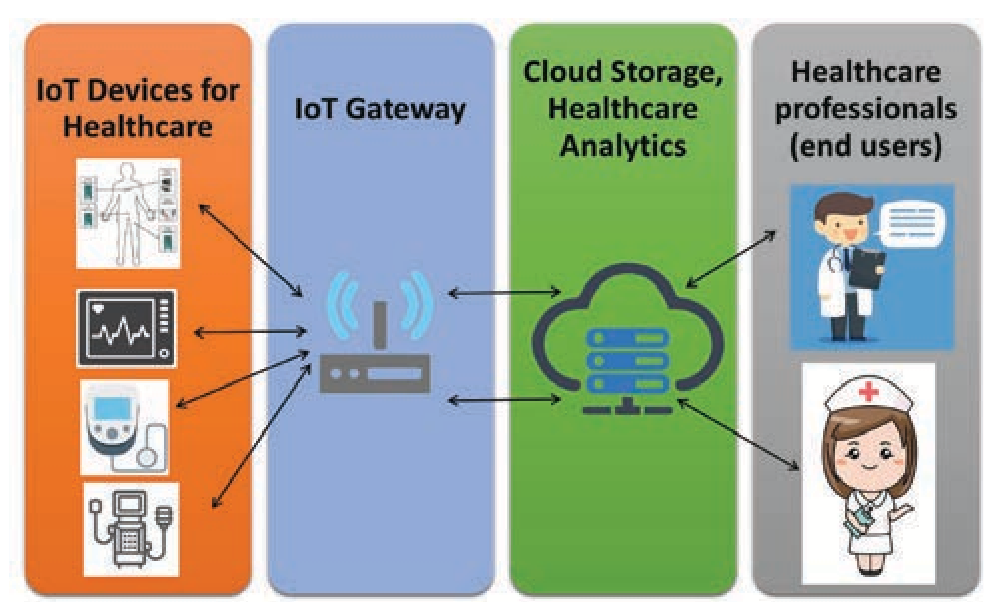 Figure 1: High-level block diagram of a smart health monitoring system where data flows from wearables through gateways to cloud-based AI analytics.
Critical Insight: Resolving the "Communication Gap"
The paper highlights a grim reality: during the pandemic, many hospitals were overwhelmed while nearby facilities remained underutilized. The proposed solution is a Connected Emergency Service utilizing ICT devices.
- In-Patient Management: Tracking PPE availability and staff-to-patient ratios in real-time.
- Smart Supply Chain: Using RFID to link hospital inventory directly to "Smart Factories" for drugs and ventilators.
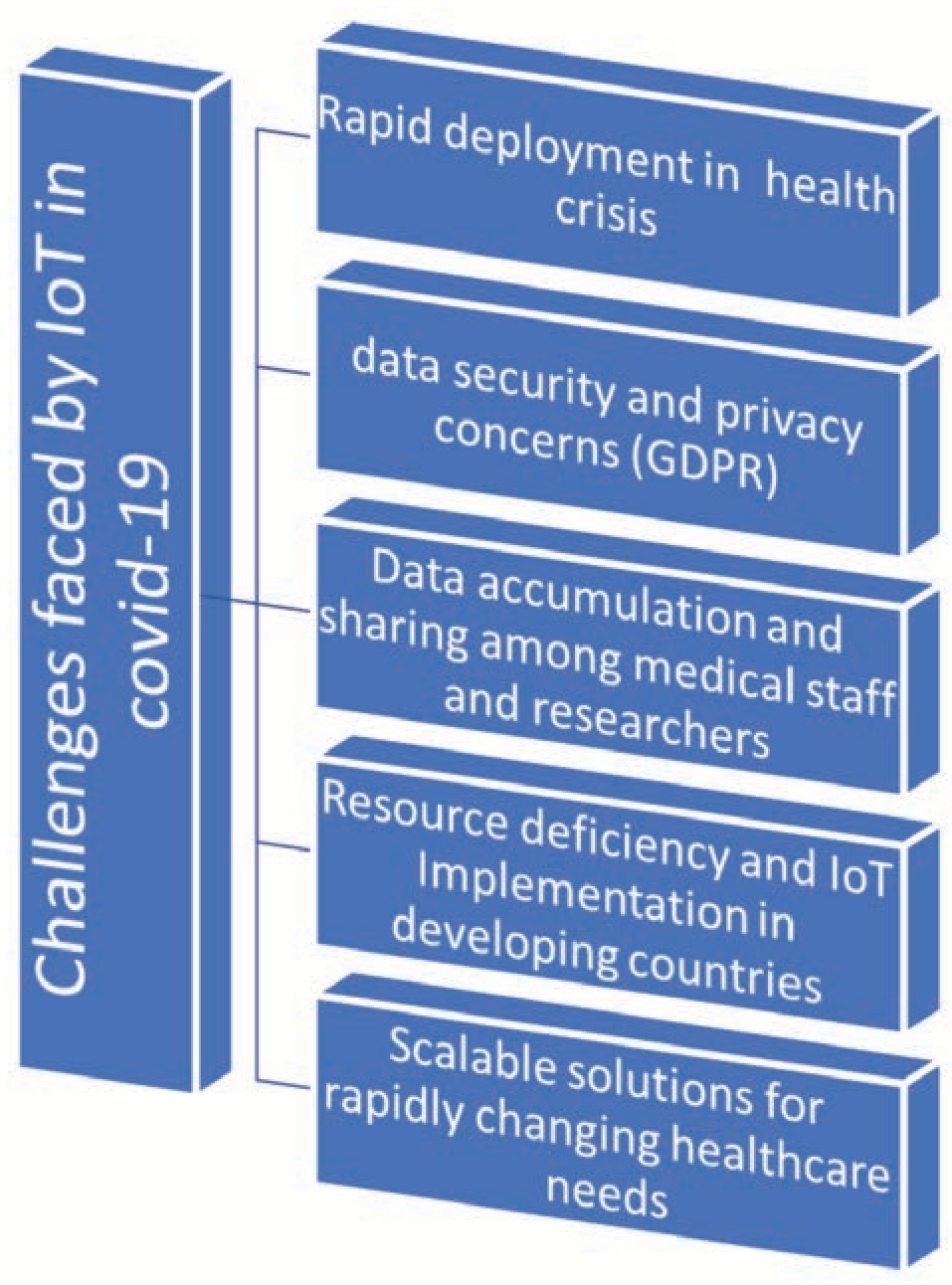 Figure 2: Taxonomy of challenges including Energy consumption, Security/Privacy, and Data Format Interoperability.
The Technical Hurdles (Ablation of Challenges)
While the potential is vast, the authors do not ignore the "bottlenecks":
- Energy & Power Usage: Maintaining thousands of sensors without battery failure is a massive research gap.
- Data Heterogeneity: Doctors shouldn't spend time "fixing data formats"; IoT systems must offer "Cognitive Decision Support" to turn raw numbers into actionable insights.
- Security/Privacy: In mass health crises, security is often sidelined. The authors advocate for Blockchain and Distributed Control to ensure that sensitive health data doesn't become a target for hackers.
Critical Analysis & Conclusion
Takeaway
The shift from "Healthcare as a Location" to "Healthcare as a Service (HaaS)" is inevitable. The integration of Edge Processing is the most critical takeaway; waiting for the Cloud to process a critical patient's heart rate change is not an option when seconds matter.
Limitations
The paper is heavy on framework and light on large-scale deployment data, reflecting the urgent, theoretical nature of research conducted during the height of the crisis. Future work must address the Legal and Ethical hurdles of mandatory contact tracing apps, which remain a point of global contention.
Future Outlook
We are moving toward an Extended AI-Driven Framework. The next generation of medical IoT will not just record data; it will perform "Distributed Multi-tasking," managing everything from Alzheimer’s aftercare to pandemic triage on a single, resilient network.