
Vikyalo: Turning Social Capital into Mobile Currency in Developing Nations
7008_WishVast Building trust and social capital using cellphones.
This paper introduces Vikyalo, an innovative SMS-based social networking platform designed to facilitate trust and information exchange among small-scale farmers and entrepreneurs in developing nations (specifically Kenya and Tanzania). By leveraging ubiquitous mobile technology, it creates a digital "reputation system" to bridge socioeconomic gaps.
TL;DR
Vikyalo is an SMS-based social networking platform that bridges the "trust gap" in developing economies. By converting peer-to-peer interactions into a quantifiable reputation score via basic mobile phones, it enables rural farmers and entrepreneurs to trade, collaborate, and access markets that were previously inaccessible due to a lack of formal credit or verified identities.
Background Positioning: This work represents a "Frugal Innovation" approach within the ICT4D (Information and Communication Technologies for Development) field, focusing on high-impact social utility over high-tech hardware.
Problem & Motivation: The "Trust Tax" in Analog Markets
In regions like Northern Tanzania and Western Kenya, small-scale entrepreneurs face a paradoxical challenge: they have the products (like brown sugar or produce) and there is market demand (in cities like Nairobi), but the infrastructure of Trust is broken.
- The High Cost of Uncertainty: Farmers often spend significant portions of their income on "checking-in" phone calls just to verify if a buyer is reliable.
- Invisible Social Capital: Currently, reputation is trapped within a person's immediate physical circle. A farmer might be the most honest person in their village, but to a buyer 500km away, they are a high-risk stranger.
- Technological Mismatch: While Western solutions rely on high-bandwidth apps, the target demographic primarily uses basic "dumbphones" and SMS.
Methodology: High-Logic, Low-Tech Architecture
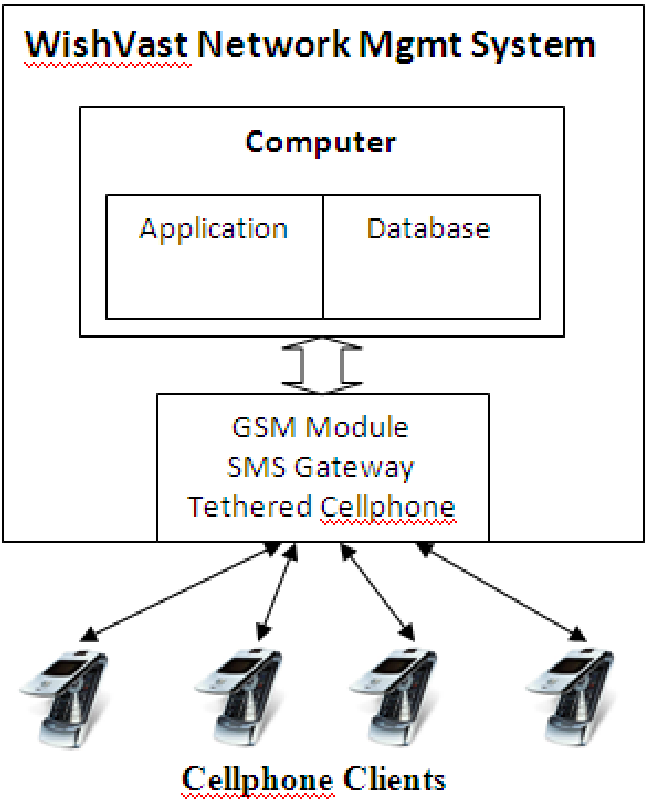
The core insight of Vikyalo is that Social Capital is a functional form of Economic Capital. The system architecture is designed to be "Server-Side" heavy to keep the user interface as simple as possible.
1. The Reputation Loop
The heart of the system is the Vikyalo Point. These points are not just "likes"; they are a measure of peer-verified reliability (analogous to an eBay feedback score but delivered via SMS).
2. User Interaction Flow
Any user can join a group (e.g., "Western Kenya Sugar Growers") by texting a unique Group ID. They can then:
- Broadcast Needs: "Need 1000kg brown sugar at Nairobi price."
- Verify Peers: Query a user's reputation score before committing to a deal.
- Award Trust: Send points to a partner after a successful transaction.

Experiments & Results: Real-World Scenarios
The authors validated the model through ethnographic studies and a pilot program. Specifically, let’s look at the "Brown Sugar Scenario" involving a farmer named Paul and a Nairobi entrepreneur, William.
- Efficiency Gains: Traditionally, William would spend 500-700 KSh (Kenyan Shillings) on phone calls to coordinate a single truckload. With Vikyalo, he sends one broadcast SMS and receives verified responses from farmers with high trust ratings.
- Inclusion: The system allows women entrepreneurs—who were previously marginalized despite having high repayment rates—to build a "Digital Resume" of their reliability, which can later be used to secure micro-financing.
Critical Analysis & Conclusion
Takeaway
Vikyalo proves that Technology doesn't need to be complex to be transformative. By focusing on the Social Graph rather than the Interface, the authors created a tool that fits the existing cultural fabric of trust and barter in East Africa.
Limitations
- The Sybil Attack Risk: In a purely SMS-based system, what stops a user from creating multiple identities to "boost" their own points? The authors suggest "moderated groups" and "cost-per-SMS" as barriers, but a more robust identity verification system (perhaps linked to SIM registration) would be needed for larger scales.
- Language Barriers: While currently in English/Swahili, local dialects might require more sophisticated NLP processing on the server side.
Future Outlook
The next step for Vikyalo is the integration of Community-Based Currencies. Imagine a system where "Reputation Points" can be traded for actual resources (like tractor time or fertilizer), effectively creating a closed-loop economy that isn't dependent on volatile national currencies.