
The Emotional Pulse of a Nation: A 6-Month Study of India's Demonetization
749_A Longitudinal Study of Public Emotions during Demonetization in India.
This paper presents a longitudinal sentiment analysis of public response to India's 2016 demonetization using a corpus of tweets collected over six months. Utilizing the NRC emotion lexicon and R-based Syuzhet package, the authors track eight distinct emotions and overall polarities to quantify the shifting public perception of this massive economic reform.
TL;DR
On November 8, 2016, India's sudden invalidation of 86% of its currency sparked a global economic debate and a social media firestorm. This paper moves beyond simple "positive vs. negative" classification to track the longitudinal evolution of eight specific human emotions—from the initial shock and anger to a growing sense of trust and digital adoption. By analyzing Twitter data from November 2016 to April 2017, the researchers provide a data-driven look at how a nation's psyche adapts to radical financial disruption.
Background & Motivation
Demonetization was more than an economic policy; it was a psychological event. While economists debated liquidity and GDP impact, the public lived through the "commotion"—long bank queues, cash shortages, and a sudden scramble for digital wallets. Prior research largely provided "snapshots" of sentiment, failing to capture the dynamic nature of public opinion as the government tweaked policies (like increasing ATM limits) and released the Union Budget. The authors sought to map this emotional trajectory to see if the "initial pain" eventually led to "perceived gain."
Methodology: Mapping Data to Human Emotion
To capture this evolution, the researchers used a multi-step pipeline:
- Data Acquisition: Using "Octoparse," they scraped tweets under several hashtags, including #DeMonetisation and #BlackMoneyCleanup.
- Lexical Mapping: They employed the NRC Lexicon, a gold-standard in sentiment analysis that associates ~14,000 words with binary scores across eight emotions (Anger, Anticipation, Disgust, Fear, Joy, Sadness, Surprise, and Trust).
- Trajectory Smoothing: Using Discrete Cosine Transformation (DCT), they smoothed out the daily "noise" of Twitter to find the underlying trend lines of public sentiment over the six-month window.
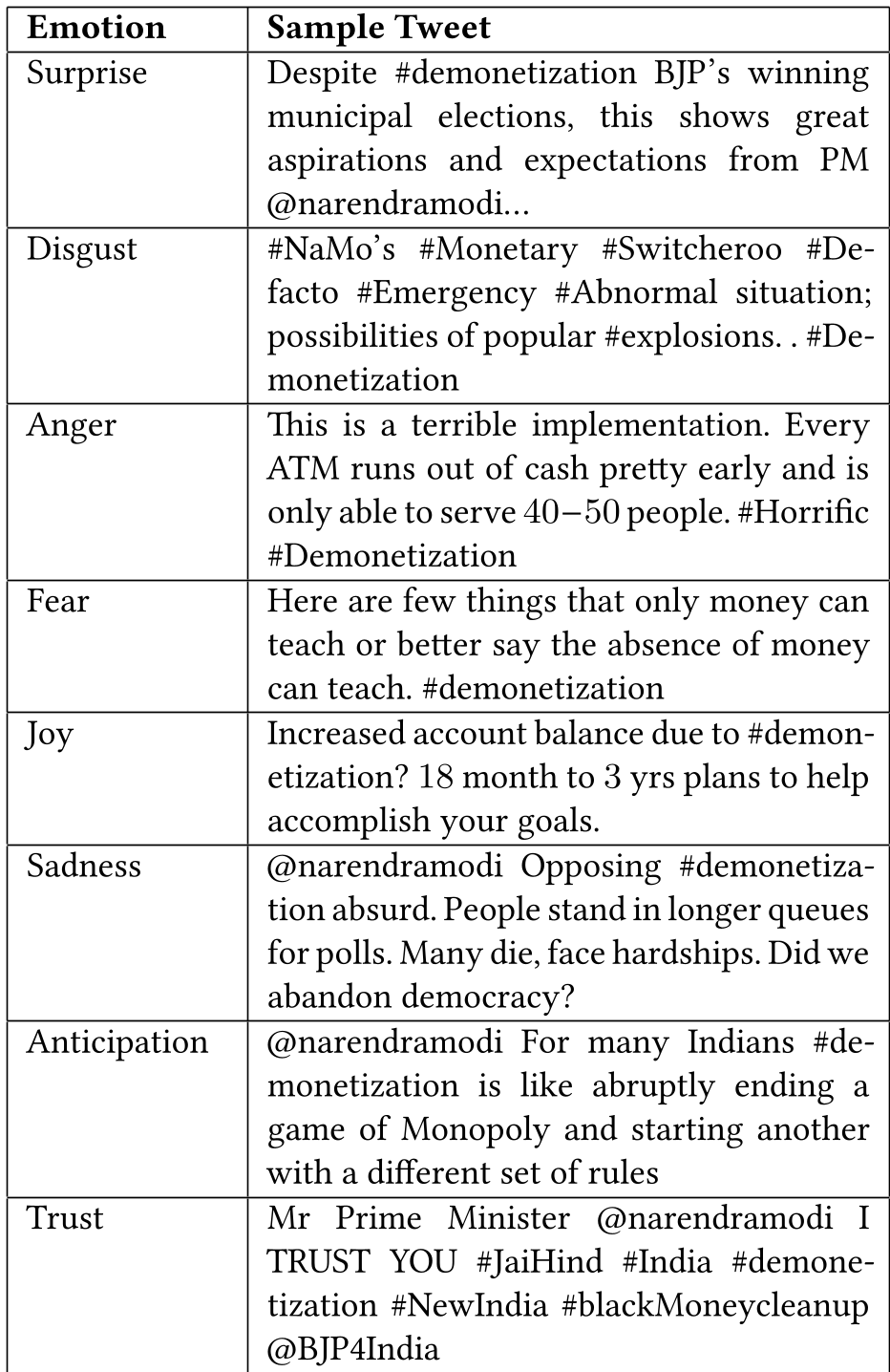 Table 1: How raw tweets were mapped to specific emotional categories.
Key Insights: From Hardship to Hope
The findings reveal a fascinating emotional arc:
- The Trust Factor: Surprisingly, 'Trust' remained the dominant emotion in the early months. Despite the queues, many citizens viewed the move as a "one-stroke solution" against corruption.
- The Budget Effect: A significant spike in 'Anticipation' occurred in February 2017, coinciding with the Union Budget presentation, where the government introduced housing and farmer-focused schemes.
- Vocabulary Shift: Early word clouds were dominated by survivalist terms like "cash," "atm," and "blackmoney." By late spring, the conversation shifted toward "gdp," "manufacturing," and "tax policy," signaling a transition from personal crisis to macroeconomic evaluation.
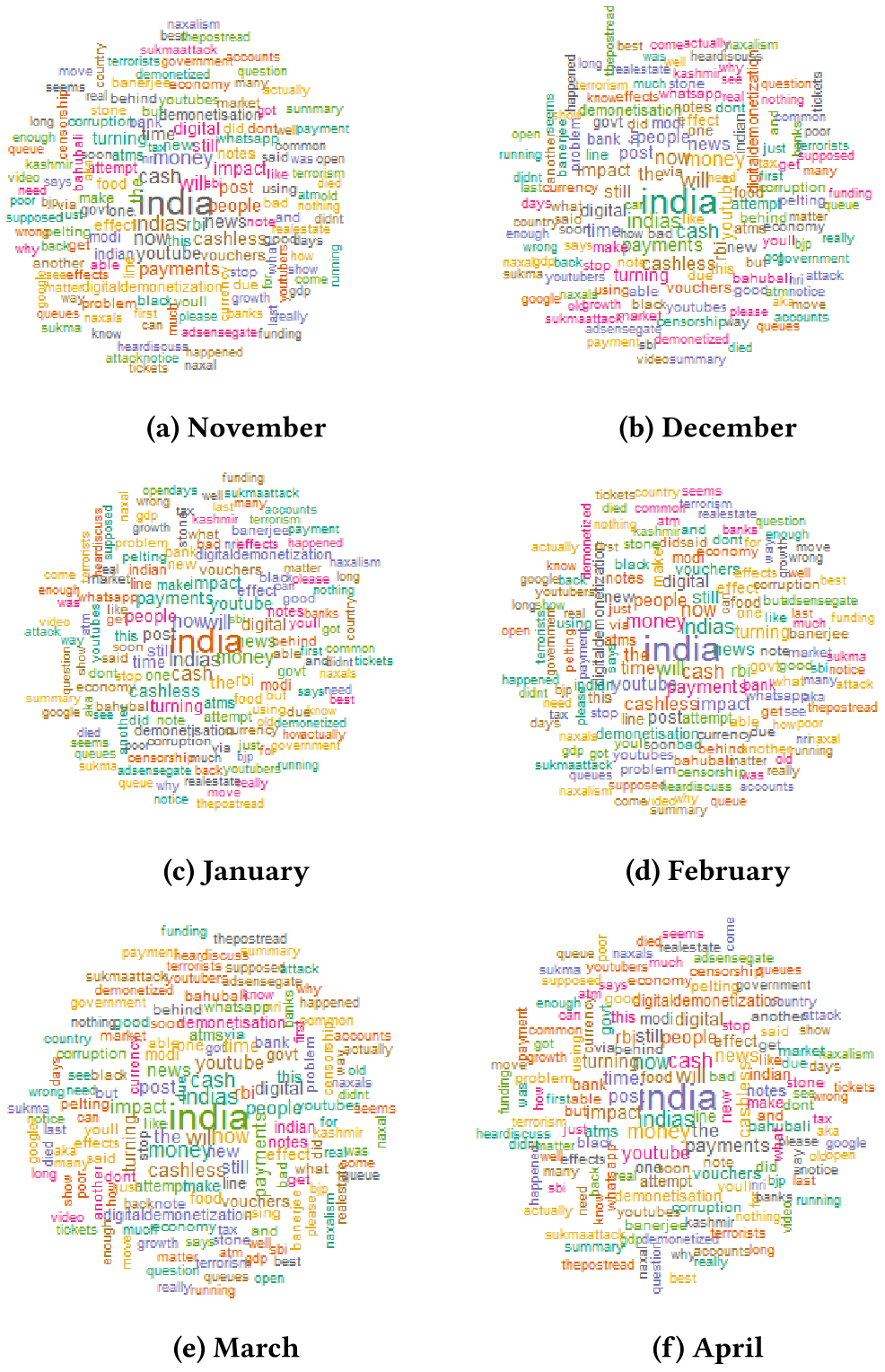 Figure 1: While word clouds (above) show the shift in topics, the underlying analysis confirmed that positive polarity eventually outweighed negativity.
Results & Performance
The longitudinal data showed that:
- Positivity Increased: Aggregate positive sentiment grew steadily as government relief measures (like gas and air ticket purchase allowances using old notes) took effect.
- Disgust and Fear Peaks: 'Disgust' peaked in February (likely due to reports of unemployment in the industrial sector), while 'Fear' rose slightly in April, possibly reflecting tax-related anxieties.
- Real-world Correlation: The rise in 'Trust' and 'Joy' by March correlated with the ruling party's (BJP) significant victory in the Uttar Pradesh legislative elections, suggesting that Twitter sentiment was a viable proxy for voter behavior.
Critical Analysis & Conclusion
This study demonstrates that sentiment analysis is most powerful when it is longitudinal. A single-day snapshot in November 2016 would have shown only chaos; however, the six-month view reveals a narrative of resilience and gradual acceptance.
Limitations: The study relies on Twitter, which represents a specific, more digitally-literate demographic of India and may not fully capture the sentiments of the rural population who faced the most severe hardships. Furthermore, sarcasm detection—a known hurdle in Twitter sentiment analysis—remains a challenge.
Future Outlook: For policymakers and researchers, this work proves that "hard" financial reforms must be paired with "soft" emotional management. The steady stream of government announcements and the eventual Union Budget announcements were critical in pivoting the nation from 'Anger' and 'Disgust' back toward 'Trust'.