
PSED: Revolutionizing Autism Screening with a Neuromorphic Emotion Processor
An 8 Channel Patient Specific Neuromorphic Processor for the Early Screening of Autistic Children through Emotion Detection
The paper presents a patient-specific neuromorphic processor for early Autism Spectrum Disorder (ASD) screening via EEG-based emotion detection. It utilizes a hardware-efficient 8-channel architecture and a linear SVM classifier, achieving 63% and 60% accuracy for valence and arousal on the DEAP dataset.
TL;DR
Early detection is the "holy grail" of Autism Spectrum Disorder (ASD) treatment. This paper introduces a specialized 8-channel neuromorphic processor designed for real-time emotion detection. By optimizing feature extraction and replacing heavy mathematical operations with Look-Up Tables (LUTs), the researchers achieved an energy-efficient (10μJ/classification) SoC solution that paves the way for portable, stigma-free ASD screening tools.
Context & Positioning
Existing ASD diagnostics are largely behavioral—relying on observation by specialists. This is not only subjective but often leads to late-stage diagnosis. The authors position this work as the first dedicated digital SoC implementation for on-FPGA and CMOS-synthesized emotion detection. Within the academic landscape, it moves from "high-accuracy, high-resource" cloud-based models toward "efficient, patient-specific" edge computing.
The "Why": Solving the Hardware Bottleneck
EEG signal processing is computationally expensive. Traditional models use 32+ channels, which leads to massive data throughput and power drain. Furthermore, emotion detection often requires calculating ratios (SIHPR), which involves integer division—a notorious "area killer" in silicon design.
The authors' insight is twofold:
- Spatial Sparsity: By using only 8 channels located on the forehead and temporal lobes, they minimize user discomfort and hardware complexity.
- Algorithmic Approximation: Since the goal is classification (not scientific calculation), a high-precision divider is unnecessary. A "good enough" approximation can save massive silicon area.
Methodology: The Core Architecture
The Patient Specific Emotion Detection (PSED) processor follows a streamlined pipeline: Preprocessing Feature Extraction Linear SVM Classification.
The LUT Divider Innovation
To calculate the Scaled Inter-Hemispheric Power Asymmetry Ratio (SIHPR), the authors designed a custom LUT-based divider. Instead of performing a standard 24-bit division, the system:
- Categorizes the dividend and divisor into 16 sub-ranges.
- Uses a 64-byte LUT to retrieve approximated values.
- This results in a 47% reduction in hardware resources compared to standard Xilinx or Cadence division IPs.
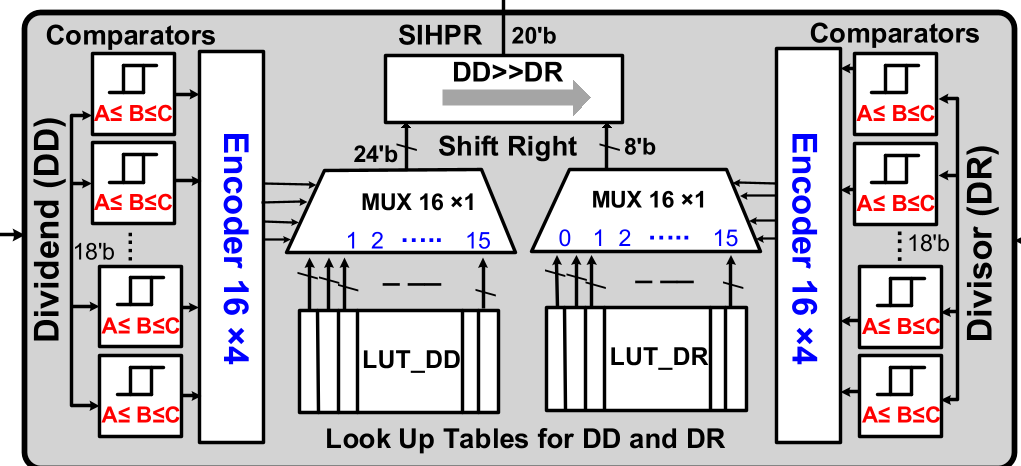 Figure 1: The lightweight LUT-based divider replaces power-hungry floating-point units.
Feature Vector
The system focuses on the Beta band (12-30 Hz), as research indicates autistic children often lack beta waves due to brain under-connectivity. The 16-element feature vector includes:
- PSD: Power Spectral Density per channel.
- IHPD: Power difference between left/right hemispheres.
- SIHPR: Power ratio between left/right hemispheres.
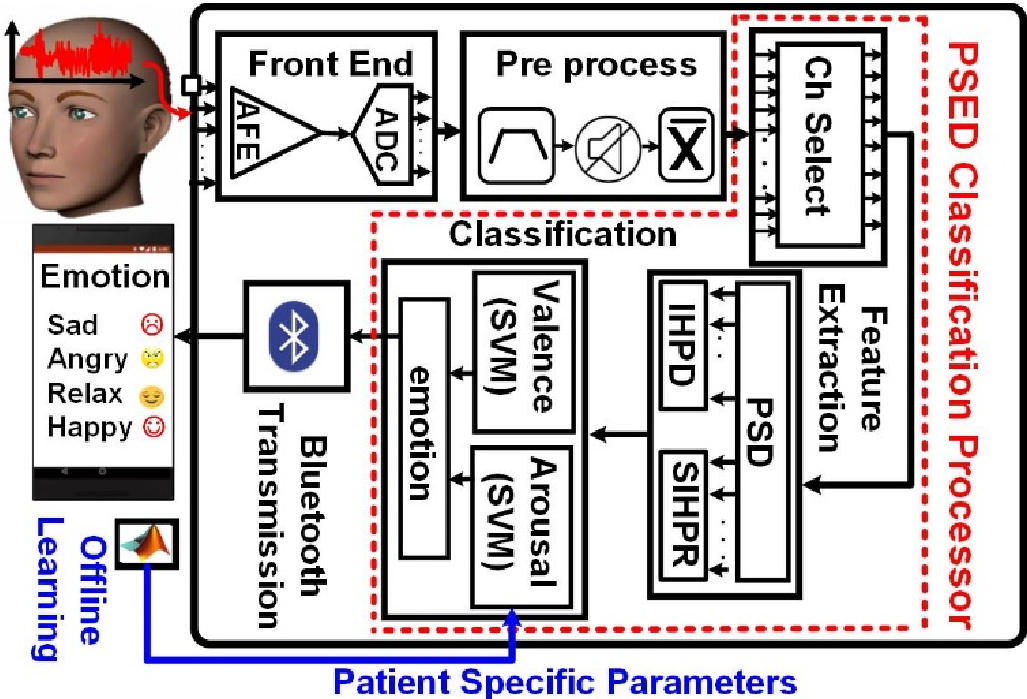 Figure 2: System-level block diagram showing the integration of the feature engine and SVM classifier.
Experimental Results & SOTA Comparison
The processor was evaluated using the DEAP dataset. While its performance (63% valence, 60% arousal) might seem lower than some software-only deep learning models (which hit 70-80%), it is the only one operating within a 12.7μW power envelope with only 8 channels.
| Work | Hardware? | No. of Channels | Accuracy (V/A) | Power |
|---|---|---|---|---|
| Zheng et al. | No | 32 | 69.7% | - |
| Mehmood et al. | No | 16 | 76.0% | - |
| This Work | Yes | 8 | 63/60% | 12.7μW |
The "best-case" patient-specific accuracy reached 78%, proving that for specific individuals, the system is highly reliable.
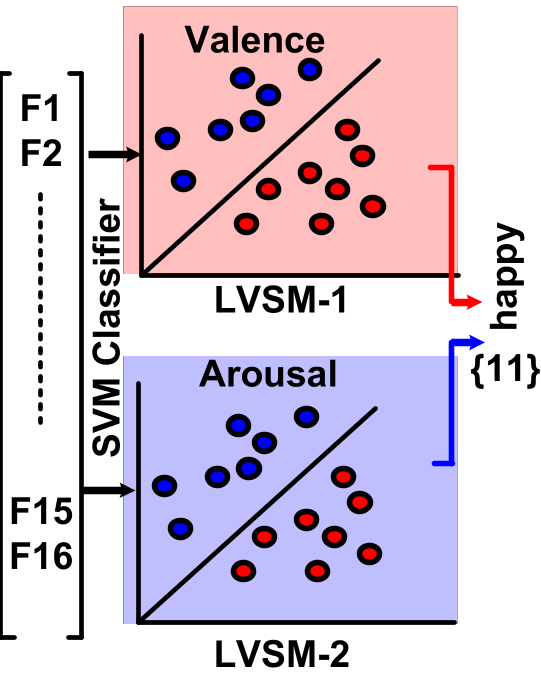 Figure 3: Real-time detection output showing the classification of "Happy" emotion.
Critical Insight: Efficiency over Complexity
The true value of this paper lies in its Hardware-Algorithm Co-design. Most AI researchers focus on pushing accuracy by +1% using massive Transformers. This work does the opposite: it asks "how much math can we remove before the system fails?" By identifying that the Beta band and hemispheric asymmetry are the dominant features, they stripped away 75% of the standard EEG channels and replaced expensive division with a 64-byte table.
Limitations & Future Work
The primary limitation is that the current testing was conducted on the DEAP database (healthy subjects) rather than a clinical autistic population. The next step for this research is to validate the processor in clinical trials with children diagnosed with ASD to refine the "patient-specific" aspect of the SVM weights.
Conclusion
This 65nm neuromorphic processor represents a major leap toward wearable neurofeedback. By prioritizing energy efficiency and silicon area, the authors have moved emotion detection out of the lab and closer to the household, offering a promising future for early ASD intervention.