
APPR: Breaking the Synchronization Bottleneck in Parallel PageRank
Accelerating PageRank in Shared-Memory for Efficient Social Network Graph Analytics
This paper introduces APPR (Accelerated Parallel PageRank), a shared-memory graph processing approach designed to optimize PageRank computation on large-scale social networks. By integrating destination-centric partitioning, degree-aware scheduling, and a unified message controller, APPR achieves a 2.4x average speedup over state-of-the-art methods like PCPM and reduces DRAM communication by up to 16.4x.
TL;DR
PageRank is the backbone of social network analysis, but parallelizing it on modern CPUs often hits a "synchronization wall." The APPR (Accelerated Parallel PageRank) framework bypasses this wall by using a lock-free destination-centric partitioning scheme and a degree-aware scheduler that exploits the power-law nature of social graphs. The result? A 2.4x speedup in execution time and a staggering 16.4x reduction in DRAM traffic.
The "Write-Conflict" Headache
In a standard push-based PageRank, multiple threads attempt to update the same "popular" vertex (a high-degree hub) simultaneously. To prevent data corruption, developers usually resort to locks or atomic operations.
Current SOTA methods like PCPM try to solve this using "bins" (intermediate buffers), but this comes at a heavy cost: the CPU has to read and write the graph data twice per iteration, creating a massive memory bandwidth bottleneck. The authors of APPR asked a simple question: What if we could partition the graph so that all updates to a single vertex happen sequentially within one thread, yet multiple threads still work on different vertices in parallel?
Methodology: The APPR Secret Sauce
1. Destination-Centric Partitioning (Lock-Free by Design)
APPR shifts the partitioning logic from source-centric (who is sending the update) to destination-centric (who is receiving it). By assigning all in-neighbors of a specific vertex to the same partition—and assigning that partition to a single thread—the need for locks vanishes.
- The Problem: This is an NP-complete number partitioning problem because high-degree vertices can cause massive load imbalances.
- The Fix: APPR uses a greedy heuristic to balance the number of edges per partition, ensuring every CPU core works equally hard while remaining lock-free.
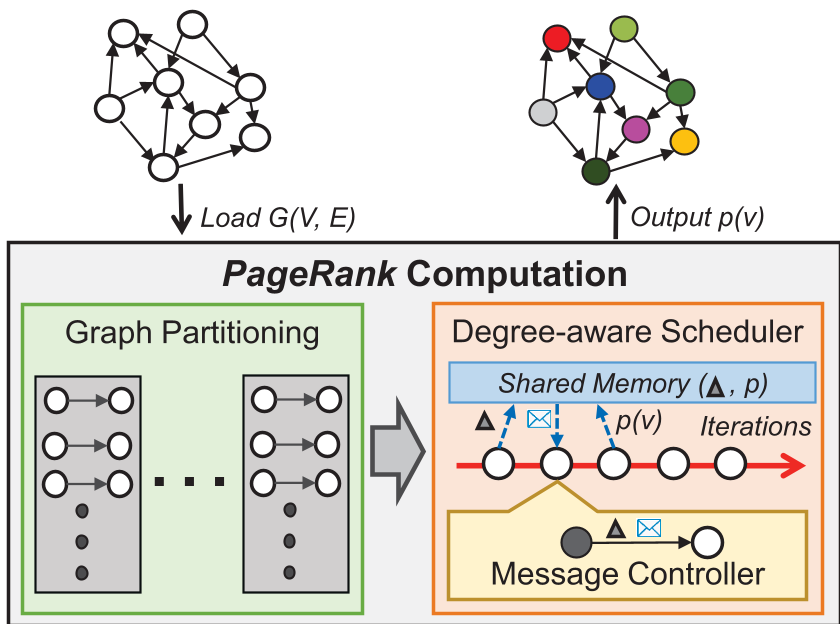 Figure 1: The APPR system architecture showcasing the partitioning and scheduling flow.
2. Degree-Aware Computation Scheduling
Social networks follow a Power-Law distribution: most users have few followers, while a few "influencers" have millions. APPR observes that high-degree vertices (H-vertices) take longer to converge and depend heavily on the values of low-degree vertices (L-vertices).
- Strategy: APPR "silences" the influencers in early iterations. Threads focus on converging the millions of L-vertices first. Once the "rank base" is stable, the influencers are activated to finalize the results, saving millions of redundant operations.
3. The Message Controller (Locality is King)
In a typical Gather-Apply-Scatter (GAS) model, the system traverses edges once to send rank updates ("deltas") and a second time to update vertex statuses. APPR's Message Controller merges these into one pass. By sending both delta and status messages together, the target vertex data stays in the CPU cache, dramatically reducing expensive trips to the DRAM.
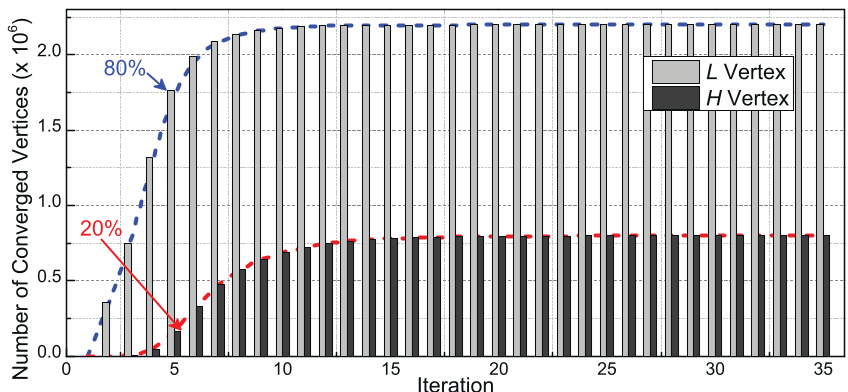 Figure 2: Moving from the two-pass GAS model to APPR's one-pass Message Controller.
Experimental Results: Slashing Latency and Traffic
The authors tested APPR against Pull-based, Push-based, and PCPM baselines across massive datasets like 'Twitter' (265M edges) and 'SD' (1.9B edges).
- Speedup: APPR consistently outperformed PCPM by 1.2x to 4.0x.
- Efficiency: The most impressive victory was in DRAM communication. By avoiding the "double-traversal" of the bin-based approach and using the message controller, APPR reduced memory traffic by 16.4x on social network datasets.
- Scalability: The partitioning scheme scaled linearly with the number of CPU cores, peaking at 20 partitions for a 20-core server.
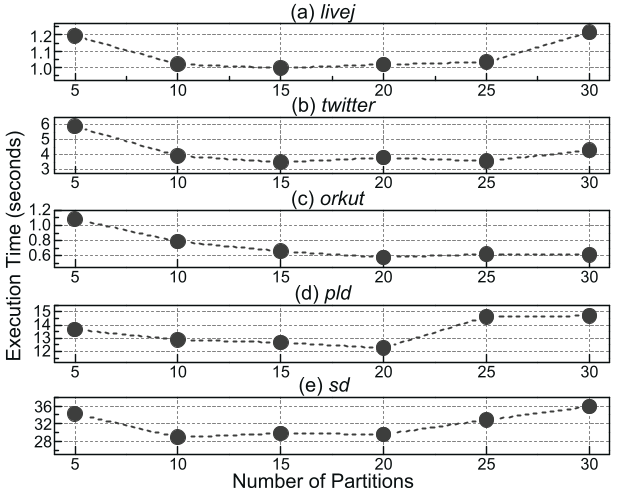 Figure 3: Iteration reduction and execution time benefits of the APPR modules.
Critical Insight & Conclusion
The genius of APPR isn't just in the "how," but in the "where." By recognizing that shared-memory systems have different bottlenecks (DRAM bandwidth and cache hit rates) compared to distributed systems (network latency), the authors successfully applied architectural awareness to a classic graph problem.
Takeaway: If your graph shows a power-law distribution, "one size fits all" iteration is a waste. Prioritizing low-degree stability and aligning memory writes with thread locality is the future of high-performance graph analytics.
Limitations: While APPR is exceptional for static graphs, the destination-centric partitioning might require significant re-computation for dynamic graphs where edges are added or removed frequently.