
The Illusion of Digital Inclusion: Analyzing Accessibility in the 2016 US Presidential Debate
Access to prominent political events on the World Wide Web: the case of the final 2016 US presidential debate
This paper evaluates the availability and functionality of closed captioning (CC) for the 2016 US presidential debate across major broadcasters' websites and YouTube channels. It highlights a significant discrepancy between the accessibility of live broadcasts and their subsequent online re-shows, revealing that over 50% of the analyzed online clips lacked functional CC.
TL;DR
While the 2016 US Presidential Debate was a masterclass in live television accessibility, its "digital afterlife" was a failure for the hearing-impaired. Nazaret Fresno’s research reveals that once the live cameras stopped, the commitment to accessibility vanished. Despite existing regulations, over half of the online clips analyzed were either uncaptioned, poorly synchronized, or relied on error-prone "halting" AI transcripts that rendered the political discourse unintelligible.
Context: A Tale of Two Platforms
In the United States, 48 million people live with some degree of hearing loss. For this demographic, political engagement isn't just about watching a screen; it’s about intellectual and social access. In 2016, major networks like ABC, NBC, and CBS provided seamless Live Closed Captioning (CC) for TV broadcasts. However, as the audience shifted to "catch-up" viewing on websites and YouTube, the accessibility framework crumbled.
The Core Motivation: Why Does Online Video Fail?
The author identifies a critical gap between legislation and enforcement. While the Twenty-First Century Communications and Video Accessibility Act (CVAA) mandates CC for online re-shows of televised content, the reality is plagued by:
- Regulatory Voids: Excerpts and third-party platforms (YouTube) often fall into "soft" zones of compliance.
- Technical Latency: Converting live stenography to web-vtt formats is often ignored in the rush to be the first to post "viral" clips.
- Reactive Approaches: Accessibility is treated as a post-production afterthought rather than a core design requirement.
Methodology: Auditing the Gatekeepers
Fresno analyzed 210 videos across the websites and YouTube channels of 8 major broadcasters. The audit wasn't just about a binary "Yes/No" for captions—it was a deep dive into functionality.
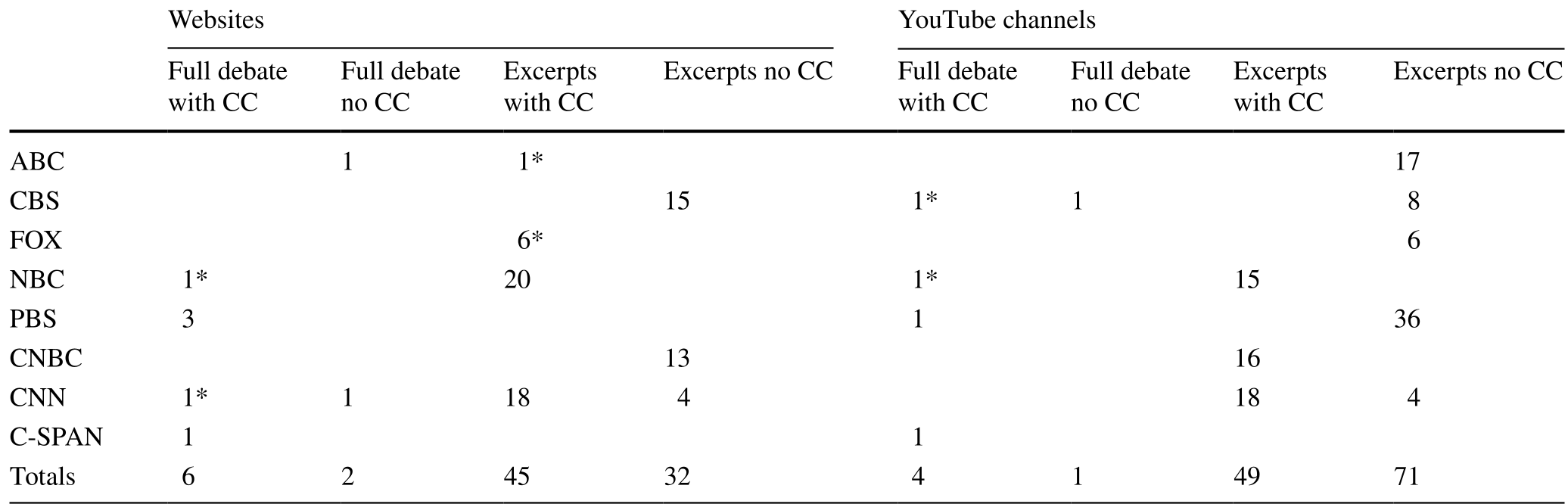
The methodology revealed a startling "Inaccessible Totals" count. For example, while 100% of live viewers had access, only a fraction of those watching the next day on YouTube could say the same.
Key Findings: When AI and Neglect Collide
The study’s findings serve as a warning against over-reliance on unedited Automated Speech Recognition (ASR).
1. The Hallucination of Accuracy
Broadcasters like ABC used "automatically generated" transcripts. Table 1 in the paper illustrates the catastrophic nature of these errors:
- Actual: "rip the baby out of the womb... in the ninth month."
- AI Version: "ripped the baby out of the womb in the nine-teen months." Such errors don't just reduce quality; they distort sensitive political stances.
2. The YouTube "Black Hole"
The study highlights that YouTube is a wasteland for accessibility. Since it is considered a "third party," many networks (like FOX and ABC) simply chose not to upload the caption files they already possessed from the TV broadcast.
3. Synchronization Nightmares
NBC’s YouTube upload of the full debate had captions that were 33 minutes out of sync. For a deaf viewer, the text appearing on the screen had no relation to the visual cues, making the content effectively unusable.
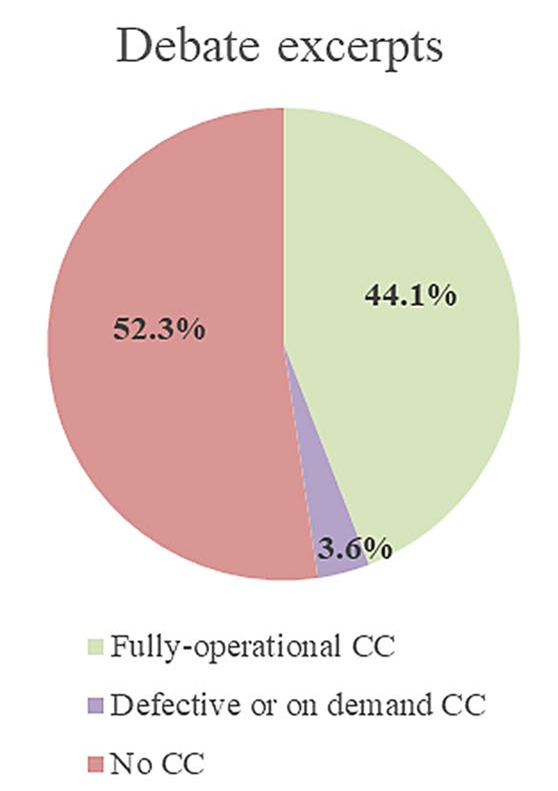 Fig 1: The stark reality—only 44% of excerpts were fully functional.
Critical Insight & Conclusion
Fresno’s work proves that compliance is not accessibility. A broadcaster can check a legal box by providing "automatic" captions, but if the content is "bad男孩" (a literal ASR artifact found in the study) instead of "bad boys," the user has been denied their right to information.
The Takeaway: The future of media accessibility requires active monitoring (similar to the UK’s Ofcom or Australia’s ACMA) where broadcasters must report not just on the existence of captions, but their quality. Until accessibility is treated with the same technical rigor as video resolution or ad-targeting, "Internet Justice" remains an unfulfilled promise.