
Digital Gatekeepers: The Hidden Barriers in Social Media Registration
Accessibility of Registration Mechanisms in Social Networking Sites
This study evaluates the accessibility of registration mechanisms across 22 major social networking sites (SNS) using Section 508 standards. The research identifies critical barriers for users using assistive technologies, specifically highlighting that no evaluated site was fully accessible, with Facebook and LinkedIn performing best, while Student.com performed worst.
TL;DR
As higher education shifts toward "E-learning 2.0," social networking sites (SNS) have become essential collaborative tools. However, a deep dive into 22 major platforms reveals a grim reality: not a single site is fully accessible. The registration process—the very first point of entry—is riddled with Section 508 violations, particularly in form labeling and scripting, effectively locking out students who rely on assistive technologies.
Contextualizing the Entry Barrier
In the academic world, social media isn't just for leisure; it's a hub for "Connectivism" and "Communal Constructivism." When an instructor integrates a Facebook group or a LinkedIn networking task into a syllabus, they implicitly assume every student can enter that space.
The authors argue that the registration process is the most critical "gatekeeper." If a student with a disability cannot sign up, the rest of the platform's features—no matter how accessible—remain irrelevant.
The "Web 2.0" Paradox
The shift to Web 2.0 brought interactivity through AJAX and heavy scripting, but it also introduced an Inductive Bias against accessibility. The study points out two main technical culprits:
- Dynamic Scripting: Heavy reliance on JavaScript without
<noscript>alternatives. - Authentication Hurdles: The rise of visual-only CAPTCHAs and complex multi-step email verifications that break the flow of screen readers.
Methodology: Auditing the Giants
Using RampPE 6.0, the researchers audited registration flows of 22 sites categorized into Strictly Social (e.g., MySpace, Facebook), Special Focus (e.g., YouTube), and Professional (e.g., LinkedIn).
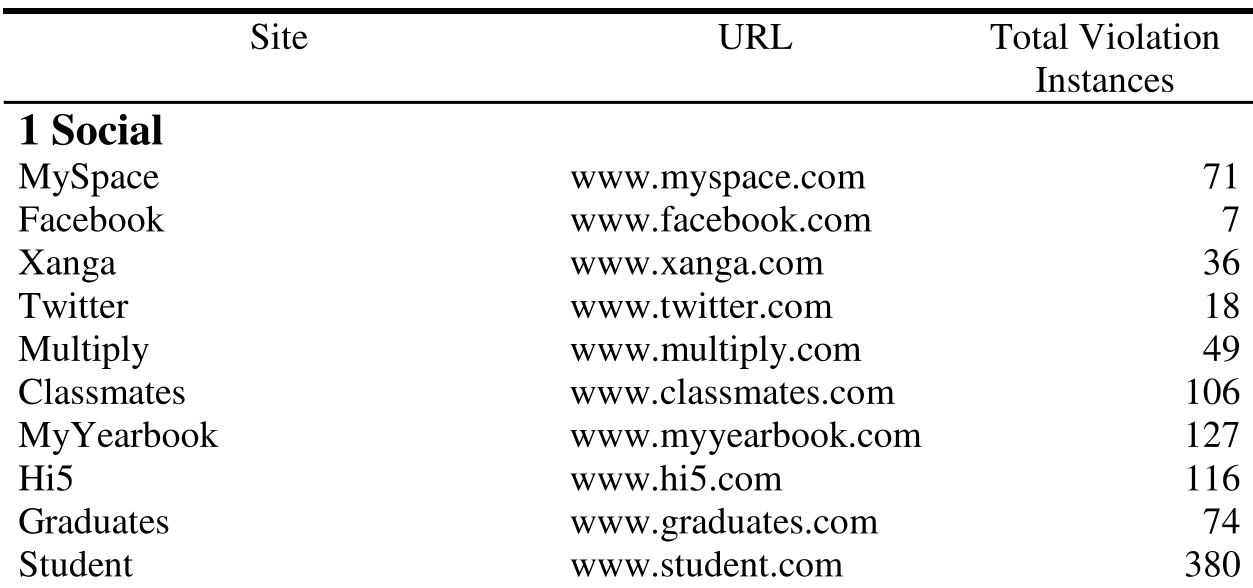 Table 1: Initial violation counts showing the massive disparity between platforms.
Key Findings: Where It All Breaks Down
The results confirm that the "rich" user experience of modern webs often comes at the cost of compliance.
1. The "Form" Frustration
Paragraph n (Forms) of Section 508 was the most frequent offender with 709 instances. Most developers simply forget to link labels to input fields, making it impossible for a screen reader to tell a user what information (e.g., "Last Name" vs "Password") is being requested.
2. The CAPTCHA Wall
A staggering 77% of sites used character-based CAPTCHAs, but only 27% offered an audio alternative. For a blind student, a visual CAPTCHA without an audio track is a "Dead End" sign.
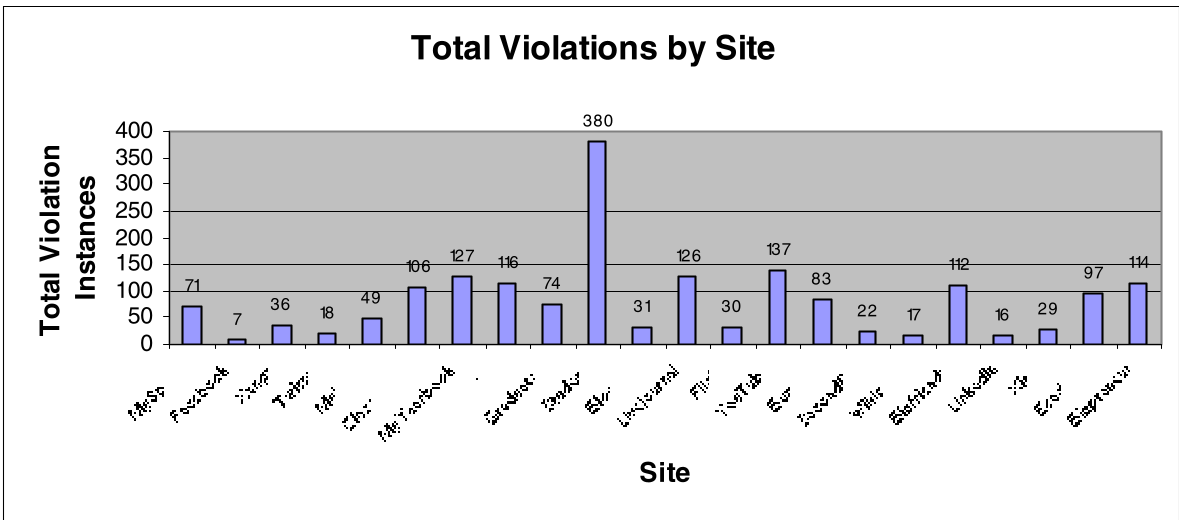 Fig 1: Total Violation Instances. Note the extreme spike in site-specific violations.
3. Professionalism vs. Accessibility
Interestingly, professional sites like LinkedIn and Xing generally showed fewer violations than purely social counterparts. This suggests that more rigorous development standards in professional contexts inadvertently benefit accessibility.
Deep Insight: Beyond the Rules
The paper highlights a disturbing trend: Websites often become less accessible over time. As developers push "hotfixes" and new interactive features, accessibility audits are frequently sidelined. The site "Student.com," which specifically targets the demographic in question, had the highest number of violations (380), proving a lack of awareness even in student-centric development.
Conclusion & Future Outlook
The takeaway for educators and tech leads is clear:
- For Educators: Verification of a platform's Section 508 status must precede its inclusion in a curriculum.
- For Developers: "Awareness" is the cheapest and most effective tool. Adding a manual
<label>tag or an audio CAPTCHA requires minimal effort but removes a total barrier for thousands of users.
As we move toward even more complex interfaces, the industry must transition from treating accessibility as a "post-launch patch" to a core architectural requirement.
Author Analysis: This work serves as a foundational reminder that in the race for "flashy" Web 2.0 features, the industry has left behind the fundamental principles of universal design.