
TOA: Rethinking Influence Maximization through Target-Oriented Estimation
Accurate Path-based Methods for Influence Maximization in Social Networks
This paper introduces the Target-Oriented Approach (TOA), a novel path-based method for Influence Maximization (IM) in social networks under the Independent Cascade (IC) model. It shifts the estimation logic from source-node out-degree summation to target-node activation probability, achieving higher accuracy than the state-of-the-art IPA method.
TL;DR
Influence Maximization (IM) helps identify the most influential nodes to trigger a "viral" cascade. While path-based methods are faster than Monte Carlo simulations, they often get the math wrong by simply summing up source influences. This paper introduces the Target-Oriented Approach (TOA), which fixes this by calculating the probability of target nodes being activated by a collective seed set, resulting in significantly more accurate influence predictions and better seed selection.
Background: The Source-Oriented Trap
In the world of social network analysis, finding the top-k "influencers" is NP-hard. Early solutions relied on SimpleGreedy with Monte-Carlo (MC) simulations, which are accurate but prohibitively slow. To solve this, "path-based" methods like IPA and SIMPATH emerged.
However, these methods harbor a fundamental flaw: they are source-oriented. They calculate the influence of a seed set as: This formula treats influence as a commodity that can be simply added up. In reality, if two seeds both target the same friend, the probability they are influenced doesn't double—it follows the laws of independent probability.
The Motivation: Why Linear Sums Fail
Imagine two influencers, and , both connected to the same follower .
- has a 70% chance of influencing .
- has a 30% chance of influencing .
A source-oriented method would say the total influence is (essentially claiming is guaranteed to be influenced). A target-oriented method realizes that is only influenced if at least one of them succeeds. The correct probability is .
By ignoring this overlap, previous state-of-the-art methods (SOTA) like IPA select suboptimal seeds because they overvalue clusters of nodes with overlapping reach.
Methodology: The Target-Oriented Shift
The authors propose shifting the perspective from the Source to the Target.
1. Collective Activation
Instead of calculating how much influence each seed "gives," TOA calculates how much influence each non-seed node "receives" from the seed set . Under the Independent Cascade (IC) model, the influence received by node is: Where is the weight of the path from the seed set to the target.
2. Global Aggregation
The total influence spread is then the sum of these activation probabilities across all non-seed nodes:
This approach inherently respects the "diminishing returns" property of social influence and aligns perfectly with the logic used in gold-standard Monte Carlo simulations.
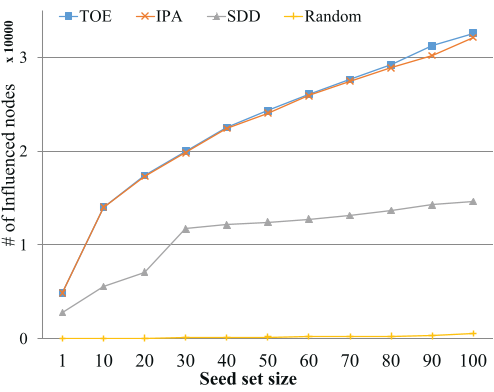 Figure 1: Comparison showing why target-based logic prevents over-counting influence.
Experimental Results
The researchers compared TOA against IPA (source-oriented), SDD (degree-based), and Random selection using real-world datasets like DBLP and the Stanford web graph.
Key Findings:
- Consistent Superiority: TOA outperformed IPA across all seed set sizes.
- The "Density" Gap: As the seed set size increased, the performance gap between TOA and IPA widened.
- Quantitative Gains: On the Stanford dataset, TOA achieved up to a 4% higher influence spread than the previous SOTA.
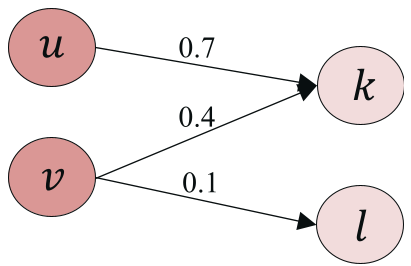 Figure 2: Performance trajectory on DBLP (a) and Stanford (b) datasets.
As seen in the results, when more seeds are added (above 60), the likelihood of path overlap increases. This is where IPA's linear summation fails most significantly, and where TOA's probabilistic approach shines.
Critical Analysis & Conclusion
The Target-Oriented Approach (TOA) provides a mathematically sound correction to path-based influence estimation. By correctly modeling the Independent Cascade process from the receiver's end, it identifies "influencer teams" that complement each other rather than those that simply compete for the same audience.
Limitations: While more accurate, calculating target-oriented paths can be computationally intensive as the number of "valid paths" grows. The paper uses threshold-based pruning to manage this, but there remains a trade-off between the depth of the path search and the execution time.
Future Outlook: This methodology provides a blueprint for improving localized influence heuristics. Future work could integrate this target-oriented logic into real-time social media algorithm designs where precision in "viral" prediction is worth millions in marketing spend.