
Emergency Cascades: How the Oslo Bombing Revealed the Hidden Hierarchy of Our Social Circles
The activation of core social networks in the wake of the 22 July Oslo bombing
This study provides a large-scale social network analysis of human communication behavior following the 2011 Oslo bombing. By analyzing anonymized Call Detail Records (CDRs) from Telenor, the researchers identified a structured "core network" activation pattern characterized by an immediate surge in voice calls to primary social ties.
TL;DR
On July 22, 2011, a bomb devastated central Oslo. In the minutes that followed, the Norwegian telecommunications network didn't just see a spike in volume—it revealed a precise, sequential "activation" of the human intimate sphere. Research by Telenor Group shows that we don't just call "everyone" when disaster strikes; we execute a prioritized algorithm: verify the #1 tie immediately, then pivot to the broader core circle (ranks 2-5) with even higher proportional intensity.
The Anatomy of an Emergency Spike
When a crisis occurs, the "immediacy" of voice communication trumps the asynchronous nature of SMS. The researchers observed that voice traffic reached twice the normal volume within 30 minutes of the explosion.
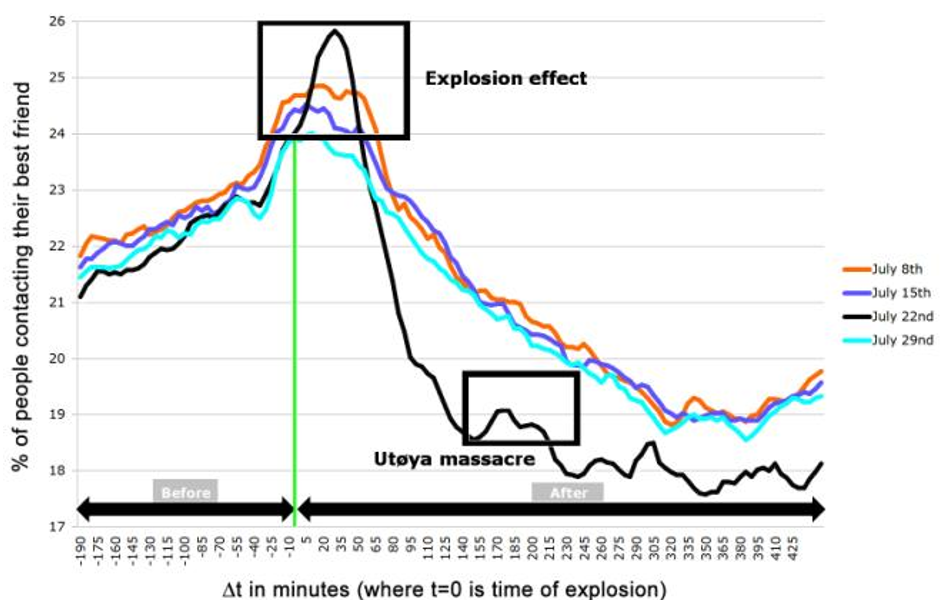
This wasn't just panic; it was a search for information. Interestingly, the peak occurred right as major online newspapers began reporting the event, suggesting that digital information drives the "need to reach out."
The Successive Activation Strategy
The study's most profound insight lies in who we call and when. By ranking contacts 1 through 5 based on three months of prior history, the authors visualized the "rollout" of social concern:
- Phase 1: The Primary Tie. Within the first 25 minutes, there is a sharp increase in calls to the single closest relationship ("Link 1"). However, this interest drops off faster than others.
- Phase 2: The Core Network Expansion. As the "Link 1" concern is satisfied, users don't stop; they pivot. Contacts ranked 3, 4, and 5 saw a higher proportional increase compared to their normal baseline than the primary contact did.
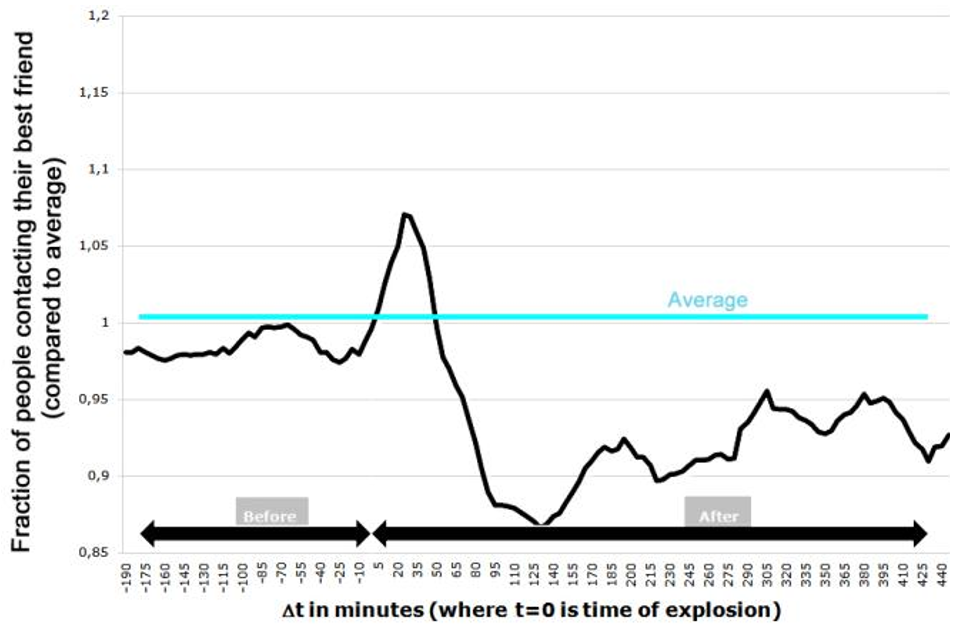
Why the drop-off for Link 1? The authors suggest that once the primary person is verified safe (or physical meeting is arranged), users feel an "urgency" to check the rest of their core circle, leaving less time for extended conversation with their best friend.
Geographical Empathy: The "Diagonal" Effect
Geography played a critical role. Naturally, calls into and out of Oslo (the impact zone) skyrocketed. But the data also revealed a high "diagonal" activation—people outside of Oslo calling others who were also outside of Oslo.
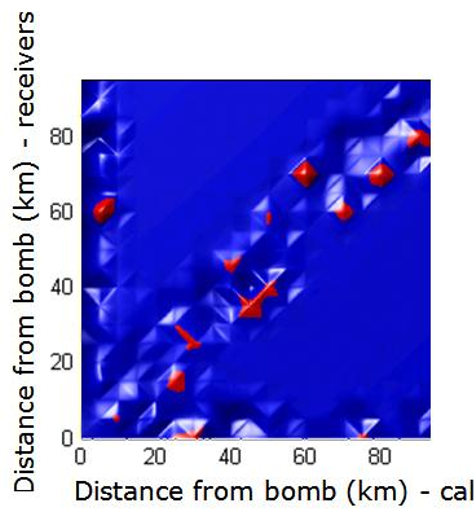
This suggests two distinct motivations for communication during a disaster:
- The Safety Check: Calling someone perceived to be in danger.
- Sense-Making: Reaching out to those socially close to "process" the shock, even if neither party is in immediate physical peril.
Summary and Critical Insight
This paper proves that our "Core Social Network" is not a static list, but a functional hierarchy that activates under pressure. The mobile phone is no longer just a tool; it is a digital extension of our social cohesion.
Takeaway for the Future: For emergency services and network operators, understanding that communication "cascades" through social ranks can help in predicting network congestion and designing better priority-routing systems for the public during the critical "Golden Hour" of a disaster.