
Bridging the Loneliness Gap: SONOPA’s Sensor-Driven Social Network for Active Ageing
Promotion of active ageing combining sensor and social network data
The SONOPA framework combines in-home PIR and visual sensors with a social network to promote active ageing among the elderly. By introducing the SONOPA Controller and a customized matchmaking algorithm, the system creates social recommendations based on users' inferred activity levels and hobbies to combat loneliness and physical decline.
TL;DR
Aging populations face two parallel threats: declining physical mobility and shrinking social circles. This paper presents SONOPA, an Ambient Assisted Living (AAL) framework that uses simple home sensors (PIR) to infer an elderly user's activity and socialization levels. It then feeds this data into a specialized matchmaking algorithm to recommend meaningful local social connections, effectively turning a "smart home" into a "social hub."
Motivation: Why Smart Homes Aren't Enough
For years, AAL research has focused on the "Safety" aspect—detecting falls, managing pills, or monitoring vitals. While critical, this emphasis often ignores the World Health Organization's (WHO) definition of health, which includes social well-being. Loneliness is a primary driver of psychological decline.
The authors recognize a major hurdle: most AAL systems are too "heavyweight" or expensive for real-world adoption. SONOPA addresses this by prioritizing reusability (via a specialized middleware) and socialization (via sensor-augmented matchmaking).
Methodology: From Raw Motion to Social Intelligence
The core of the system is the SONOPA Controller, a Python-based middleware deployed on a Raspberry Pi. It uses a REST API and JSON Schema to manage heterogeneous sensors.
1. Activity and Socialization Metrics
Instead of complex computer vision, the system uses simple PIR (Passive Infrared) sensors.
- Activity Metric (): Calculated by weighting room activations and "room change" events. It measures how physically active a user is at home.
- Socialization Metric (): Combines the number of people in the house (inferred from concurrent sensor activations) with the user's digital engagement on the social network.
2. The Matchmaking Algorithm
The "magic" happens when these metrics are fed into a connection engine. The system doesn't just match people randomly; it looks for:
- Activity Similarity: Matching active people with active people to facilitate shared physical tasks.
- Hobby Similarity: Using the Jaccard Coefficient to find common interests.
- Network Proximity: Leveraging "small world" phenomena by recommending friends of friends.
 Figure 1: The overarching SONOPA architecture connecting sensors, the controller, and the social interface.
The Activity Rule Annotation Tool
Recognizing that Machine Learning requires massive labeled datasets (hard to get in private homes), the authors developed a Rule Annotation Tool. This allows caregivers to set intuitive logic (e.g., "If PIR-Kitchen > 60% activation between 10am-12pm, then 'Cooking'").
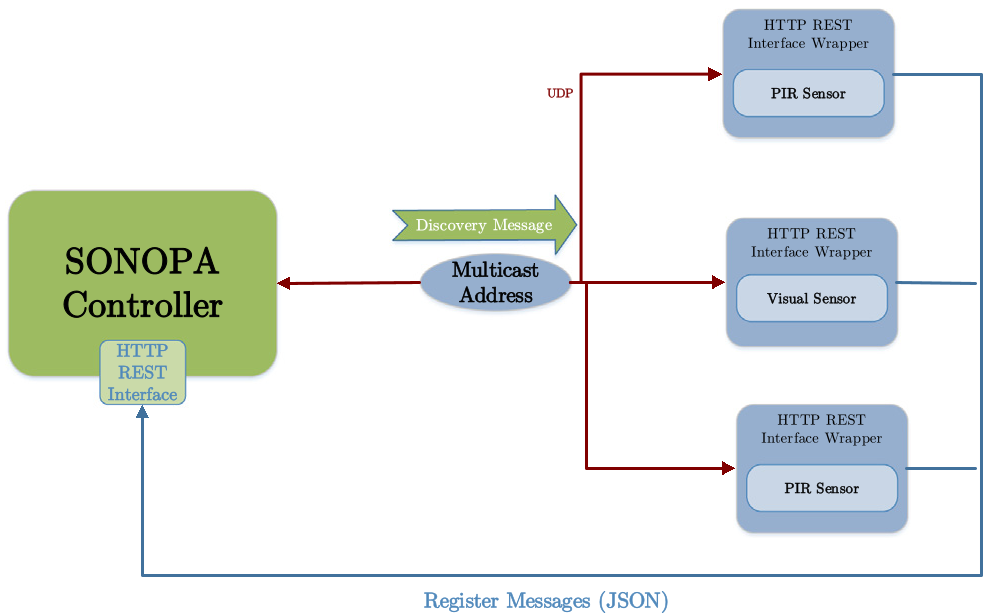 Figure 2: The discovery mechanism between sensors and the controller.
Experiments and Insights
The system was field-tested in Surrey (UK) and Dendermonde (Belgium). Due to the limited size of the pilot group, the authors used a simulated social graph of 816 elderly users to test the matchmaking scalability.
Key Findings:
- Reduced Isolation: The number of unconnected "islands" of users dropped by over 75% after applying the algorithm.
- Local Focus: By prioritizing location-based matches, the system ensures that digital connections can transition into real-world friendships (e.g., meeting for coffee).
- Performance: The average degree of connectivity increased significantly, proving the algorithm's ability to "densify" sparse social networks.
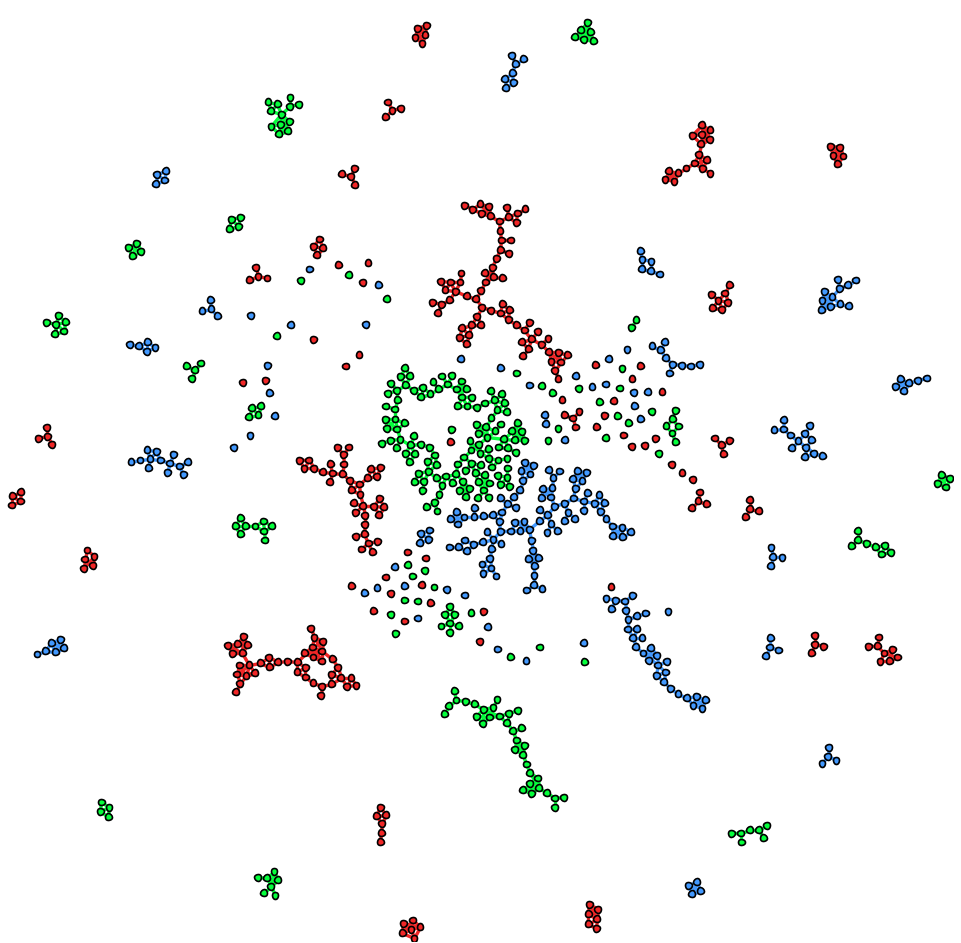 Figure 3: Simulated graph showing the clustering effect and increased interconnectedness post-matchmaking.
Critical Analysis & Conclusion
Takeaway
SONOPA successfully shifts the AAL focus from reactive monitoring (waiting for an accident) to proactive engagement (fostering a social life). Its use of lightweight PIR sensors and a flexible middleware makes it a viable candidate for low-cost, mass-scale deployment.
Limitations
- Sensor Granularity: PIR sensors cannot differentiate between individuals unless they move in separate rooms simultaneously. This limits the "Occupancy" metric's accuracy.
- Social Adoption: The paper relies on simulated data for the social results; the "human factor" of whether elderly users will actually accept algorithmically suggested friends remains a psychological challenge.
Future Work
The next step is integrating frailty diagnosis (based on gait and movement speed) to further personalize recommendations—ensuring that someone in the early stages of frailty is matched with a supportive peer group.