
Beyond Passive Viewing: Using Physiological Computing to Personalize Cultural Heritage
Towards an adaptive cultural heritage experience using physiological computing
This paper presents a pilot study for an adaptive cultural heritage interface that personalizes museum experiences by monitoring visitor interest. Using mobile physiological sensors (ECG, SCL, EEG) and a Support Vector Machine (SVM) classifier, the system achieves an 80% mean accuracy in identifying "High" vs "Low" interest states in an ambulatory setting.
TL;DR
The contemporary museum experience is largely a "monologue" where visitors consume static content. This research breaks that silence by introducing an adaptive cultural heritage experience that listens to the visitor's body. By leveraging mobile physiological sensors and Machine Learning (SVM), the authors developed a system capable of detecting a visitor's interest level with 80% accuracy, paving the way for "Digital Curators" that adapt narratives in real-time.
The Problem: The "Opaque" Visitor
Despite the adoption of QR codes and mobile apps, most cultural heritage institutions treat visitors as passive receivers. Current technology is "blind" to the visitor's internal state. Does the user find this mosaic boring? Are they overwhelmed by the audio guide? Because traditional systems can't answer "Why" or "How" a visitor feels, they cannot provide a truly personalized journey.
Methodology: Mapping Interest onto Biology
To bridge this gap, the researchers moved beyond the lab into an ambulatory (walking/standing) setting. They used a sophisticated sensor suite to capture the body's subtle signals:
- Activation: Measured via Heart Rate (ECG) and Skin Conductance (SCL) to track autonomic arousal.
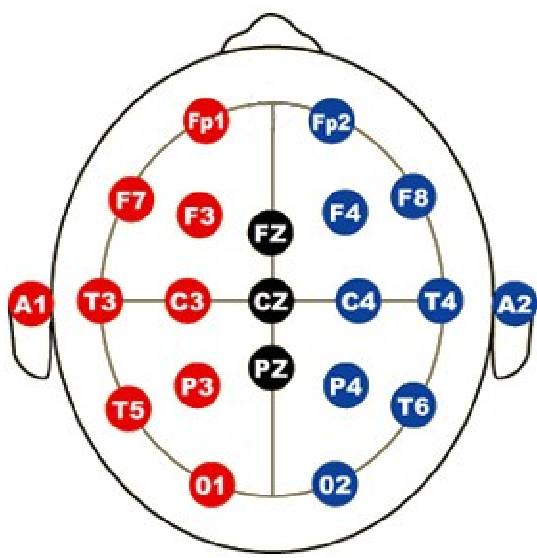
- Cognition: Measured via EEG, specifically the ratio of to waves at frontal sites (FP1, FP2, F3, F4) to track mental effort.
- Motivation: Calculated as the hemispheric asymmetry of power, representing the user's "approach" or "avoidance" tendency toward the content.
The core of the system is a Support Vector Machine (SVM) classifier. Unlike a "one-size-fits-all" model, the authors focused on a subject-dependent approach, training the model on each individual's unique physiological baseline to account for the high variance in how different people react to the same stimulus.
Key Results: Can an Algorithm Feel Your Curiosity?
The results from 10 participants suggest a resounding "Yes." The study found that combining Activation (arousal) and Cognition (mental focus) features provided the most reliable signal for interest.
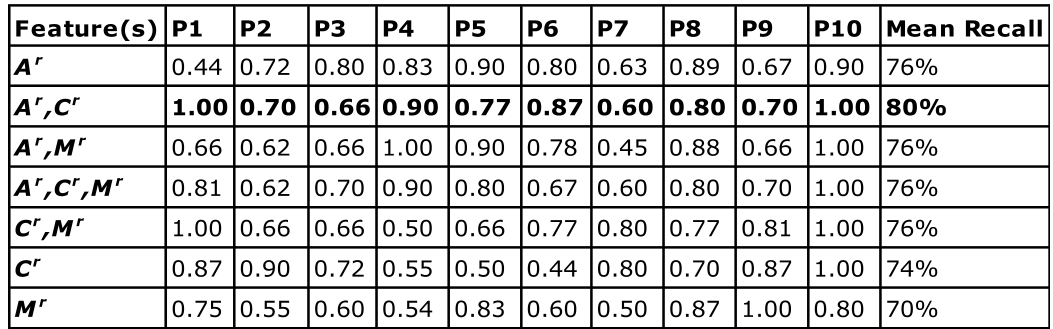
- Mean Accuracy: 80% for the A+C feature fusion.
- The Individual Factor: While some subjects reached 100% accuracy, others were lower (60%), highlighting the challenge of "physiological noise" in real-world settings.
- Generalization: When the model was tested across different people (subject-independent), accuracy dropped to 65%—still better than a coin flip (50%), but reinforcing why personalized calibration is currently necessary.
Critical Insight & Future Outlook
The heavy lifting here isn't just in the accuracy; it's in the Interest Model. By quantifying "interest" as a fusion of biological activation and cognitive load, the researchers provide a mathematical framework for "curiosity."
Limitations: The elephant in the room is the hardware. Wearing an EEG cap and torso electrodes while walking through a museum is a high barrier to entry. However, the authors correctly point out that the rapid evolution of "nano-scale" and "tattoo" sensors will eventually make these measurements invisible and friction-free.
Conclusion: This work marks a shift from "Human-Computer Interaction" to "Human-Computer Symbiosis." In the future, your museum guide won't just tell you about the Renaissance; it will sense your waning attention and pivot the story to something that reignites your wonder.