
Adaptive Multi-Agent Frameworks: The Future of Personalized E-Banking
An Adaptive E-commerce Personalization Framework with Application in E-banking
This paper introduces an adaptive multi-agent framework for e-commerce personalization, specifically applied to the e-banking sector. It integrates rule-based, content-based, and learning-agent technologies with a feedback-driven optimization mechanism to provide dynamic financial product recommendations.
TL;DR
In the increasingly competitive world of online banking, the ability to predict a customer's financial needs before they ask is a strategic goldmine. This paper presents an adaptive personalization framework that leverages a multi-agent system (MAS) to solve the dual challenges of big data processing and static recommendation rules. By combining data mining with parallel processing (MPI), it delivers tailored financial advice in under 30 seconds.
Background: Moving Beyond Static Rules
E-commerce personalization isn't new; we see it every day on Amazon. However, applying these techniques to e-banking presents unique hurdles. Banking data is vast, highly structured, and sensitive. Static rules (e.g., "if user has X, suggest Y") fail to capture the evolving behaviors of modern consumers. The authors identify a critical gap: existing systems lack a mechanism to "learn" from the failure or success of their own recommendations in real-time.
The Problem: The Computational Bottleneck and Cold-Starts
As transaction records grow into the millions, typical data mining algorithms (like Association Rules or Collaborative Filtering) become painfully slow. Furthermore, the Cold-Start problem—where the system knows nothing about a new user—often leads to a total failure in service. The authors argue that a hybrid, multi-layered agent approach is the only way to maintain the 30-second response window required for web usability.
Methodology: The Three-Layered Intelligence
The heart of this research is a distributed architecture divided into three distinct layers of abstraction:
- Technology-oriented Layer: Reactive agents that handle immediate input and specific algorithms (e.g., Transaction Frequency).
- Optimisation Layer: The "brain" that adjusts parameters based on user feedback.
- Task-oriented Layer: The interface that interacts directly with the customer, coordinating the complex backend tasks into a simple web view.
Parallel Intelligence via MPI
To solve the speed issue, the framework employs Message Passing Interface (MPI) agents. This allows the system to split raw data across multiple processors—essentially a precursor to contemporary distributed computing—ensuring that the "heavy lifting" of data mining doesn't stall the user experience.
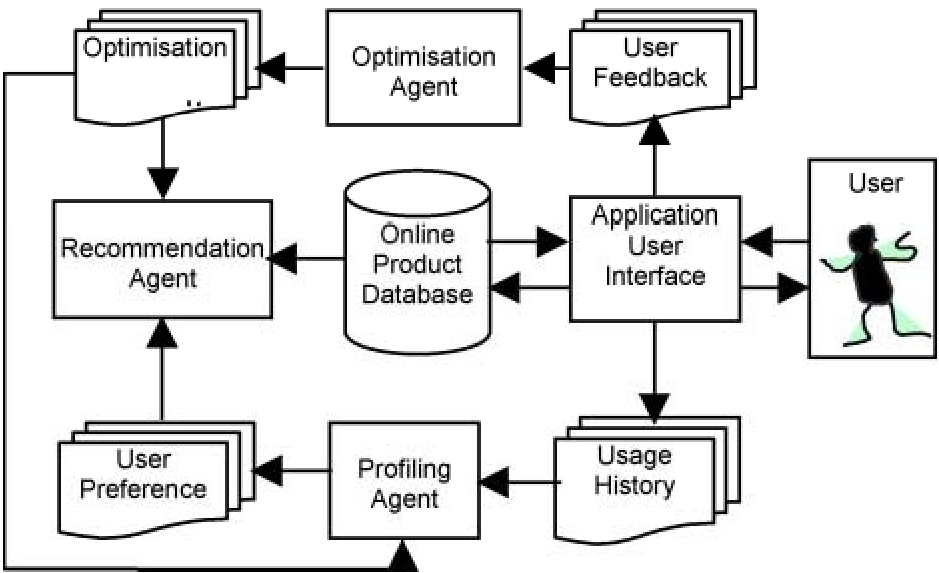 Figure 1: The proposed adaptive personalization framework showing the flow from user interaction to agent-based optimization.
Solving Cold-Start
The system mitigates the cold-start issue by blending search-result extraction with profiling. If a user is new, the system relies on the search query intent to provide immediate value while the profiling agent works in the background (often offline) to build a long-term behavioral model.
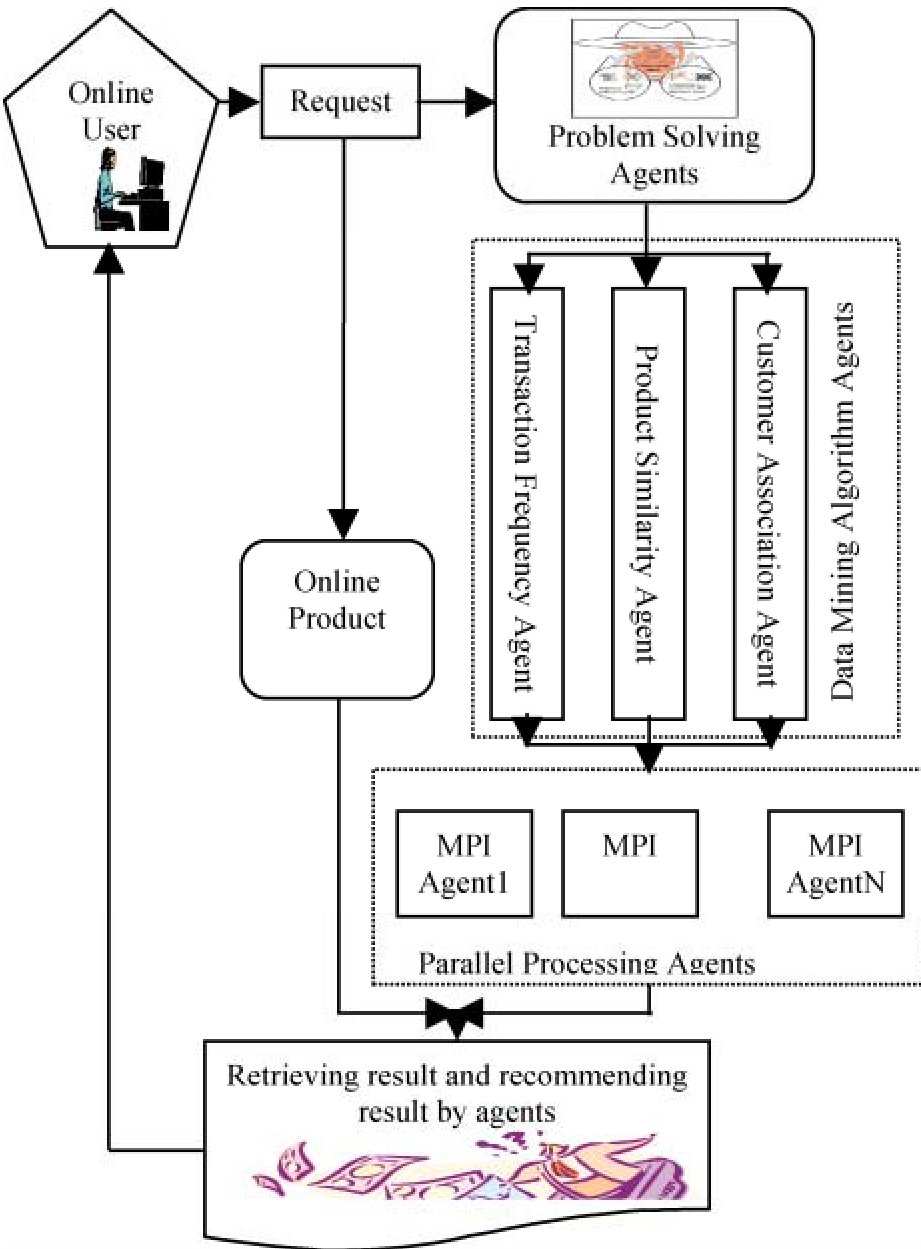 Figure 2: Detailed architecture of the Multi-Agent Automatic Recommendation System.
Experiments: Testing in the Banking Trenches
The framework was tested on a massive e-banking dataset containing over 1,000,000 saving account records.
Key Findings:
- Behavioral Clustering: The similarity agent successfully grouped 550 customers into a primary cluster with nearly identical transaction habits, allowing for highly targeted marketing.
- Rule Discovery: The profiling agent identified non-obvious correlations, such as the relationship between high average salaries and specific transaction frequencies, and identified a segment of 28 customers with negative balances whose behavior defied standard loan-status logic.
- Performance: Despite the data volume, the MPI-driven backend kept recommendation latency within the acceptable 30-second threshold.
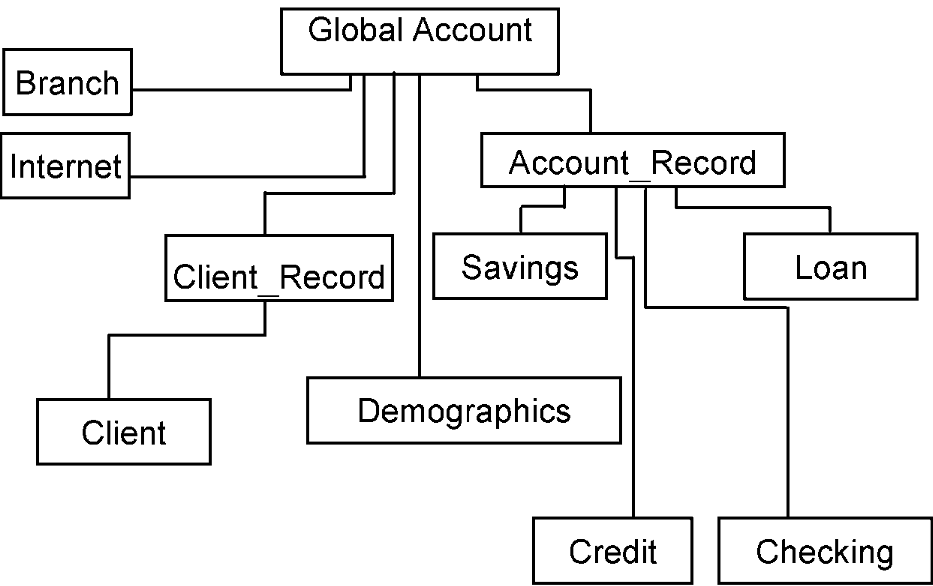 Figure 3: Distribution of customer clusters based on saving account behavior.
Critical Analysis & Conclusion
The standout contribution of this work is the Optimisation Agent. By treating the recommendation process as a dynamic loop rather than a one-way street, the system becomes "adaptive."
Limitations: While the MPI implementation was cutting-edge for its time, modern serverless or cloud-native architectures would now replace this with more elastic scaling. Additionally, the "validation phase" of rule discovery still requires human intervention, which remains a bottleneck for true 24/7 automation.
Takeaway: This paper provides a robust blueprint for any high-stakes e-commerce environment (like Banking or Insurance) looking to move away from "one-size-fits-all" interfaces toward truly intelligent, agent-driven customer relationships.