
Quest: Bridging the Cold-Start Gap via Adaptive Social Profiling
Quest: An Adaptive Framework for User Profile Acquisition from Social Communities of Interest
This paper introduces Quest, an adaptive framework for automatically acquiring bag-of-words user interest profiles from Social Web communities like LiveJournal. It utilizes a semantic taxonomy search tree to guide three distinct crawling strategies (Depth-based, N-Split, and Greedy) and employs a two-step mining process involving K-means clustering and classifiers (kNN/PDT) to generate weighted profiles for semantic recommenders.
TL;DR
The Quest framework solves the recommendation "cold-start" problem by proactively "hunting" for potential users in social communities. By using a domain-specific taxonomy to guide adaptive crawlers and a two-step machine learning pipeline (clustering + classification), it transforms raw Social Web data into structured, weighted interest profiles ready for semantic recommendation.
Background: The Sparsity Bottleneck
In the world of personalized systems, if you don't have user data, you don't have a recommender. Most traditional approaches rely on Web Usage Mining—analyzing what users do within your platform. But what if your platform is new?
Quest shifts the perspective from internal usage to external discovery. It taps into the "Social Web" (using LiveJournal as a case study) to find communities of interest and extract "bag-of-words" profiles that match a specific business domain, such as cultural heritage.
Methodology: Taxonomy-Driven Acquisition
The core innovation of Quest lies in its use of a Semantic Taxonomy to dictate how data is gathered and processed.
1. The Adaptive Taxonomy Tree
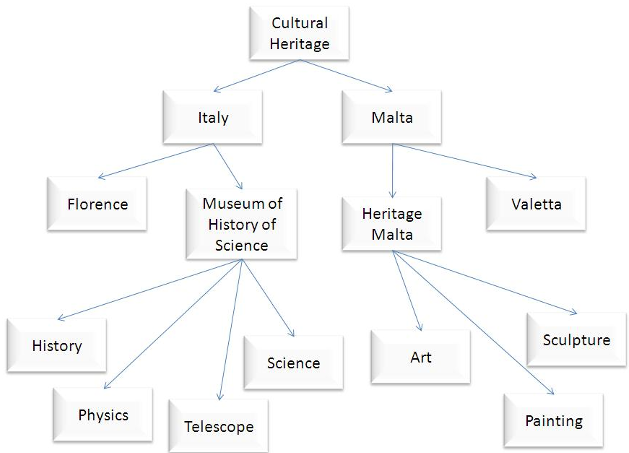
Instead of searching for random keywords, the system builds a tree starting from generic concepts (root) down to specific instances (leaves). For a museum, this might range from "Art" to "Sculpture."
2. Quest Strategies: How to Crawl?
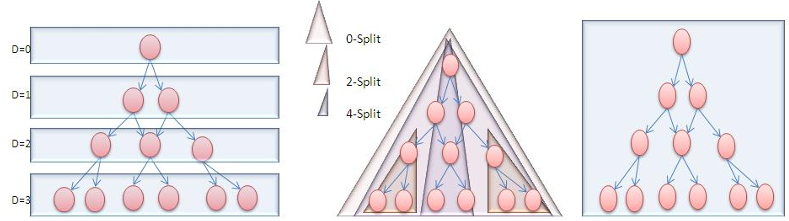
The authors propose three ways to navigate this tree for query formulation:
- Depth-based: Iteratively moves down the tree levels.
- N-Split: Divides the tree into N-sized segments for focused processing.
- Greedy: A "brute force" approach taking all topics at once.
3. The Two-Step Miner
Once data is cached, it undergoes a refinement process:
- Clustering (K-means): Reduces the massive "bag-of-words" into dense centroids. The supervisor ensures these centroids align with the taxonomy.
- Classification (kNN/PDT): Maps these clusters to probabilistic models, creating a weighted list of interests (e.g., User A has a 0.8 probability of interest in "Telescopes").
Experimental Insights
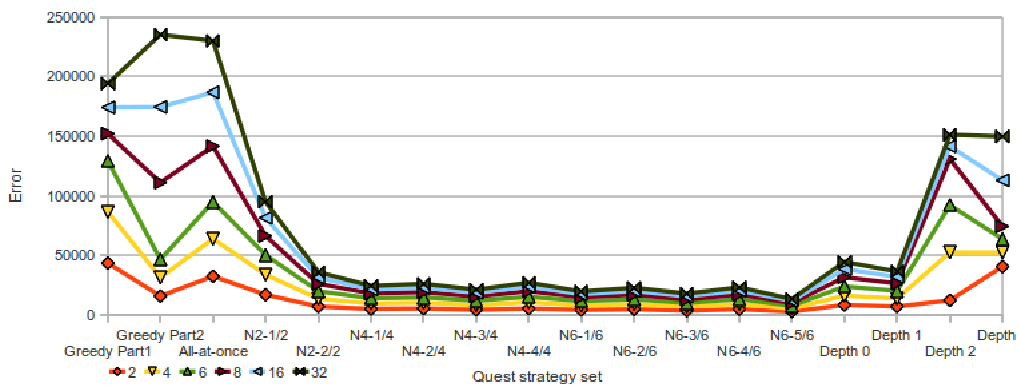
The framework was tested against 300 communities on LiveJournal (approx. 9,750 topics) targeting the "Smartmuseum" domain.
- Efficiency: The N-Split strategy was the clear winner. It showed significantly lower WCSSR (error) in clustering. Unlike the Greedy method, which struggles with high data volume, N-Split provides manageable "digests" of the taxonomy.
- Classification Accuracy: The kNN classifier proved more robust than Decision Trees (PDT). While PDT's error increased linearly with more clusters, kNN maintained a more stable F-Score, especially when paired with the N-Split approach.
Critical Analysis & Conclusion
Quest successfully demonstrates that semantic guidance makes social mining more efficient. Its primary strength is the Inductive Bias provided by the taxonomy, which ensures that the crawling stays relevant to the target domain.
Limitations: The current taxonomy construction is manual, which could be a bottleneck for rapidly evolving domains. Furthermore, the reliance on FOAF/XML data from platforms like LiveJournal might need adaptation for modern "walled garden" social media APIs.
Future Outlook: The true potential of Quest lies in integrating Ontology Learning to build the trees automatically. As we move toward a Web of interpersonal content, adaptive frameworks like Quest will be vital for any startup looking to bypass the cold-start problem and find their audience where they already live: in social communities.