
AMP Framework: Master of the Shifting Landscape in Dynamic Optimization
For Peer Review An Adaptive Multi-Population Framework for Locating and Tracking Multiple Optima
The paper introduces the Adaptive Multi-Population (AMP) framework, a robust meta-heuristic architecture designed to locate and track multiple optima in dynamic optimization problems (DOPs). It features a unique learning mechanism that adaptively adjusts the number of searching populations by leveraging historical data stored in a database, achieving state-of-the-art performance in both Moving Peaks Benchmark (MPB) and static multi-modal tasks.
TL;DR
In the world of optimization, a "moving target" isn't a metaphor—it's a mathematical reality called a Dynamic Optimization Problem (DOP). The Adaptive Multi-Population (AMP) framework acts as an intelligent coordinator that learns how many "scouts" (populations) are needed at any given time. By combining historical learning with heuristic clustering, it outperforms traditional methods in tracking multiple shifting peaks simultaneously.
Background: The Moving Peaks Dilemma
In many real-world scenarios—like traffic routing or robotic path planning—the optimal solution today might be the worst tomorrow. Multi-population methods (MPMs) solve this by maintaining several clusters of searchers. However, the million-dollar question remains: How many clusters do we need?
- Too few: You miss the global optimum if it jumps to an unmonitored area.
- Too many: You waste "fuel" (function evaluations) on redundant searches.
Prior SOTA methods like SAMO or AMSO adjusted populations based on instantaneous feedback. AMP changes the game by introducing a memory-driven adaptation mechanism.
Methodology: Precision Through Learning
The AMP framework is more than just a search algorithm; it is a management system for searchers. Its architecture is built on four pillars:
1. Heuristic Clustering
Instead of forcing the user to define "radii" or "cluster sizes," AMP uses a hierarchical clustering method that terminates when intra-cluster distances exceed inter-cluster distances. This allows the model to "feel" the natural shape of the fitness landscape.
2. The Learning Database & Probabilistic Prediction
This is the core innovation. AMP records "maps" of established populations versus the total number of individuals. When a shift occurs, it doesn't just guess; it uses a Probabilistic Prediction Scheme to decide whether to expand or shrink the total search force based on the trend of its historical success.
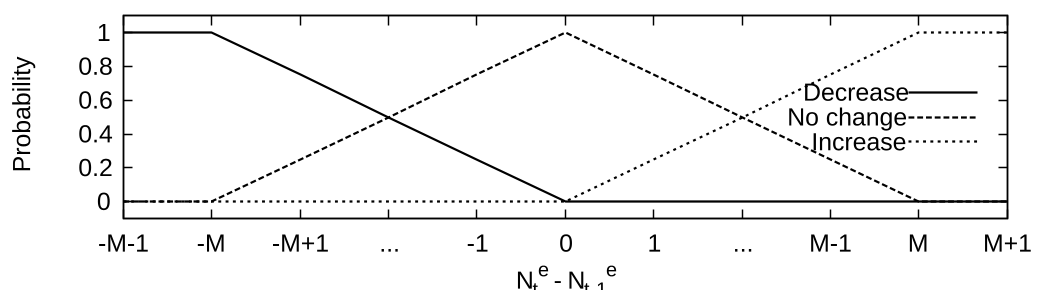 Figure 1: The feedback loop where algorithm behavior changes are logged and used to predict future population needs.
3. Peak Hiding & Hibernation
To avoid "staring at a solved problem," AMP employs Peak Hiding. Once a peak is found and explored, its basin of attraction is effectively "hidden" from new explorers, forcing them to find undiscovered peaks elsewhere. Hibernation keeps populations dormant on a peak to save energy, only waking them up when a change in the environment is detected.
Experimental Battleground: MPB and Beyond
The researchers tested AMP against 10 formidable rivals using the Moving Peaks Benchmark.
Tracking Efficiency
The most impressive result is how closely the number of AMP populations matches the actual number of peaks as they change over time. In Var1 and Var2 experiments (where peak counts oscillate), AMP's population count followed the true peak count like a shadow.
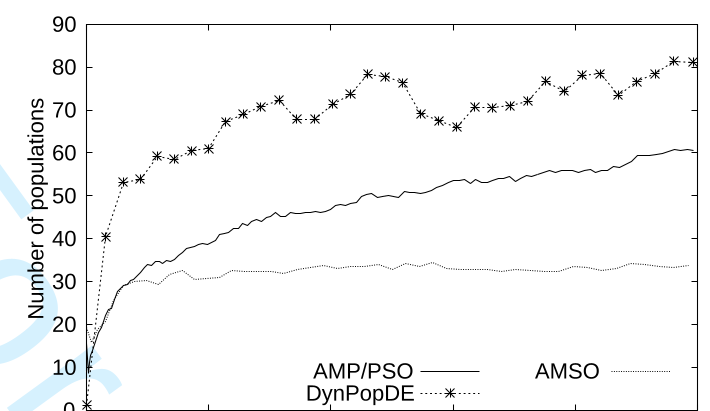 Figure 2: Analysis of population synchronization. Note how AMP maintains a more accurate count compared to SAMO or AMSO.
Quantitative SOTA
- Offline Error: AMP/PSO achieved significantly lower error rates across all peak densities (10 to 200 peaks).
- Success Rate (SR): In static multi-modal functions, AMP/PSO achieved a 100% SR on almost all test functions (F1-F10), often using far fewer evaluations than baseline models like CRDE.
Critical Insight: Why Historical Data Matters
Most algorithms are "forgetful." They treat every environmental change as a brand-new problem. AMP recognizes that while the values change, the patterns of the landscape often repeat. By storing the relationship between search density and peak discovery in a database, AMP effectively builds a meta-model of the environment's complexity.
Conclusion & Future Outlook
The AMP framework represents a shift from "reactive optimization" to "predictive optimization." While it excels in low-dimensional benchmarks, the next frontier is scaling this historical learning to high-dimensional, noisy real-world data. For researchers in evolutionary computation, AMP provides a robust, parameter-lite template that can be instantiated with any base algorithm (PSO, DE, etc.) to conquer dynamic landscapes.
Main Source: "An Adaptive Multi-Population Framework for Locating and Tracking Multiple Optima", Transactions on Evolutionary Computation.