
9EMBA.COM: Engineering the Next Generation of Adaptive Social Networks for Elites
Adaptive Social Network Services: The Practice of 9EMBA.COM
This paper introduces an Adaptive Social Network framework designed to foster virtual community evolution through four integrated pillars: Content, Community, Communication, and Self-Branding. The authors implemented this framework in 9EMBA.COM, a specialized platform for Executive MBA students in Taiwan, achieving high user satisfaction by utilizing tag-based implicit associations for personalized recommendations.
TL;DR
Building a successful virtual community is more than just creating a group on Facebook. This paper presents 9EMBA.COM, an adaptive social network that integrates content, communication, and self-branding into a unified ecosystem. By leveraging Implicit Tag Associations, the platform creates a "self-promoting" environment where professional elites can share knowledge and build identities without the noise of general-purpose social media.
The Pain Point: Fragmented Professional Networks
In the current social media landscape, professional interactions are often fragmented. An EMBA student might discuss a case study on Line, read industry news on Yahoo, and update their professional profile on LinkedIn. This fragmentation leads to:
- Resource Dispersion: Valuable knowledge shared in chats is lost and never archived.
- Maintenance Fatigue: Community organizers struggle to keep members engaged across five different platforms.
- Lack of Specialized Context: General-purpose algorithms often fail to surface the niche, high-value content that "business elites" actually need.
Methodology: The Architecture of Adaptivity
The core innovation lies in the Adaptive Service Association. Rather than treating chat, news, and profiles as silos, the authors treat everything as an Entity connected by a web of tags.
1. The Four Pillars of Service
The framework integrates four essential services:
- Content Service: RSS-fed business/finance news.
- Communication Service: Real-time chat-rooms for instant feedback.
- Community Service: Tools for organizing activities (competitions, dinners) and teams.
- Self-Branding Service: A "LinkedIn-style" profile that captures the user's activities and expertise within the niche.
2. Implicit vs. Explicit Associations
The system maps user intent through two layers:
- Explicit: Direct actions like "Liking" or "Collecting" an entity (Strong Connection) or simply browsing it (Weak Connection).
- Implicit: Leveraging Tags to create "Entity-to-Entity" links. If you read an article on "Fintech," the system implicitly connects you to chat rooms and activities tagged with "Fintech."
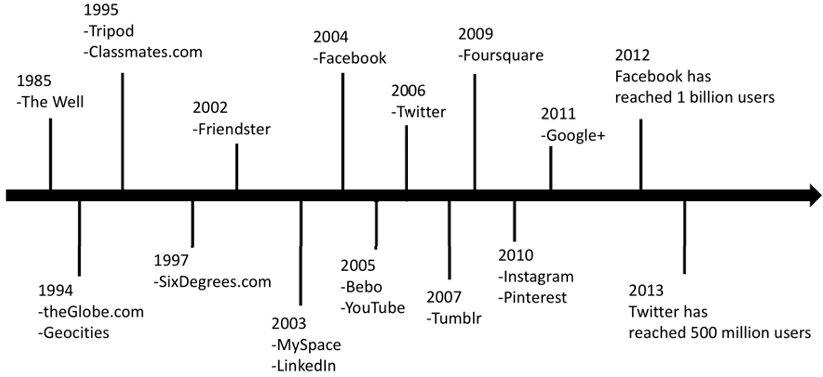 Fig 1: The historical evolution from profile-based sites to the proposed adaptive, passion-based networks.
3. Dual-Path Recommendation Engine
To keep the community "sticky," the authors employ two mathematical approaches:
- Object-centric: Analyzes the tag distribution of entities a user has interacted with to predict interest in new topics.
- User-centric: Uses Pearson Correlation to find "look-alike" users, recommending entities that similar professionals found valuable.
The formula used to predict user interest by aggregating scores from similar neighbors.
Real-World Implementation: 9EMBA.COM
The platform was built as a Progressive Web App (PWA) to ensure researchers could maintain a single codebase while providing a native-app-like experience across iOS and Android.
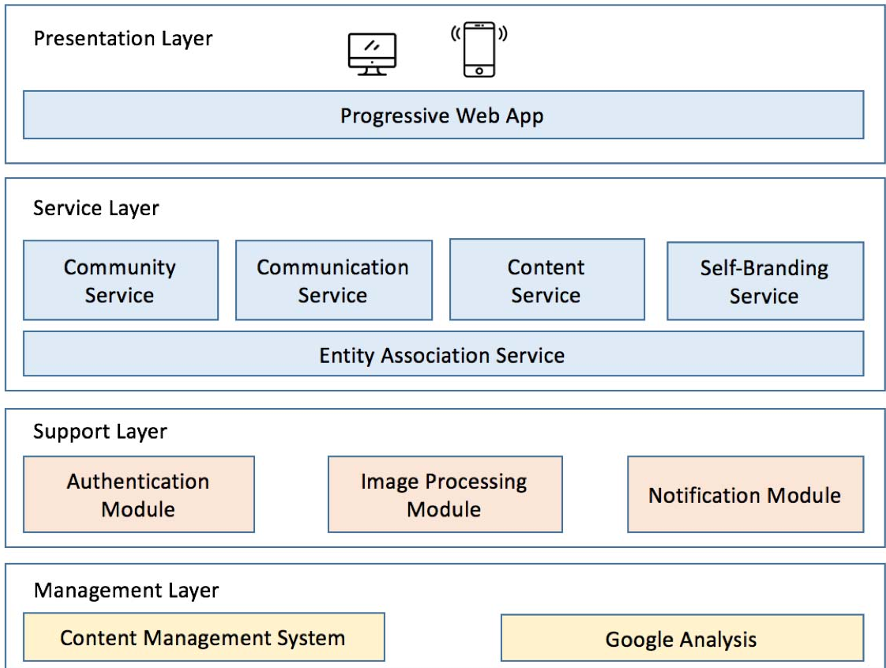 Fig 2: The interface of 9EMBA.COM showing Chat-rooms, User Profiles, and Tag-based Exploration.
Evidence of Success
The evaluation focused on two metrics: Usability and Usefulness. In a study of EMBA students from nine top universities in Taiwan, the data showed overwhelming positivity. Most users found that having a dedicated space for "Expertise Sharing" significantly reduced the friction found on mainstream platforms.
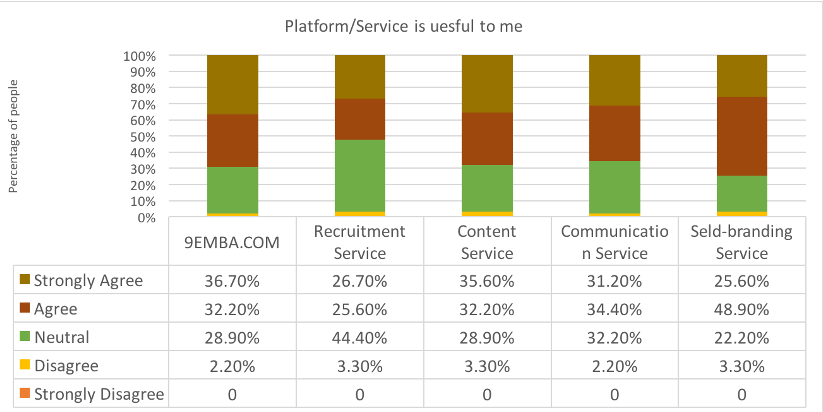 Fig 3: Survey results indicating high perceived value among professional users.
Critical Insight: Why This Matters
The "Adaptive" part of the Adaptive Social Network isn't just about the UI; it's about the Context. By forcing different services (Chat, News, Events) to communicate through a shared Entity Association Network, the platform becomes more than the sum of its parts.
Limitations: The study is currently limited by its sample size () and its reliance on PWA features like Push Notifications, which are still inconsistently supported across all mobile browsers (e.g., legacy Safari).
Conclusion
9EMBA.COM serves as a blueprint for "vertical" social media. It proves that for high-value user segments like business executives, less is more. By filtering out the noise of the general web and providing a tag-integrated environment, organizers can foster communities that are not only active but also intellectually and professionally profitable.