
ASCI-CAM: Decoding Social Circles from Anonymous Mobility via Adversarial Learning
Adversity-Based Social Circles Inference via Context-Aware Mobility
2020-12-01
Summary
Problem
Method
Results
Takeaways
Abstract
The paper introduces ASCI-CAM, a novel graph-based adversarial framework for Trajectory-based Social Circle Inference (TSCI). It combines context-aware check-in embeddings with an attentive auto-encoder and adversarial regularization to achieve state-of-the-art performance in predicting social ties from anonymous mobility data.
## TL;DR
Inferring who your friends are just by looking at where you go is a daunting task, especially when data is sparse and identities are hidden. **ASCI-CAM** (Adversity-based Social Circles Inference via Context-Aware Mobility) breaks new ground by combining **Contextual Graphs** with **Adversarial Learning**. It moves beyond the limitations of standard Variational Auto-encoders (VAEs) to map anonymous trajectories to social groups with unprecedented accuracy, even for "cold-start" users.
## The Core Challenge: Sparse Data and Rigid Priors
Predicting social ties from mobility data (TSCI) usually hits three walls:
1. **Context Blindness**: Most models treat check-ins as isolated points, ignoring the geographical and temporal links between them.
2. **The Sparsity Problem**: LBSN (Location-Based Social Network) data is notoriously skewed; users don't check in everywhere, leaving "gaps" in their movement patterns.
3. **Posterior Collapse**: Previous SOTA models like *DeepTSCI* used VAEs which assume human movement follows a simple Gaussian distribution. This often leads to the model ignoring the latent codes entirely (posterior collapse), resulting in generic and inaccurate social circle inferences.
## Methodology: Context-Awareness Meets WGAN
The authors propose a multi-stage pipeline to transform raw check-ins into high-fidelity social predictions.
### 1. Contextual Graph Embedding
Instead of using simple `word2vec` on location IDs, ASCI-CAM builds a graph where nodes are check-ins and edges represent both actual user transitions and geographical proximity (within 1km). By performing random walks on this graph, the model generates "virtual" yet plausible trajectories, effectively augmenting the sparse dataset.
### 2. Attentive Encoding & Adversarial Regularization
The architecture employs an **Attentive LSTM** to weight significant visits more heavily. To solve the distribution problem, they introduce an adversarial module (Generator and Critic) based on **WGAN**.
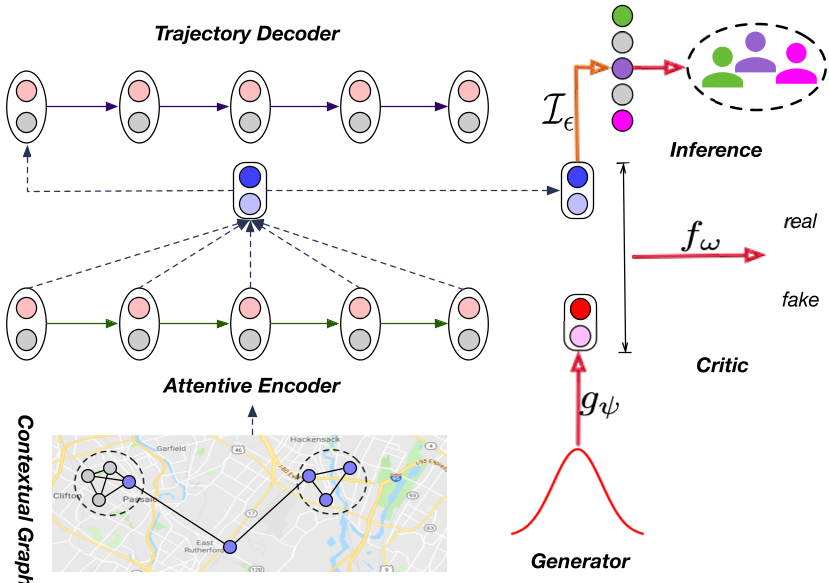
*Fig 1: The ASCI-CAM framework, highlighting the flow from Graph Construction to Adversarial Latent Space Regularization.*
Unlike VAEs that force a Gaussian structure, the Discriminator (Critic) in ASCI-CAM forces the latent trajectory representation ($A_T$) to be indistinguishable from a distribution learned by a generator. This allows for a much more **flexible and robust latent space** that captures the unique "fingerprint" of a user's movement.
## Experimental Validation
The model was tested on both "Restricted Trajectory" (RT) and "Restricted User" (RU/Cold-start) tasks across datasets like Brightkite, Gowalla, and Foursquare.
### Key Results:
* **Superiority in Cold-Start**: On the RU-TSCI task (predicting circles for users never seen in training), ASCI-CAM showed its strongest lead, proving that its graph-based augmentation helps generalize to new users.
* **Effective Discrimination**: t-SNE visualizations of the trajectory codes show clear clustering by social circle labels.

*Table 1: ASCI-CAM consistently outperforms DeepTSCI across macro-Recall, F1, and Accuracy metrics.*
## Deep Insights: Why it Works
The secret sauce of ASCI-CAM is the **Ablation Study** findings. When the authors removed the Adversarial component (`GraphTSCI`) or the Graph component (`GanTSCI`), performance dropped. However, the Graph component proved to be more critical than the Gain from GANs. This suggests that in human mobility, **better data representations (context)** are even more vital than the specific **generative architecture**.
## Conclusion
ASCI-CAM demonstrates that social circles are deeply embedded in the "where" and "when" of our lives. By abandoning the one-size-fits-all Gaussian assumption of VAEs in favor of adversarial training, the researchers have created a more nuanced tool for LBSN applications. For researchers, this work highlights the potential of using **synthetic-but-plausible** trajectories (via graphs) to bridge the gap in sparse real-world datasets.
**Takeaway**: To understand social structures, don't just look at the points—look at the contextual graph and let the data define its own distribution.