Decoding Subjectivity: Why Your Sentiment Analysis is Failing the Nuance Test
Are They Different? Affect, Feeling, Emotion, Sentiment, and Opinion Detection in Text
This paper provides a rigorous conceptual framework to differentiate between five core subjective terms: Affect, Feeling, Emotion, Sentiment, and Opinion. The authors identify unique temporal and social characteristics for each term, proposing a structured approach for advanced Natural Language Processing (NLP) detection beyond simple polarity.
TL;DR
In the world of NLP, we often treat "Emotion," "Sentiment," and "Opinion" as synonyms. This paper argues that this lack of rigor is exactly why our models struggle with complex human text. By building a psychological hierarchy—from non-conscious Affect to enduring Sentiments—the authors provide a roadmap for the next generation of "Subjectivity Sensing" that respects culture, time, and biology.
The "Synonym" Trap: Why Polarities Aren't Enough
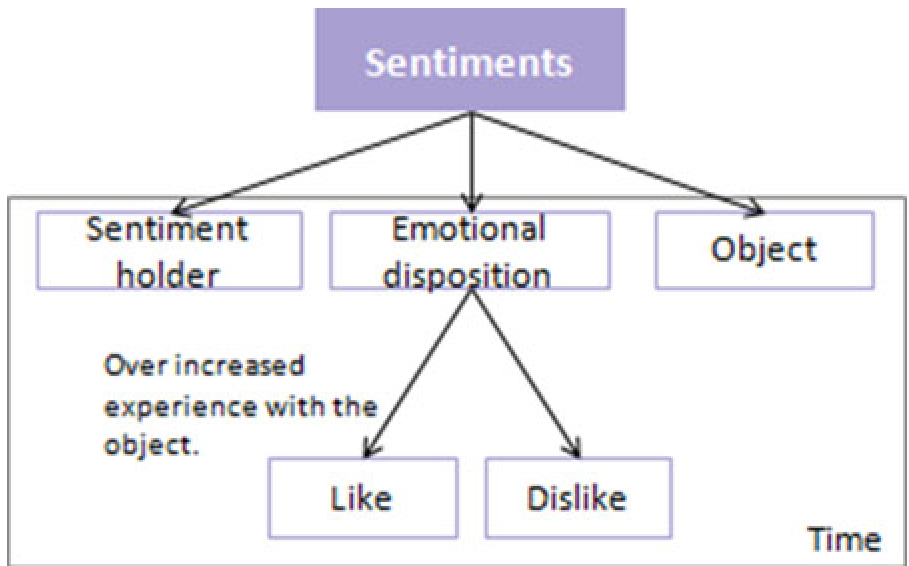
Most developers treat Sentiment Analysis as a simple binary classifier: is this tweet positive or negative? However, human experience isn't a toggle switch. The paper highlights a massive gap in current literature: the failure to distinguish between a transient Emotion (being angry at a specific glitch) and an enduring Sentiment (a long-term dislike of a brand).
The authors' core insight is that subjectivity is a multi-layered manifold. If a model doesn't know the difference between a feeling and an opinion, it cannot handle sarcasm, cultural idioms (like "wicked" being positive in the UK), or clinical descriptions that carry heavy subjective weight.
Methodology: The Hierarchy of Human Subjectivity
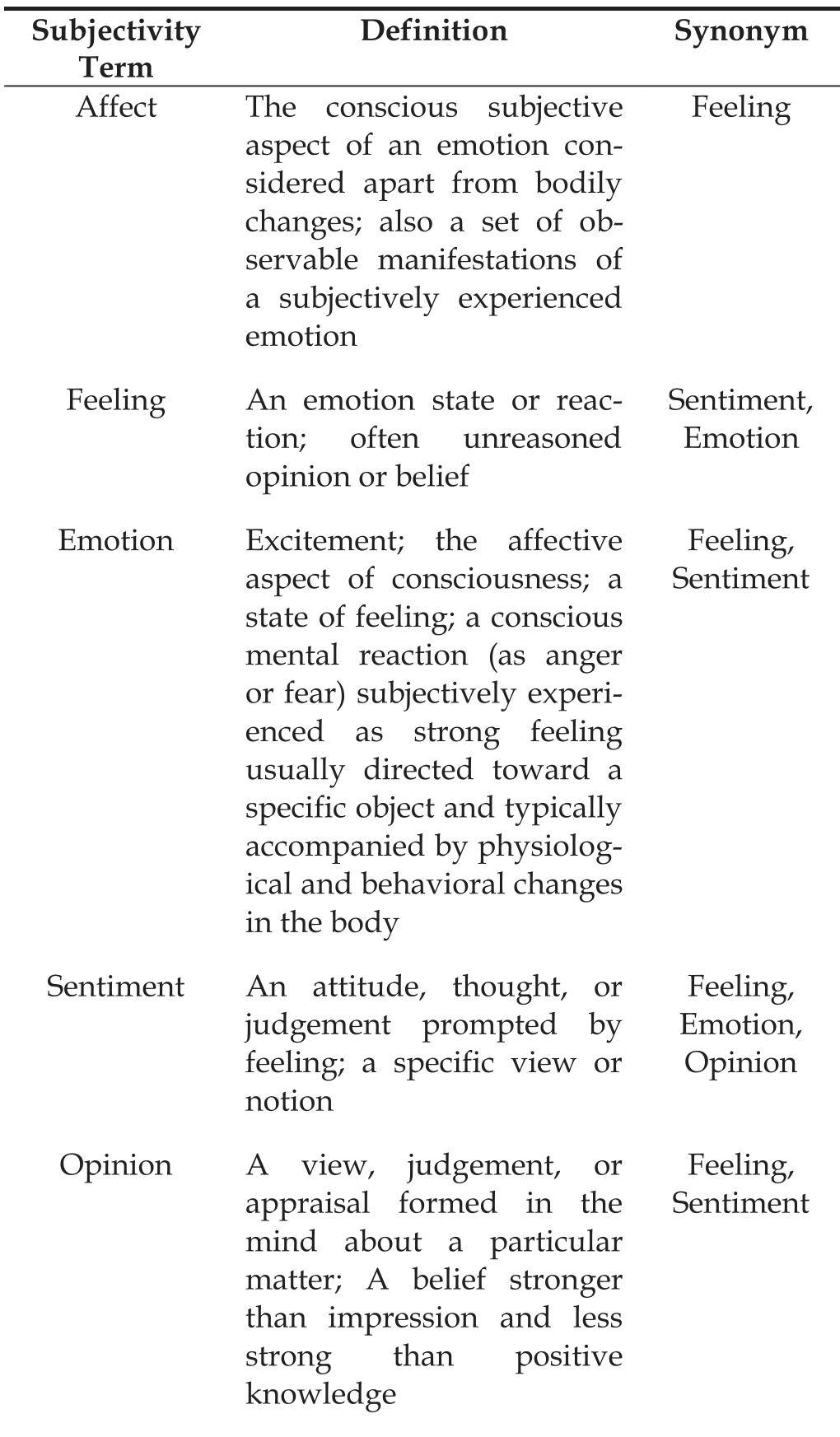
The researchers break down the "Subjectivity" umbrella into five distinct components with clear boundaries:
- Affect: The "pre-personal" intensity. It's the biological "yelp" of a dog or a baby—before language and biography define it.
- Feeling: Sensation checked against personal biography. It is conscious and labeled (e.g., "I feel cold").
- Emotion: The social projection of a feeling. Unlike feelings, emotions can be feigned to meet social expectations.
- Sentiment: This is the "Dispositional" layer. Sentiments are stable, long-term, and object-oriented (e.g., Patriotism or Long-term Friendship).
- Opinion: A personal interpretation of information. Crucially, an opinion can be completely devoid of emotion (e.g., "The battery lasts 3 hours").
How to Detect the "Invisible" Markers
The paper introduces a "Scenario Analysis" to show how an emotion like Anger is actually a composite of five factors that can all be found in text if you know where to look:
- Appraisal: "I can't believe he hit me" (Evaluative language).
- Physiological Reaction: "Adrenaline rushing in" (Internal arousal cues).
- Action Tendency: "Wanted to hit him back" (Verb-driven intent).
The Sentiment Endurance Experiment
One of the most profound takeaways is the Temporal Dimension. The authors argue that a single tweet cannot represent a "Sentiment." In their "EmoTwitter" experiment, they tracked users for up to a year. They found that by mapping transient emotions (Joy, Sadness, Anger) over time, they could visualize the "Steady State" of a user's sentiment toward an object like Apple or an iPhone.
SOTA Insights & Critical Analysis
The value of this work lies in its Inductive Bias for future models. Instead of training a model to look for "Happy" or "Sad" words, we should be training models to:
- Identify the Object: What is the sentiment directed toward?
- Access Cultural Ethnography: Where is the user? Does "wicked" mean "bad" or "awesome" in their locale?
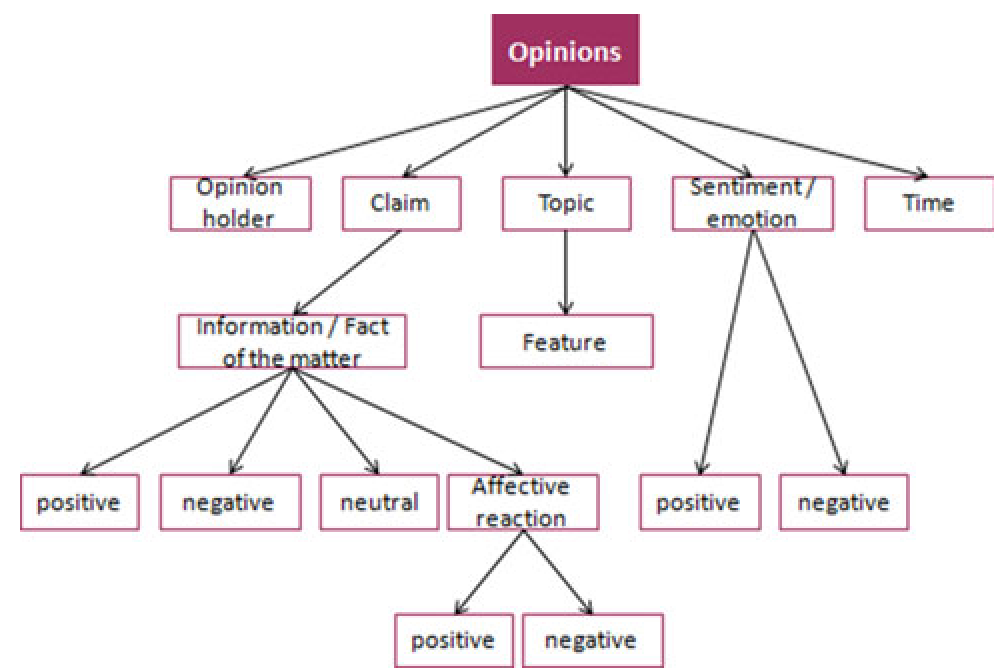
- Analyze the "Opinion Quintuple": Topic, Holder, Claim, Sentiment, and Time.
Limitations: The paper admits that distinguishing between "Use" and "Mention" (e.g., saying a slur vs. discussing the word itself) remains a major hurdle for automated systems, similar to the challenges of irony and sarcasm.
Conclusion: Toward Fine-Grained Subjectivity
The "Beginning of Wisdom" for NLP is the definition of terms. This paper moves the community away from the "Black Box" of sentiment analysis toward a structured, psychologically-grounded approach. For developers, the message is clear: if you aren't tracking your users over time and considering their cultural context, you aren't measuring their Sentiment—you're just catching a glimpse of a passing Emotion.