
Affective Social Computing: The Secret Sauce for Senior Health Interventions
Affective Computing on Elderly Physical and Cognitive Training within Live Social Networks
This paper explores the integration of Affective Computing (AC) and live social networks within the "Long Lasting Memories" (LLM) project. It introduces the FitForAll (FFA) exergaming platform, which leverages senior-specific game design to improve physical and cognitive health through social interaction.
TL;DR
Can social networks save lives? This paper suggests they can—at least when it comes to keeping seniors committed to their health. By integrating Affective Computing (AC) with live social dynamics, the Long Lasting Memories (LLM) project demonstrates that group-based "exergaming" significantly boosts usability perception and slashes dropout rates, transforming a lonely chore into a competitive, joyful social event.
Problem & Motivation: The Empty Gym Syndrome
For the elderly, physical and cognitive decline is often compounded by isolation. While "Serious Games" (games designed for health and education) exist, they often fail for two reasons:
- Technological Stress: New interfaces can be intimidating, leading to a loss of self-esteem.
- Lack of Motivation: Exercising alone 5 days a week is mentally taxing.
The authors note a lack of "affective motivation" in prior work. They hypothesize that by moving from Passive AC (making a system easy to use) to Social AC (leveraging group dynamics), they can bridge the gap between "having a tool" and "actually using it."
Methodology: FitForAll (FFA) and Group Dynamics
The study utilized the FitForAll (FFA) platform, an exergaming suite that uses low-cost peripherals like the Nintendo Wii Balance Board.
The Core Architecture of the Intervention
The methodology was built on three pillars:
- Accessibility-First Design: Reducing the "disappointment" factor of UI/UX.
- Affective Measurement: Evaluating emotional states using validated scales like the Physical Activity Enjoyment Scale.
- Live Social Iterations: Instead of home-use, trials were conducted in groups (1-12 people) to simulate a "live social network."
 Table 1: Statistical significance of user satisfaction and affective state.
Results: The Power of the Crowd
The data revealed a striking correlation between the number of people in a training room and their willingness to stay in the program.
- Usability & Satisfaction: Scores were significantly higher than neutral means, proving the system was well-liked.
- The "Social Threshold": The researchers found that once a group reached 7 or more participants, the dropout rate plummeted toward zero. In contrast, smaller groups or solo users were much more likely to abandon the intervention.
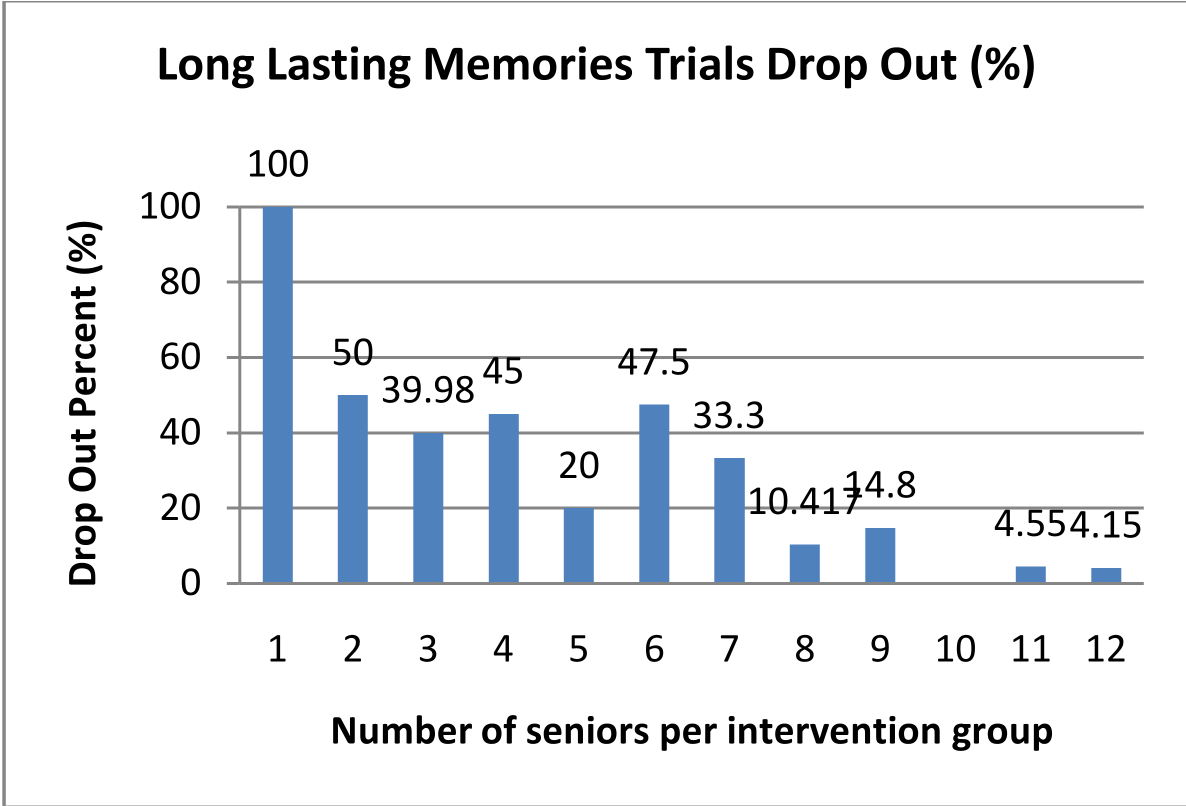 Fig. 1: Clear evidence that larger social groups (7+ members) correlate with near-zero dropout rates.
Why did this happen?
The authors suggest that "large" social networks provide a "fertile ground" for:
- Friendly Competition: Collecting virtual rewards (like apples from a tree) becomes more meaningful when others are watching.
- Mutual Support: Seniors were observed providing peer-to-peer advice on how to win, fostering a sense of community.
Critical Analysis & Conclusion: Towards the Social Cloud
The takeaway is clear: Health is social. The "affection" produced by group play is more powerful than the game mechanics themselves.
Limitations & Future Work: While the results are promising, the study was conducted in physical locations (daycare centers). The authors acknowledge that the next frontier is the Social Cloud. The goal is to replicate these "live" results in a virtual environment, allowing seniors to exercise at home while remaining connected to a real-time, global social network of peers.
This work marks a pivot from treating Affective Computing as a "user-to-machine" relationship to a "user-to-community" interface.