
Rowls: Bridging Organizational Context and Semantic Service Discovery in E-Health
Agent-Based Semantic Service Discovery for Healthcare: An Organizational Approach
The paper introduces Rowls, a role-based semantic service discovery mechanism for e-health, utilizing an organizational approach to multi-agent systems. It integrates interaction modeling with OWL-S to improve service discovery accuracy in dynamic healthcare environments.
Executive Summary
TL;DR: The paper presents a novel approach to e-health service discovery that moves beyond simple functional matching (inputs/outputs) to incorporate organizational roles. By defining a "Rowls" matchmaker, the authors allow software agents to find medical services based on the specific social and communicative roles they play (e.g., Advisor, Informer) and the roles they require from the requester.
Background: Historically, service-oriented architecture (SOA) in healthcare focused on the "What" (the technical interface). This work shifts the focus to the "Who" and "Whom," situating healthcare services within the complex organizational fabric of emergency medical assistance.
Problem & Motivation: The Context Gap
In medical emergencies, finding a "Blood Test Service" isn't enough. You need to know if the service provider is authorized to play the role of a Diagnostic Advisor and whether you, as the requester, are capable of playing the role of a Health Status Informer.
Existing SOTA methods like OWLS-MX focus on hybrid syntactic/semantic matching of data types. However, they fail to capture the Interaction Logic. In healthcare, descriptions must have unique, clear meanings rooted in human activity. The authors argue that without modeling the organizational interaction—the "roles" parties play—service discovery remains too generic for high-stakes medical scenarios.
Methodology: Interaction Analysis & Role Ontologies
The core of the "Rowls" approach is a two-layered ontology:
- Social Roles & Interactions: Domain-specific concepts (e.g., Patient, Cardiologist, Medical Advisement).
- Communicative Roles & Interactions: Abstract, reusable patterns (e.g., Informer, Advisor, Information Exchange).
The Role-Based Service Description
The authors extend the OWL-S Service Profile by adding a ServiceRoles parameter. Every advertisement now specifies:
- Provider Role: What role the service performs.
- Depending Roles: What roles the requester must be able to play (expressed in Disjunctive Normal Form) for the service to execute successfully.
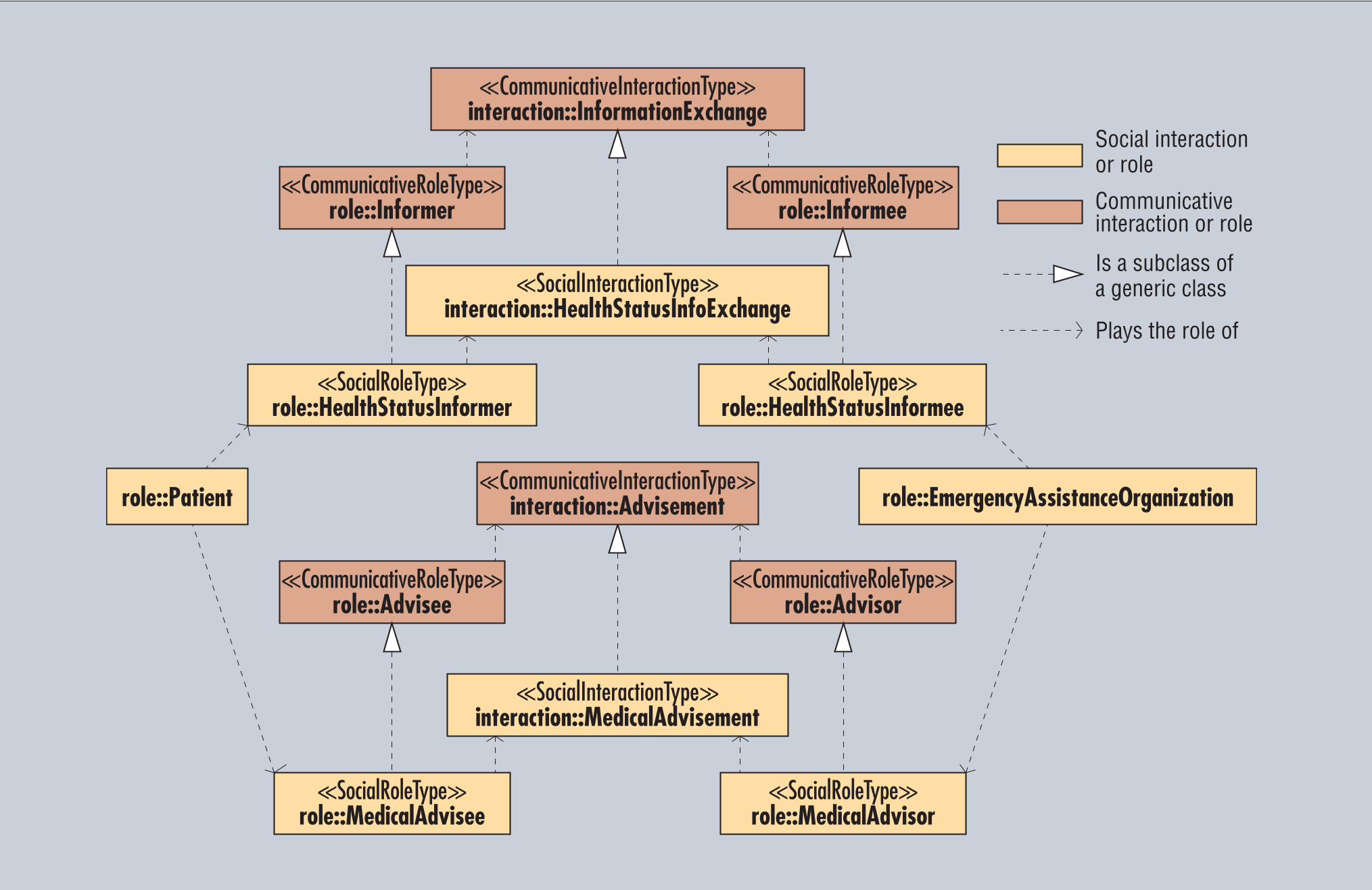 Figure 1: Taxonomy of specific social roles refined into general communicative interactions.
Semantic Matchmaking Algorithm
The matching algorithm doesn't just look for string equality. It calculates a Degree of Match (dom) based on the semantic distance in the ontology:
- Exact (1.0): Perfect concept match.
- Plug-in (0.5 - 1.0): The service provides a more specific role than requested.
- Subsumes (0 - 0.5): The service provides a more general role.
The formula utilizes an exponential decay function of the path length () between concepts to ensure that the degree of match decreases as the concepts become more distantly related in the tree.
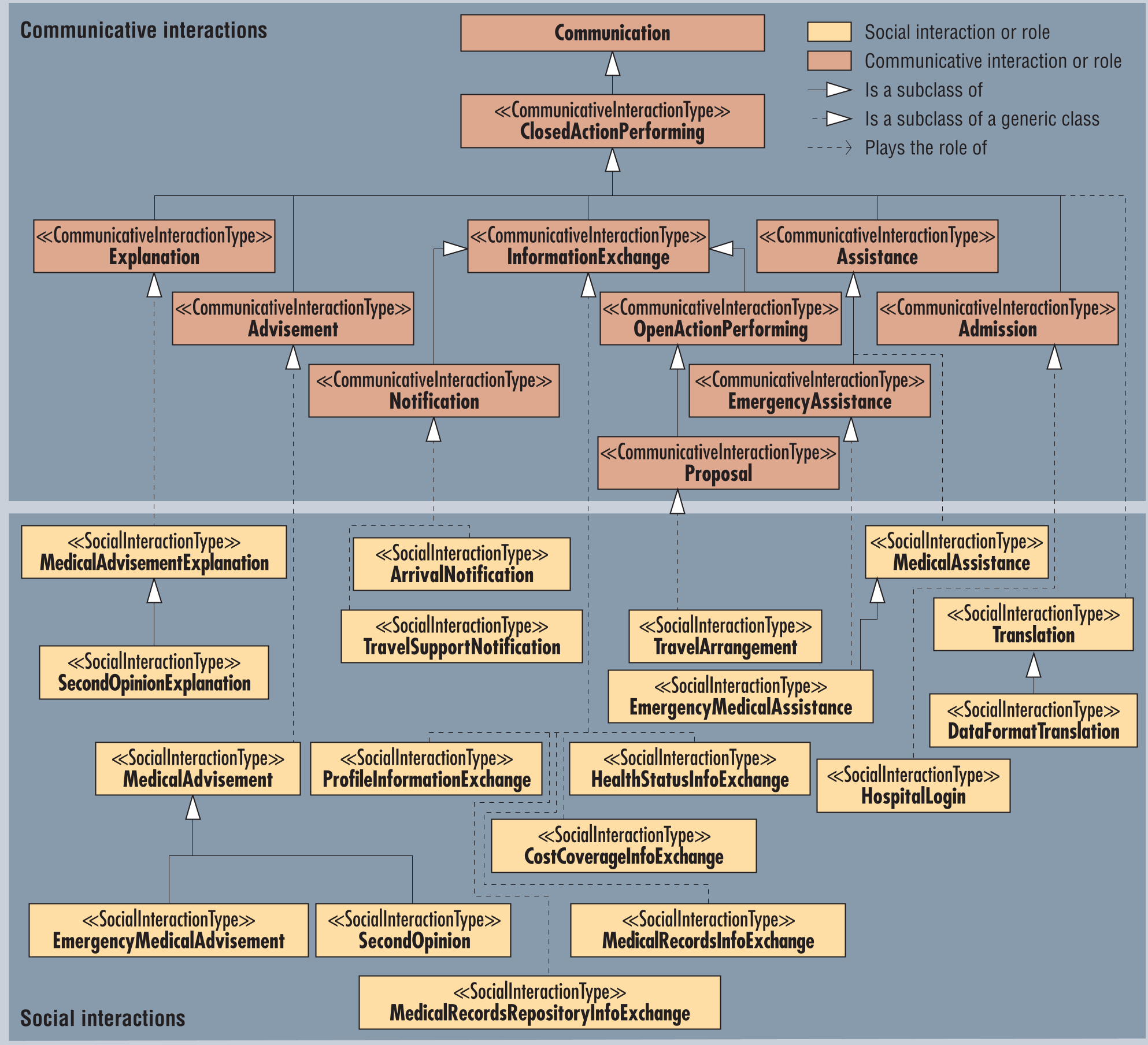 Figure 2: Partial representation of the interaction-type ontology used for matching.
Experiments & Results: Real-World Validation
Rowls was integrated into the CASCOM framework, a suite for context-aware mobile computing in healthcare.
- Scalability: Tested against 300 OWL-S services, the matchmaker returned results in <1s.
- Integration: It functions as a pre-filter or part of an ensemble alongside OWLS-MX (for I/O matching) and PcEM (for Preconditions/Effects).
- Field Trial: Validated in a medical emergency scenario in Austria, involving real-world hospital structures and emergency providers.
 Figure 3: Sequential and simultaneous configurations for multi-component matchmaking.
Critical Analysis & Conclusion
Takeaway: The "Organizational Approach" is a powerful paradigm for Multi-Agent Systems. By treating organizational abstractions as "first-class citizens," the authors have made service discovery more robust and context-sensitive.
Limitations:
- The system relies on a well-defined and relatively static role ontology. In extremely dynamic environments where roles shift rapidly, the manual "extension" of ontologies might become a bottleneck.
- The weighting between role-matching and I/O-matching (in the simultaneous setup) requires careful tuning to avoid role-compatibility overriding functional suitability.
Future Work: The authors suggest exploring Fuzzy Logic for more nuanced aggregation of match degrees and broadening compatibility with WSMO (Web Service Modeling Ontology).