
Agent-Based Trace Learning: Turning Malware Detection into a Strategic Game
Agent-based trace learning in a recommendation-verification system for cybersecurity
The paper introduces an Agent-Based Trace Learning system within a Recommendation-Verification framework for cybersecurity. It utilizes API scraping and machine learning (specifically decision trees) on execution traces to identify the Zeus/Zbot malware family with 97.95% accuracy while maintaining model simplicity for human interpretability.
TL;DR
Researchers from Carnegie Mellon and NYU have developed a recommendation-verification system that treats cybersecurity as a decentralized signaling game. By using API scraping to observe execution traces and machine learning to generate "human-interpretable" detection rules, they successfully identified the highly polymorphic Zeus malware with high accuracy and low model complexity.
Background Positioning
In the landscape of cybersecurity, we are moving away from "black-box" antivirus software toward Social-Technological Networks. This paper sits at the intersection of Game Theory, Formal Methods, and Machine Learning, proposing a framework where defense strategies are not just code, but "M-Coin" incentivized assets that agents can recommend, verify, and mutate.
Problem & Motivation: The Failure of Static Signatures
The core pain point is polymorphism. Malware like Zeus/Zbot uses layers of obfuscation to ensure that two infected files never look the same on disk (Static Analysis). However, the behavior of the malware—how it communicates with the kernel—remains consistent because it must perform specific malicious tasks to succeed.
Existing formal verification methods (like model checking) are often too complex to scale. The authors' insight is to bridge this gap: use machine learning to "learn" these formal properties from execution traces, making them compact enough to be checked on your phone or laptop.
Methodology: The Architecture of Trace Learning
The authors employ a two-step process: API Scraping and Supervised Property Learning.
1. API Scraping with Intel Pin
Using the Intel Pin tool, the system monitors 527 Windows kernel functions. It records "entry" and "exit" events, creating a behavior sequence.
- Features: They don't just count API calls; they look at k-mers (subsequences of length k). For example, if a "File Write" call is immediately followed by a "Network Send," that sequence is more suspicious than the two calls occurring independently.
2. Induction of Interpretable Models
They chose algorithms like C4.5 (Decision Trees) because the results are readable by humans. A human agent can look at a decision tree and understand why a process was flagged, which is crucial for a system where users must "recommend" and "trust" defense options.
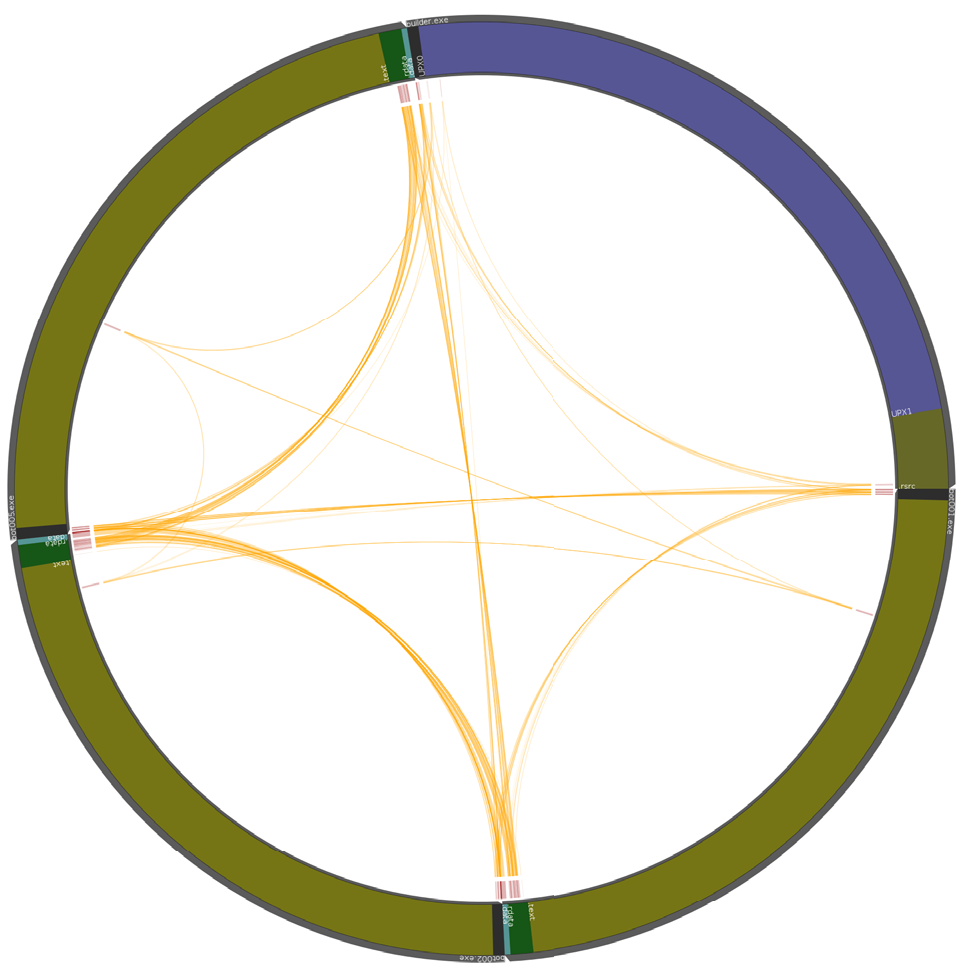 Figure: Even when binary code changes (polymorphism), the execution pointer patterns over time reveal a visible "signature" of the Zeus family.
Experiments & Results
The study compared Naive Bayes, Random Forest, and C4.5. While Random Forests are powerful, the authors prioritized C4.5 for its interpretability.
- Accuracy: 97.95% with Adaboost.
- Robustness: The most striking finding was that they could "prune" the decision tree—making it much simpler—without a catastrophic drop in performance. This suggests that the core behavior of Zeus is concentrated in a few highly distinct API transition patterns.
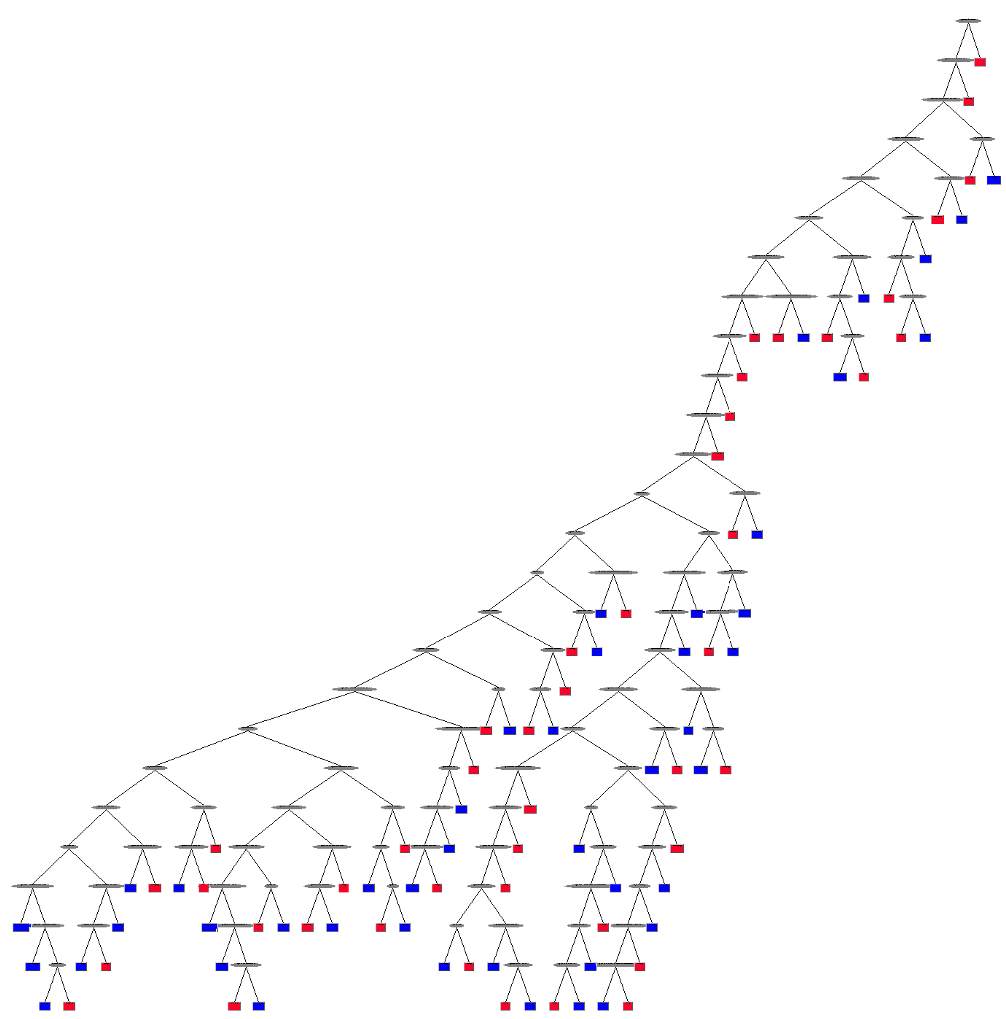 Figure: The Precision-Recall and ROC curves demonstrate that the model handles the imbalanced dataset (a small number of Zeus samples vs. a large baseline) effectively.
Critical Analysis & Conclusion
Takeaway
The value of this work is not just in the 97% accuracy score, but in the formalization of defense. By converting a machine learning classifier into a "System Security Property," the authors provide a language for agents to negotiate security in an era of ubiquitous computing.
Limitations
- Anti-Analysis: While the authors verified their scraper survived Zeus's current anti-debugging, more advanced "metamorphic" malware could potentially alter call sequences to evade k-mer detection.
- Resource Overhead: Real-time API scraping via binary instrumentation can be computationally expensive for endpoint devices.
Future Outlook
The move toward "M-Coin" based incentive systems for sharing security properties suggests a future where your device's security updates are driven by a decentralized market of verified behavior-monitors rather than a single monolithic provider.