
Agility vs. Reliability: Navigating Data Sparseness in Food Safety Predictors
Trade-offs between Agility and Reliability of Predictions in Dynamic Social Networks Used to Model Risk of Microbial Contamination of Food
This paper evaluates the performance of the Dynamic Social Network in Latent space (DSNL) model for predicting microbial contamination in food production facilities. By modeling factories and Salmonella strains as a bipartite network, the authors demonstrate how latent space representations can forecast future pathogen occurrences, achieving higher recall than independent baseline models.
TL;DR
Predicting food-borne illness outbreaks requires a delicate balance between speed (agility) and accuracy (reliability). This paper demonstrates that while Dynamic Social Network in Latent space (DSNL) models effectively capture hidden links between food facilities and Salmonella strains, their performance is highly sensitive to the temporal window size. To maintain predictive power in sparse, high-frequency monitoring, researchers must account for data aging and seasonal cycles.
Background: Beyond Independent Facilities
In the realm of food safety, the standard operating procedure has long been to treat every processing plant as an island. If Plant A has a Salmonella outbreak, traditional models don't necessarily look at Plant B.
The authors of this study argue that this is a missed opportunity. By treating facilities and pathogen strains as nodes in a Social Network, we can uncover "phenomenological" relationships—similarities in failure patterns that suggest shared supply chain risks or environmental vulnerabilities.
The Problem: The Agility-Reliability Paradox
The core tension explored here is the Time Window.
- Wide Windows (e.g., 1 Year): Plenty of data, dense graphs, and reliable predictions. But, the model is "slow" (low agility); by the time you predict a risk, it might already be a crisis.
- Narrow Windows (e.g., 3 Months): Fast updates (high agility), but the graph becomes incredibly sparse. In a 3-month window, the connectivity of salmonella strains drops to just 41% of their annual levels. This sparseness makes complex network models struggle to find meaningful patterns.
Methodology: Mapping Risk into Latent Space
The authors employ the DSNL (Dynamic Social Network in Latent space) model. The intuition is elegant: imagine every food plant and every bacteria strain living in a multidimensional room (the Latent Space).
- Distance as Risk: If a plant node and a strain node are "close" in this room, the probability of a positive test (a link) is high.
- Smooth Evolution: Facilities can move through this space over time, but the model assumes they don't teleport; their movement is governed by a Gaussian transition model to ensure temporal consistency.
- Efficiency: To avoid the computational trap of comparing every plant to every strain, they use a bi-quadratic kernel, which ignores entities beyond a certain "radius," speeding up the math to .
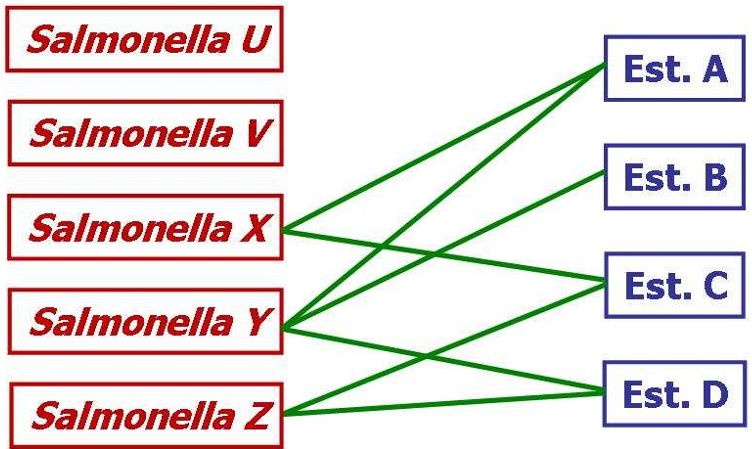 Figure 1: Representing microbial failures as a time-evolving bipartite graph.
Experimental Insights: Why Data "Ages"
When comparing DSNL against a baseline that treats plants independently, the results yielded a surprise. In 12-month windows, DSNL won easily. In 3-month windows, the baseline actually performed better initially.
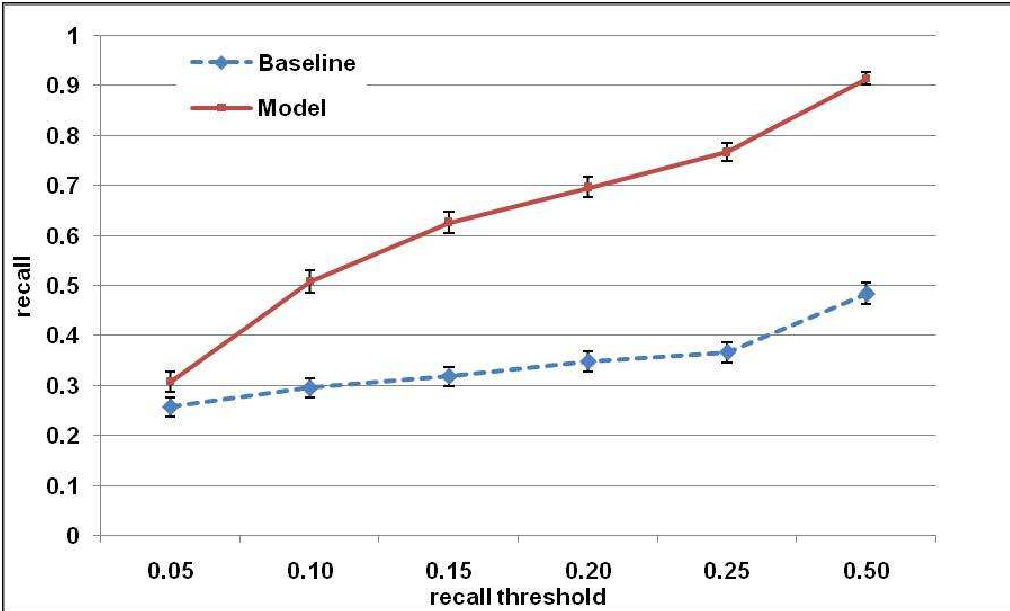 Figure 2: Performance comparison showing DSNL superiority in dense, long-term data.
The researchers discovered two critical factors to fix this:
- Recency Matters: Including training data from more than a few quarters ago actually hurt accuracy. The relationships between facilities and pathogens are transient; they "age" and become irrelevant.
- Seasonality is Key: Salmonella is seasonal (peaking in late summer). By specifically training the model on the same quarters from previous years (e.g., using Q3 2005 to predict Q3 2007), the model's reliability was restored.
Critical Analysis & Takeaways
The brilliance of this work lies in its honesty about the limitations of "heavy" models in "light" data scenarios.
Key Lessons:
- Network Context is Powerful: Breaking the "assumption of independence" allows the model to leverage peer performance, which is vital when a specific facility has a limited testing history.
- Agility requires Sparsity Management: If you want a model that reacts quickly, you must optimize for sparse graphs by using domain knowledge (like seasonality) to "bridge" the gaps in data.
- Future Outlook: This framework is not limited to food. It could be applied to cybersecurity (predicting which servers will be hit by specific malware strains) or finance (predicting localized economic shocks).
In conclusion, DSNL provides a robust roadmap for proactive food safety, provided we respect the rapid decay of historical relevance in dynamic networks.