
Automated Agricultural Market Intelligence: Beyond Simple Predictions
Towards the Idea of Agricultural Market Understanding for Automatic Event Detection
This paper introduces an automated framework for Agricultural Market (AM) understanding and event detection, specifically applied to the Natural Rubber (NR) market in Thailand. By integrating Michael Porter's Five Forces analysis with Machine Learning and Causal Inference, the authors transform heterogeneous "Agri-Big Data" into actionable market intelligence.
TL;DR
Agriculture is no longer just about farming; it is about navigating a complex web of global data. This paper proposes a system that doesn't just predict rubber prices, but understands the market. By mapping "Agri-Big Data" onto a structural economic framework (Porter's Five Forces) using Machine Learning, the authors create an automated agent capable of detecting anomalous market events and predicting future supply-demand shifts in the Thai Natural Rubber market.
The "Why": Why Traditional ML is Failing Agribusiness
Most current AI models in agriculture are "siloed." You might have a great model for predicting crop yield based on weather, or another for predicting price based on historical trends. However, a market manager needs to know how a flood in a specific province combined with a rising oil price will affect buyer behavior next week.
The problem is Veracity and Uncertainty. Agricultural data is messy—different formats, different frequencies, and often incomplete. Standard deterministic models break when a data source goes offline. The authors argue that we need Causal Inference—a way for the machine to "reason" through missing information based on established economic relationships.
Methodology: The Five-Force Fusion
The researchers utilize the famous Five-Force Analysis as the "mental model" for their AI. Instead of letting the machine guess patterns from scratch, they feed it a structured reality:
- Supply (F1): Environmental and production data.
- Demand (F2): Buyer behavior and warehouse stocks.
- Substitutes (F3): Prices of competing products (e.g., synthetic rubber).
- Logistics (F4): Currency, oil prices, and government policy.
- External Drivers (F5): Holidays and futures market trends.
System Architecture
The proposed system acts as an "Agent" that perceives the environment through streaming ingestion and processes it via two critical layers: Data Fusion and AM Understanding.
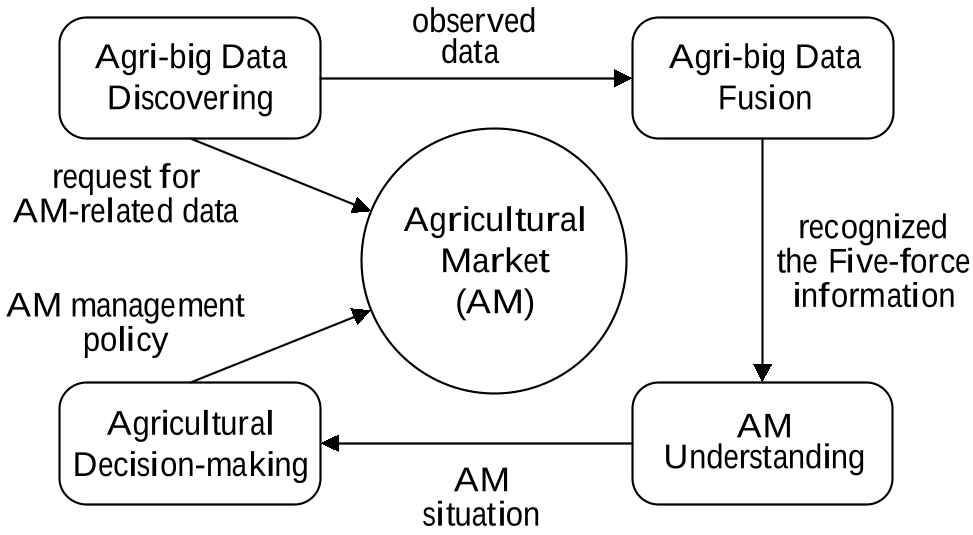 Figure 1: The flow from raw Agri-Big Data to decision-making support.
Case Study: Natural Rubber in Thailand
The strength of this framework is demonstrated through a chain-of-event analysis in the Natural Rubber (NR) market.
- Phase 1 (Recognition): The system ingest weather data. "Flooding in South Thailand" is detected. The Causal model recognizes this as a negative impact on F1 (Supply).
- Phase 2 (Prediction): Simultaneously, market data shows an "Increase in Bidders." The system recognizes this as an F2 (Demand) surge.
- Phase 3 (Understanding): The AM Understanding layer looks at the sequence: [Supply Decr.] + [Demand Incr.] = [Shortage Supply Event Detected].
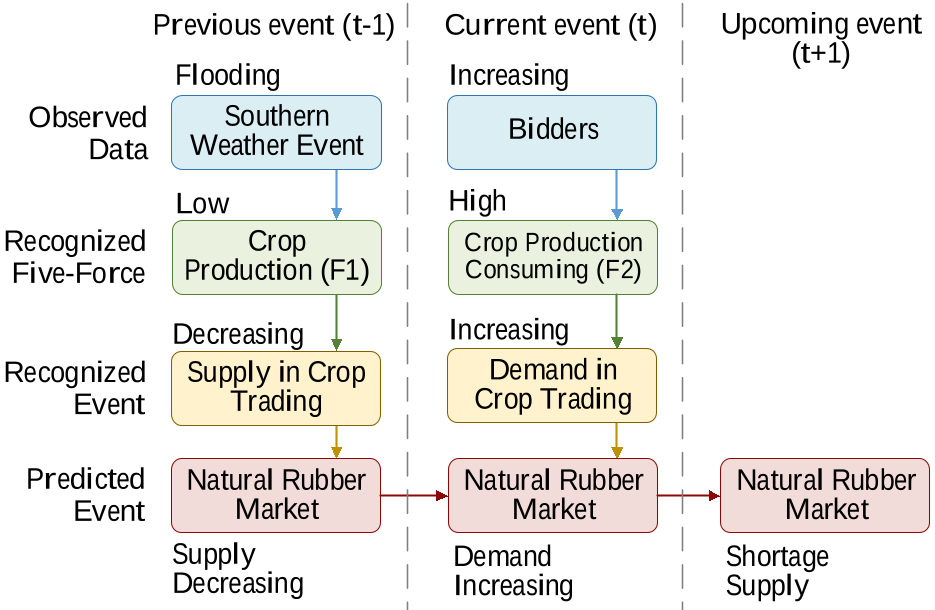 Figure 2: The logic chain used to synthesize a market "Event" from disparate data streams.
Critical Insight & SOTA Comparison
Unlike purely statistical models (like ARIMA or SVM) used in prior works (highlighted in the paper's literature review table), this approach is graph-based and structural.
| Feature | Prior SOTA (Statistical) | This Work (Causal/Structural) |
|---|---|---|
| Scope | Single Factor (e.g., Price only) | Holistic (5 Market Forces) |
| Missing Data | Often Fails | Infers via Probability Distribution |
| Output | Deterministic Value | Situation/Event Summarization |
Conclusion & Future Outlook
The paper concludes that while Machine Learning provides the "muscles" for data processing, Causal Knowledge provides the "brain." The main limitation noted is the need for initial expert knowledge to build the causal graph—a "cold start" problem.
The Takeaway: The future of agricultural tech isn't just "Big Data"; it's "Context-Aware Data." For developers and researchers, the next frontier is building dynamic learning models that can update their own causal graphs as global market behaviors shift unexpectedly.