
Deconstructing the Digital Gaze: How Image Databases Construct Race and Gender
How We've Taught Algorithms to See Identity: Constructing Race and Gender in Image Databases for Facial Analysis
This paper presents a critical analysis of 92 image databases used in facial analysis, revealing how race and gender classifications are socially constructed rather than objective. It identifies significant transparency gaps, showing that most databases lack clear definitions or provenance for these sensitive identity categories.
TL;DR
Machine learning is only as objective as the data it consumes. This seminal study by Scheuerman et al. audits the "invisible" foundations of facial analysis: the image databases. By analyzing 92 major datasets, researchers discovered a startling lack of rigor in how identity is defined. Most datasets treat race and gender as indisputable biological truths, ignoring their complex sociopolitical histories and effectively "baking" bias into the very DNA of modern AI.
The Problem: The Myth of Objective Identity
In the pursuit of SOTA performance, the computer vision community has often treated demographic labels like "Male" or "Asian" as ground-truth constants, similar to camera angles or lighting parameters. This "common sense" approach is a dangerous fallacy.
The authors argue that when an annotator labels a face, they aren't just recording a fact; they are performing a "moment of identification"—a subjective act shaped by their own cultural background and power dynamics. Current databases are failing because:
- Lack of Provenance: Users don't know how or why a specific racial taxonomy was chosen.
- Binary Reductionism: Gender is almost universally reduced to a "Male/Female" binary, erasing trans and non-binary realities.
- Physiognomic Risks: By linking physical features to identity categories without critical thought, we risk reviving 19th-century pseudo-sciences like physiognomy (predicting character from faces).
Methodology: Auditing the AI Infrastructure
The research team performed a deep-dive analysis into the documentation of 92 image databases (including staples like FERET, LFW, and VGGFace2). They categorized findings into:
- Implicit Data: General demographic stats (e.g., "this dataset is 50% female") but no labels on individual photos.
- Explicit Annotations: Every photo has a tag (e.g., "White, Male").
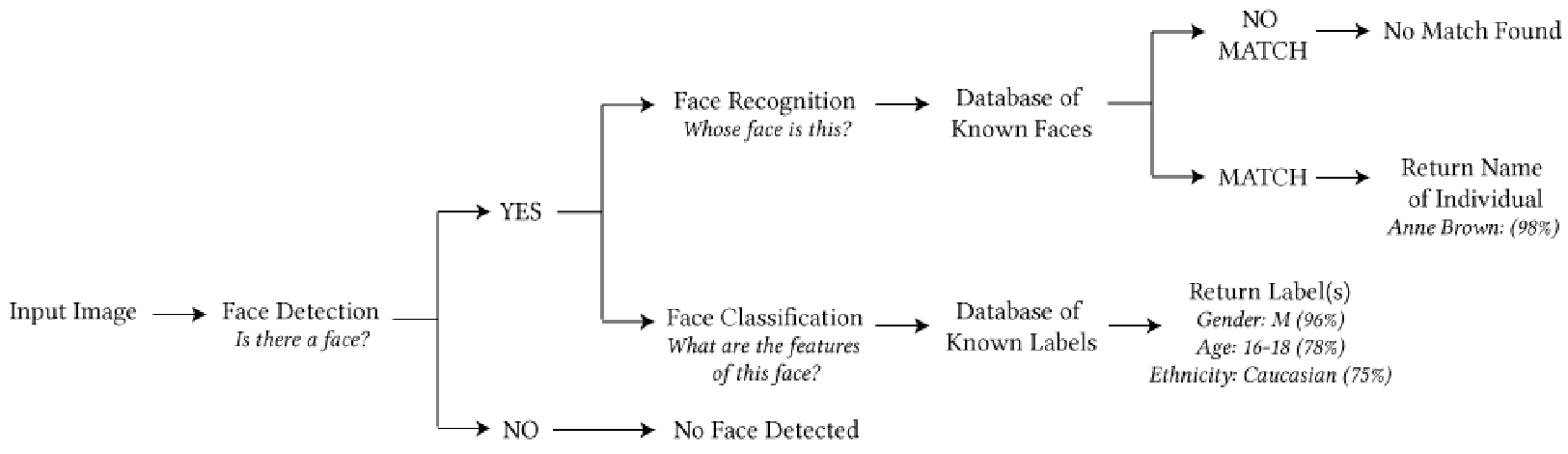 Figure 1: The standard pipeline from detection to classification, which relies entirely on the validity of the training database.
Key Findings: A Systemic Lack of Transparency
The results highlight a field-wide "black box" regarding identity:
- Inconsistency in Race: Definitions of race varied wildly, ranging from U.S. Census categories to antiquated and offensive terms like "Negroid" or "Mongoloid."
- The Gender Binary: Despite the push for diversity, gender remained stuck in a binary state. Only a handful of databases even acknowledged the limitation of this approach.
- Missing Sources: Authors rarely cited why they chose a particular classification schema. Labels were often applied by authors or crowdworkers (MTurk) without specific guidelines on "what makes a face look womanly."
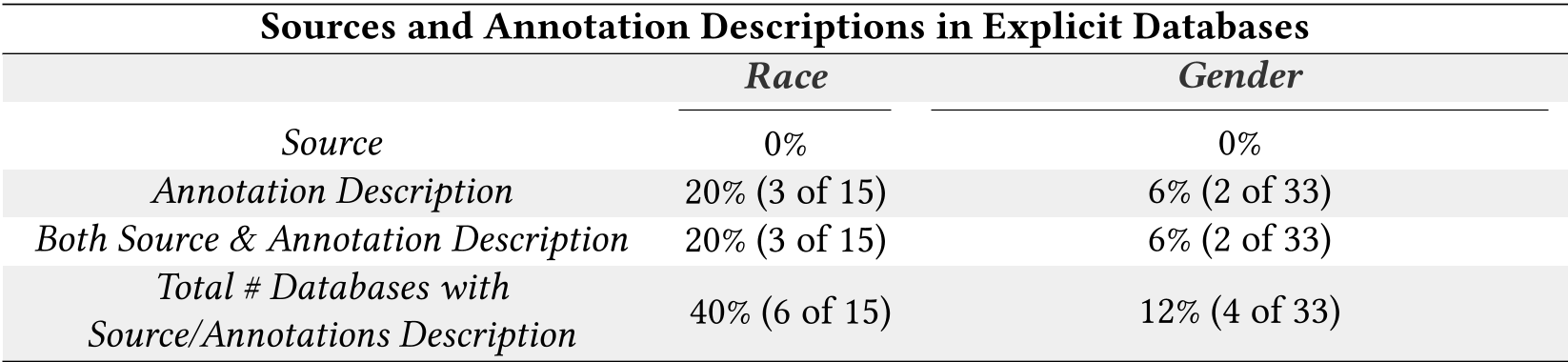 Table 1: Representation of how few databases provide adequate source material or annotation descriptions for race and gender.
Deep Insights: From "What" to "Why"
Why does this matter? Because identifying a person is an exercise of power. When a database allows for the classification of "Uyghur" people (as seen in some state-level surveillance contexts) or forces a trans person into a binary box, it is reinforcing a specific sociohistorical worldview.
The authors propose that the computer vision community must adopt Researcher Positionality. This means acknowledging who is doing the labeling. A Chinese dataset, a U.S. dataset, and an Iranian dataset may have very different cultural understandings of "Male" or "White." Hiding these differences behind a mask of "algorithmic objectivity" is not science; it’s an erasure of context.
Design Considerations for the Future
The study concludes with five pillars for better data science:
- Transparent Documentation: Explain the "why" behind your labels.
- Acknowledge Positionality: Record the demographics of your annotators.
- Sociohistorical Awareness: Be aware of how your racial categories have been used for oppression in the past.
- Creative Engagement with "Invisible" Identity: Explore self-identification (asking the subject) rather than just observing them.
- Limitation of Use: Use licensing to prevent databases from being used for unethical tracking or profiling.
Conclusion
This work is a call to action. We can no longer afford to "teach" algorithms to see identity through an uncritical lens. To build truly fair AI, we must stop pretending that identity is an apolitical attribute and start treating it with the sociohistorical rigor it deserves.