
AMCOSOP: Bridging the Digital Divide via Ambient Social Presence
Using Ambient Communication and Social Networking Technologies to Reduce Loneliness of Elders
This paper introduces AMCOSOP, an Ambient Communication for Sense of Presence platform designed to reduce loneliness among elders by connecting them with their social safety nets. The system utilizes a specialized Home Terminal touch-screen interface for elders and web/mobile clients for families, achieving social connectivity via XMPP and REST protocols.
TL;DR
The AMCOSOP project addresses the social isolation of the elderly by moving away from "active" social networking to "ambient" communication. By utilizing a dedicated, simplified touch-screen Home Terminal and XMPP-based real-time presence, the system allows elders to stay connected with their families through status sharing (mood, activity, location) rather than complex typing, resulting in sustained engagement during a 28-week trial.
Problem & Motivation: Why Facebook Fails the Elderly
While digital social networks have revolutionized communication for younger generations, they often leave the elderly behind. The paper identifies several critical barriers:
- The Input Hurdle: Conventional mice and keyboards are unintuitive for those without ICT experience.
- The Metaphor Gap: Concepts like "wall posts" or "feeds" can feel abstract or intrusive.
- The Fatigue of Active Communication: Constant active messaging is exhausting. What elders truly need is a "Sense of Presence"—the comforting knowledge that their loved ones are there and safe, without the pressure of a formal conversation.
Methodology - The Core: Designing for Presence
The AMCOSOP architecture is a sophisticated multi-user environment split into three tiers:
- Primary Users (Elders): Use the Home Terminal, a dedicated 15.6" touch-screen device.
- Secondary Users (Family): Use mobile apps or web portals.
- Tertiary Users (Caregivers): Manage services through the Service Platform.
Technical Architecture
The system leverages XMPP (Extensible Messaging and Presence Protocol) for instantaneous synchronization of status changes and REST for data retrieval. This ensures the Home Terminal acts as a "live" window into the family's life.
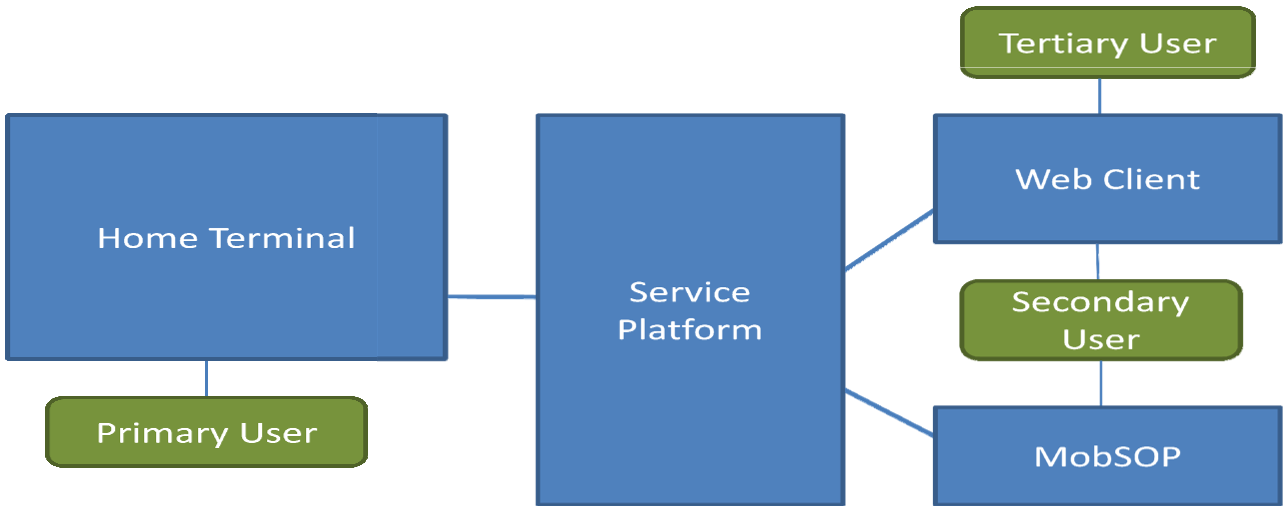 Figure 1: The AMCOSOP platform architecture, highlighting the interaction between the Service Platform, Home Terminal, and MobSOP clients.
The UI design is purposefully minimalist. Instead of deep menus, it uses a bottom-bar navigation and large, high-contrast buttons, focusing on four status fields: Status, Mood, Location, and Activity.
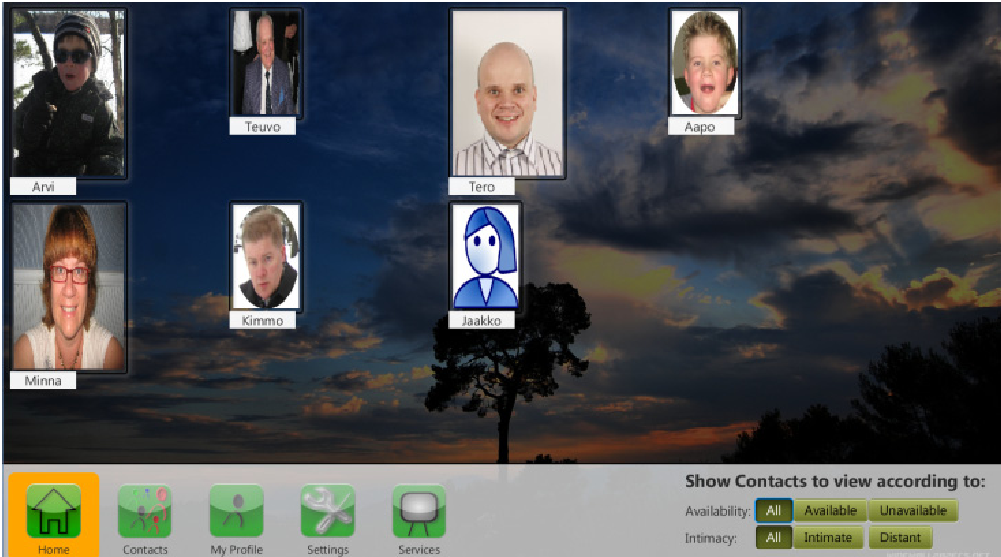 Figure 3: The simplified Home Terminal UI designed for touch interaction and low cognitive load.
Experiments & Results: Ambient vs. Active
The system was tested in Finland and Austria for 28 weeks. The data reveals a fascinating trend in user behavior:
- Passive > Active: Status updates consistently outperformed direct messaging. This confirms the hypothesis that "Ambient Communication"—the simple awareness of others' status—is the preferred mode of interaction for elders.
- Cultural Differences: Interestingly, the Austrian trials showed a higher preference for messaging compared to Finland, where status updates dominated.
- The "Christmas Effect": A noticeable dip in system activity occurred during the holiday season, illustrating that technology supplements, but does not replace, physical gatherings.
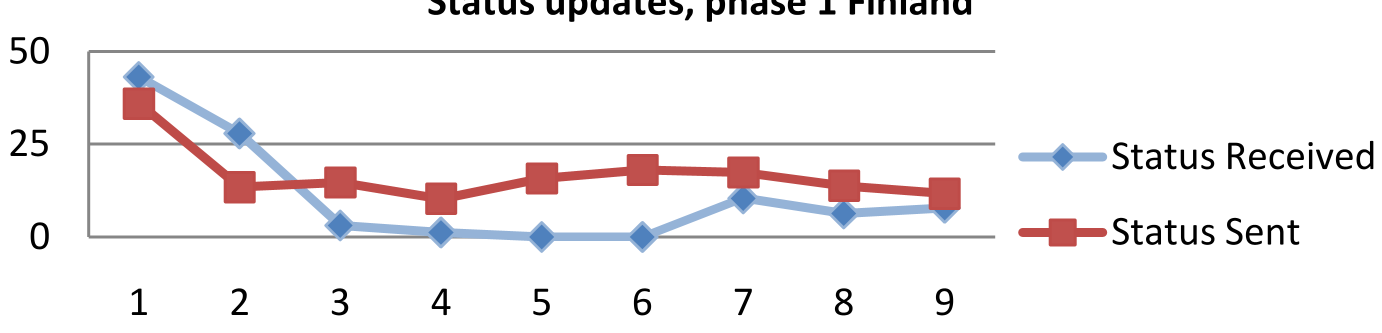 Figure 4/5: Comparative trends of status updates and messaging over the trial period in Finland.
Critical Analysis & Conclusion
Takeaway
The AMCOSOP study proves that the key to elderly inclusion is reducing the friction of interaction. When communication is designed as a background "ambient" presence rather than a foreground "task," usage stability increases.
Limitations
- Hardware Accessibility: The study relied on All-in-One PCs. While effective, these are more cumbersome than modern tablets.
- Manual Effort: Statuses still required manual input. Integrating automated context recognition (e.g., via IoT sensors) could further reduce the burden on elderly users.
Future Outlook
This work sets the stage for "Invisible Social Networks"—systems where the "Sense of Presence" is maintained automatically through IoT and ambient displays, ensuring that no elder feels alone, even when the screen is quiet.