
Beyond Unified Data: An Ontology-Oriented Bridge for Personalized Telemedicine
SPECIAL SECTION ON AMBIENT INTELLIGENCE ENVIRONMENTS WITH WIRELESS SENSOR NETWORKS FROM THE POINT OF VIEW OF BIG DATA AND SMART & SUSTAINABLE CITIES
This paper proposes an ontology-oriented architecture for integrating and mining heterogeneous Big Data in the health sector. By utilizing WordNet as a core ontology to map disparate sources (Web, sensors, and structured databases), the system achieves a unified semantic layer for personalized telemedicine. The approach demonstrated superior decision support in type 1 diabetes treatment, validating its effectiveness in a real-world case study.
Executive Summary
TL;DR: This paper introduces an architecture that doesn't just "store" Big Data but "understands" it. By leveraging a central ontology (WordNet) to bridge the gap between medical journals (PubMed), clinical databases (UCI), and wearable sensors, the researchers built a telemedicine system capable of personalized diabetes management. The system identifies specific demographic nuances—like how a patient's race or age shifts the "normal" range for blood insurance—that standard diagnostic tools often miss.
Background Positioning: This work represents a sophisticated "SOTA bridge." It moves beyond simple data mining (DM) by adding a semantic layer that allows AI models to be refined by medical literature in real-time.
The "Variety" Bottleneck in Healthcare
Modern medicine is drowning in data. We have sensors tracking glucose every second, databases holding decades of hospital encounters, and a constant stream of new clinical trials on the Web. The problem is Semantic Heterogeneity. A "high glucose" reading in a database (structured) doesn't inherently know about a new study on PubMed (unstructured) stating that specific age groups have different target ranges. Traditional hybrid architectures fail because they can't cross-reference these multi-modal sources dynamically.
Methodology: The Core Ontology Engine
The heart of this proposal is an Ontology-Oriented Architecture. Instead of trying to force all data into one giant table, the authors use "Mapping."
- Semantic Tagging: Unstructured text is processed via NLP to identify medical entities (using the UMLS domain ontology).
- Rule Extraction: Structured clinical data is mined using the C4.5 decision tree algorithm to find patterns in medication changes.
- The Master Bridge: All entities are mapped to WordNet (the core ontology). This allows "HbA1c" in a sensor to mean the same thing as "Glycated Hemoglobin" in a research paper.
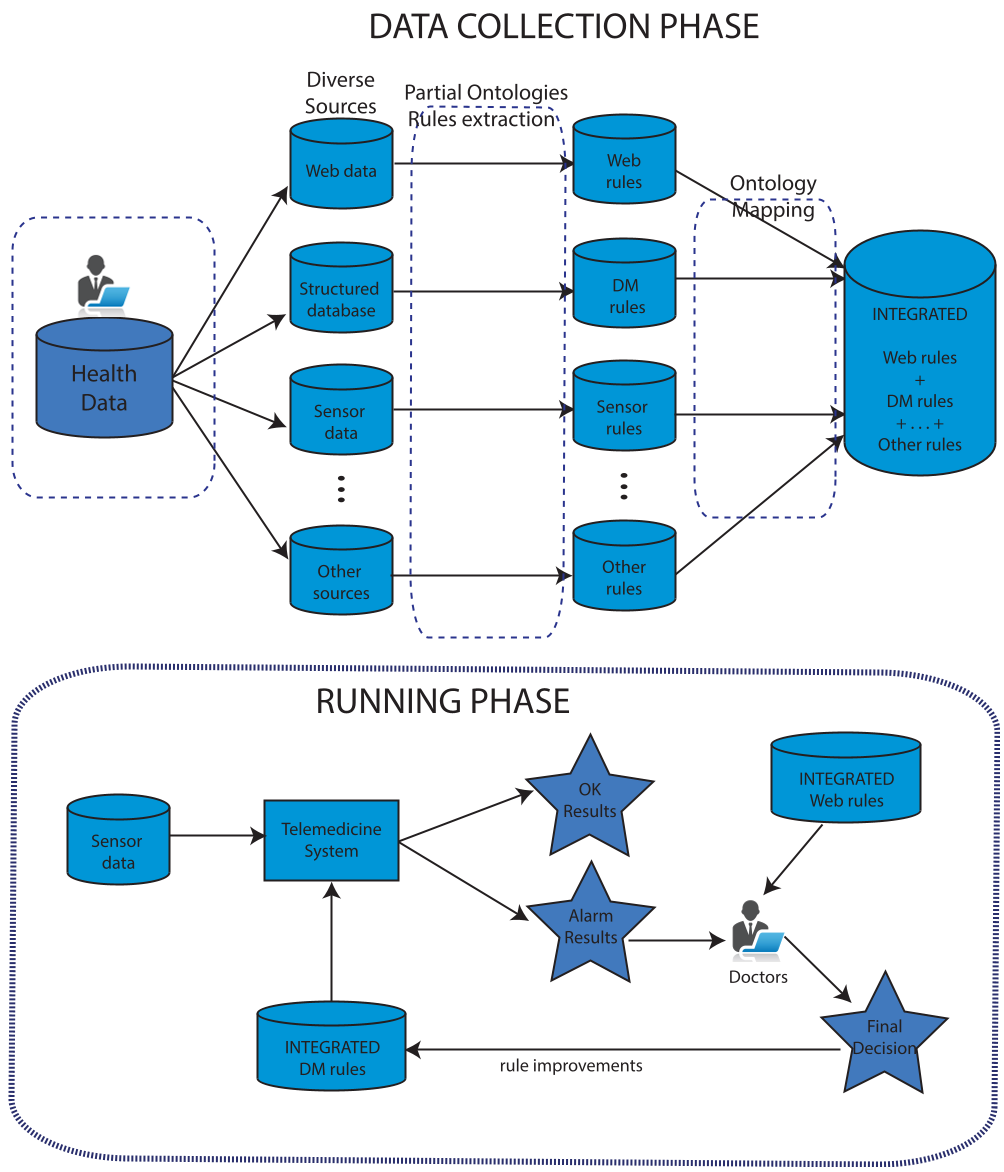 Figure 1: The dual-phase workflow showing how Web, DB, and Sensor data converge into Integrated Rules.
Case Study: Personalized Diabetes Treatment
The validity of this model was tested on Type 1 Diabetes. One of the most striking findings involves the HbA1c test.
Filtering Alarms with Context
Standard DM rules might trigger an alarm if a patient's HbA1c is above 8%. However, the system's "Web Rules" (extracted from PLOS ONE/PubMed) revealed that:
- Race Factor: Target values for Black patients are statistically higher (10.4%) compared to White patients (8.9%).
- Age Factor: Children (6-12 years) have a safer target of 8% or less.
By integrating these insights, the system prevents "False Alarms" and ensures physicians only intervene when a measurement is truly abnormal for that specific individual.
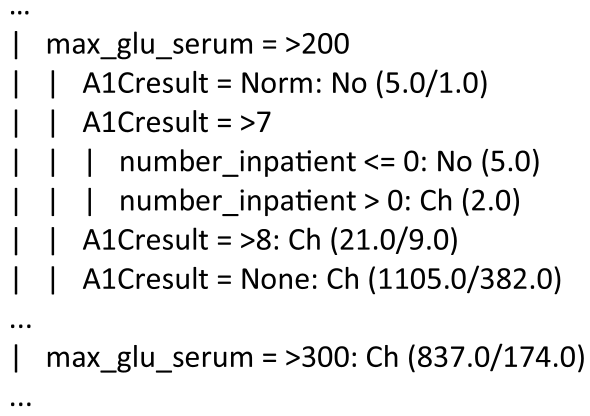 Figure 2: C4.5 Decision Tree results showing the logic for changing patient medication based on serum levels.
Real-Time Sensor Forecasting
The "Running Phase" utilizes Linear Regression (LR) and Support Vector Machines (SVM) to predict glucose levels 5 days into the future. By establishing a "Prediction Range," the system can detect deviations before they become medical emergencies.
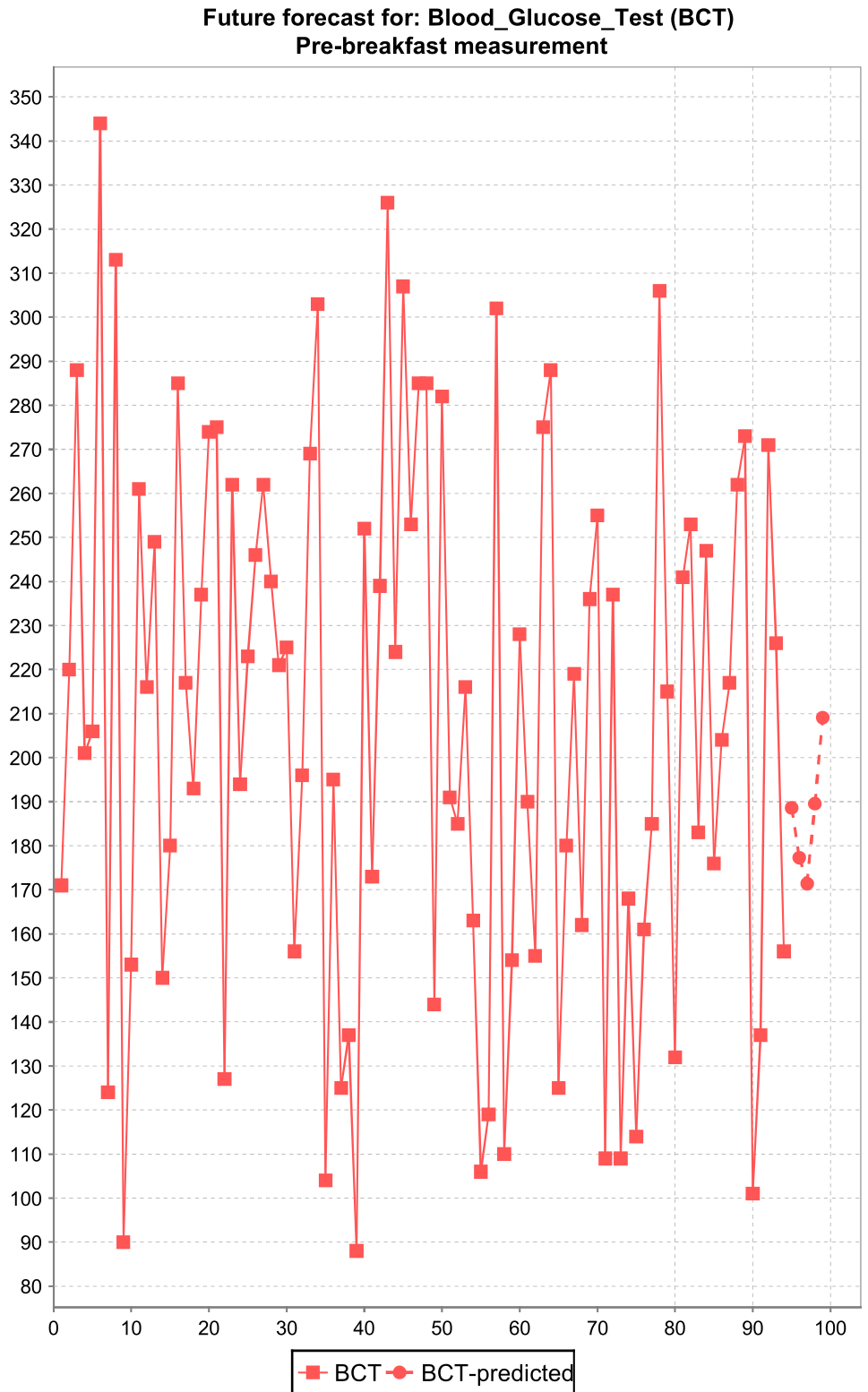 Figure 3: Time-series analysis of pre-breakfast glucose levels for an individual patient.
Critical Insight & Future Outlook
Takeaway: The real value of this work is the supervision of AI by knowledge. Most modern AI is a "black box," but this architecture uses ontologies to make the AI's logic "medically grounded."
Limitations: The reliance on manual predefined patterns for rule extraction is a bottleneck. In the era of LLMs, this process could be significantly more automated.
Future Work: The authors aim to tackle the "Velocity" aspect of Big Data by incorporating real-time embedded system frameworks and expanding to social network data for even broader context.
Final Thought: By treating medical data as a web of interconnected meanings rather than just a series of numbers, this architecture paves the way for a future where telemedicine is as nuanced as an in-person specialist.