
From Ambiguity to Precision: Ontological Reformulation for Social Image Search
An ambiguous tag-based query reformulation technique for an effective semantic-based social image research
The paper introduces a semantic-based query reformulation technique for social image retrieval, specifically targeting the "Touring" domain. By moving from ambiguous tag-based inputs to semantic-based queries through ontological rules (SROr), the system achieves a significant improvement in Precision and Recall, reaching a Mean Average Precision (MAP) of 83.78%.
TL;DR
Social image search is often a guessing game due to "tag ambiguity." This paper presents a Semantic-based Social Image Research System that acts as a translator, turning vague user tags into structured, faceted semantic queries. By leveraging an enriched ontology, it boosts search recall from a mediocre 37% to a robust 77%.
Positioning: This work is a structured, knowledge-based approach to the "Semantic Gap" problem, bridging the space between low-level social tags and high-level human intent.
The Problem: The Ambiguity of Tags
Most users search for images using 1-2 keywords (tags). However, the metadata on platforms like Flickr is notoriously incomplete and noisy. Previous solutions like Query Expansion (QE) often suffer from "Query Drift"—where the search engine gets distracted by related but irrelevant terms.
The authors identify two specific blockers:
- Incomplete Annotation Problem (IAP): Images lack enough tags to match complex queries.
- Ambiguity: A tag like "Skiing" could mean water-skiing, street-skiing, or ice-skiing. A standard search might only return one type, failing to satisfy different user contexts.
Methodology: The Semantic Bridge
Instead of simply adding synonyms, the authors build a logical pipeline to "explode" a simple query into its full semantic potential across four facets: Taxonomic, Temporal, Spatial, and Qualificative.
1. Ontological Enrichment
The system uses the "Touring" ontology but extends it with Semantic Rules (SROr). These rules define how a concept like "Adventure activity" links to specific instances like "Water-skiing."
2. The Reformulation Pipeline
The process follows five rigorous mathematical steps:
- Mapping: Identifying initial concepts in the ontology.
- Deduction: Finding all sub-concepts and descendants (e.g., "Skiing" -> "Ice-skiing").
- Rule Execution: Applying semantic rules to find associated qualities or locations.
- Translation: Converting the resulting semantic web into a SPARQL query.
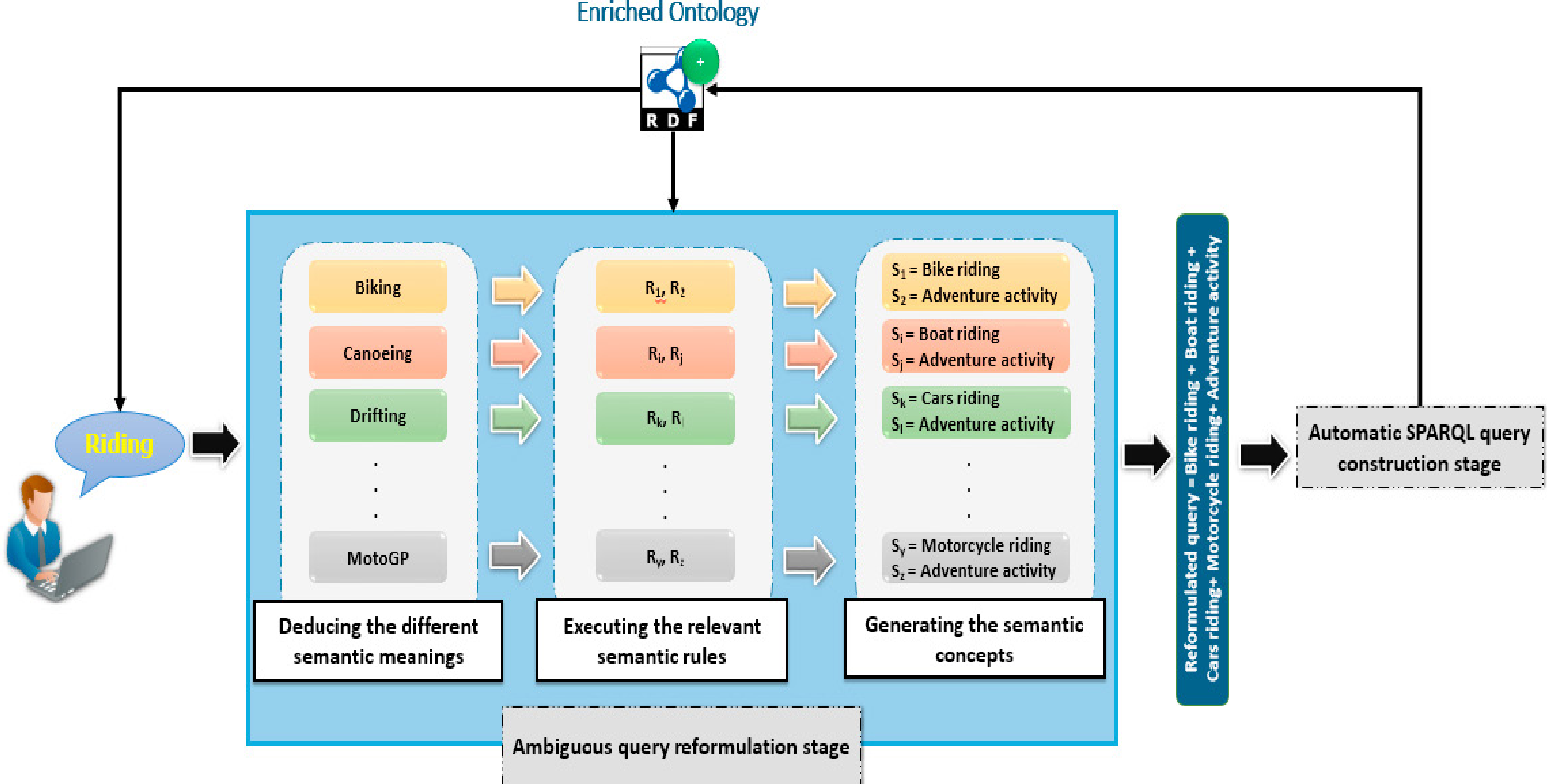 Fig 1: The Transformation process from ambiguous tag-based query to semantic-based one.
Experiments & Results: A New Baseline
The system, dubbed the Socio-Touring Research Engine, was tested against a standard tag-based retrieval system using 25,000 images from Flickr.
| Metric | Tag-Based (Baseline) | Semantic-Based (Proposed) |
|---|---|---|
| MAP (Mean Avg Precision) | 70.24% | 83.78% |
| Avg Recall | 36.98% | 77.24% |
| F-Measure | 48.45% | 80.37% |
The most striking improvement is in Recall. By understanding that a user searching for "Sport" might be interested in "Skiing" or "Festival" within a sporting context, the system retrieves relevant images that traditional keywords would have missed.
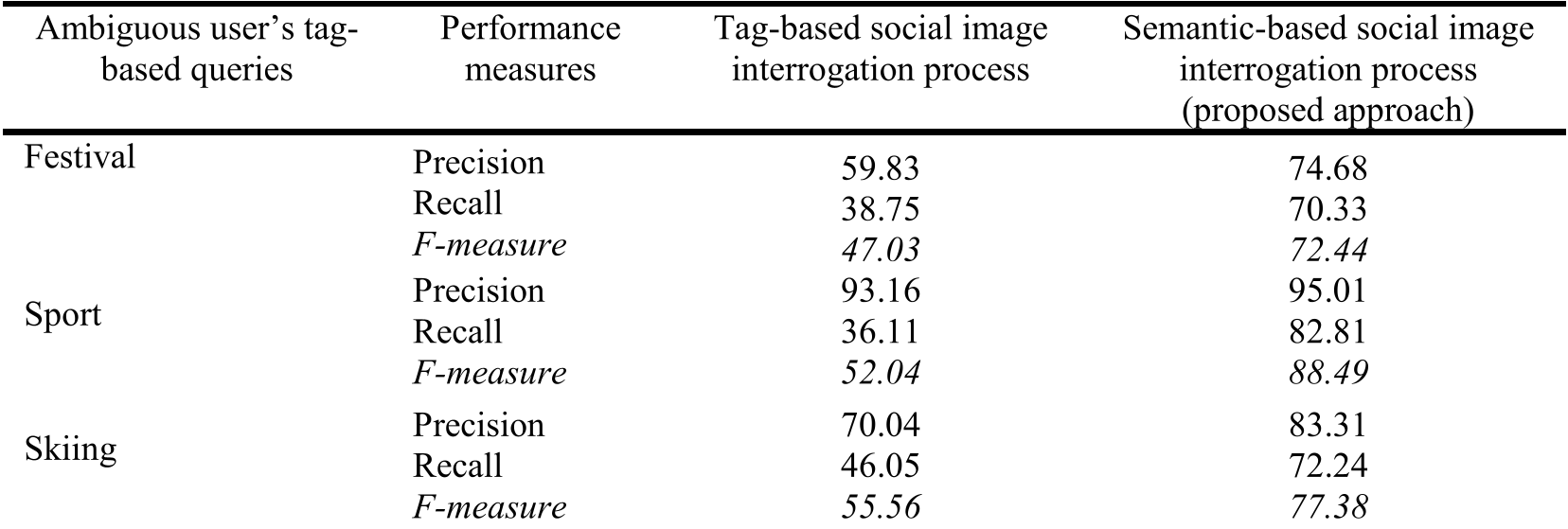 Fig 2: Comparison of Precision/Recall across various ambiguous queries.
Critical Insight & Future Outlook
The beauty of this approach is its interpretability. Unlike black-box neural networks, this system uses logical rules that can be audited and refined by domain experts.
Limitations: The current approach is heavily dependent on the quality and breadth of the underlying ontology. If a concept isn't in the "Touring" ontology, the system remains as "blind" as a standard tag search.
The Road Ahead: The authors suggest that while retrieval is now highly accurate, the diversity of results (e.g., seeing a mix of different types of skiing) can be overwhelming. Future work will focus on Semantic Re-ranking to ensure that the most representative images from each semantic facet are shown first.
Conclusion
This paper proves that structured knowledge (Ontologies) and logical rules still have a massive role to play in the age of big data. By re-engineering the query rather than just the search index, we can bridge the semantic gap more effectively than through raw statistics alone.