
AMES-Cloud: Revolutionizing Mobile Video with Cloud-Assisted Adaptation and Social Prefetching
AMES-Cloud: A Framework of Adaptive Mobile Video Streaming and Efficient Social Video Sharing in the Clouds
This paper introduces AMES-Cloud, an adaptive mobile video streaming and social sharing framework that leverages cloud computing. It integrates Scalable Video Coding (SVC) for link-adaptive streaming (AMoV) and social network analysis for proactive video prefetching (ESoV), utilizing private cloud agents for each user.
TL;DR
AMES-Cloud addresses the "buffering nightmare" of mobile video streaming by moving the heavy lifting to the cloud. By assigning a private agent to every user, the system uses Scalable Video Coding (SVC) for real-time bitrate adjustment and Social Network Analysis to pre-emptively download videos before a user even clicks "play."
The Bottleneck: Why Mobile Video Still Stutters
Despite the rollout of high-speed LTE and 5G, mobile video remains inconsistent. The primary culprits are:
- Limited Bandwidth & Fluctuation: Signal fading and mobility cause unpredictable throughput.
- Heterogeneity: Devices have vastly different resolutions and decoding powers.
- Server Overhead: Traditional central servers cannot handle the granular, per-user calculations required for millions of adaptive streams simultaneously.
Methodology: The Dual-Engine Approach
AMES-Cloud splits its innovation into two core components: AMoV (Adaptive Mobile Video) and ESoV (Efficient Social Video Sharing), both managed by a 2-tier "Video Cloud" and "Sub-Video Cloud" architecture.
1. AMoV: Dynamic Link Adaptation
Unlike standard streaming that switches between entirely different files (e.g., 720p vs 1080p), AMoV uses SVC. SVC encodes video into a Base Layer (BL) and multiple Enhancement Layers (EL).
- The Intuition: If the link is poor, the agent sends only the BL. As signal strength improves, it "stacks" ELs to increase resolution or frame rate transitionally.
- Bandwidth Prediction: The private agent predicts the next time window's capacity using a measurement-based approach (incorporating RTT, Packet Loss, and SINR).
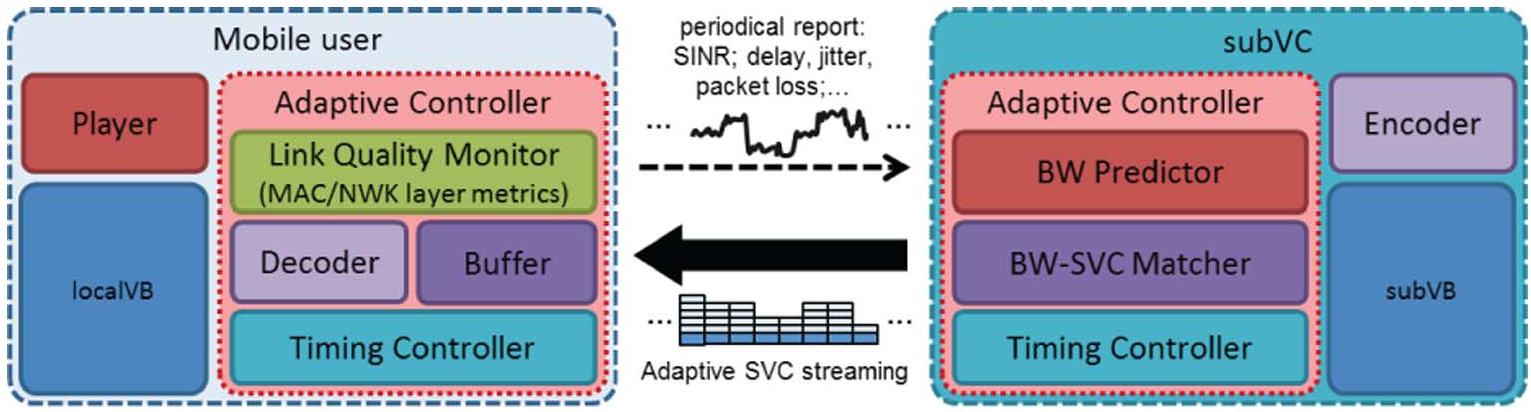 Figure 1: The functional structure showing the handshake between the Mobile Client and the Cloud-based Sub-VC agent.
2. ESoV: Social-Aware Prefetching
The most "human-centric" part of the framework is ESoV. It analyzes social interactions to guess what you'll watch next:
- Direct Recommendation (Strong): If a friend sends you a link, the agent prefetches the entire video.
- Subscription (Medium): For new clips from channels you follow, it prefetches parts (e.g., the first 10%).
- Public Sharing (Weak): If someone in your feed watched something, it prefetches just a tiny fragment to ensure an instant start.
Experimental Validation
The researchers implemented AMES-Cloud on a physical testbed using Samsung Galaxy devices and LTE/3G networks.
Bandwidth Prediction Accuracy
The study found that a short "Time Window" () is critical. With a window of 1-2 seconds, the relative error of bandwidth prediction stays around 10%, allowing the SVC logic to match segments to reality almost perfectly.
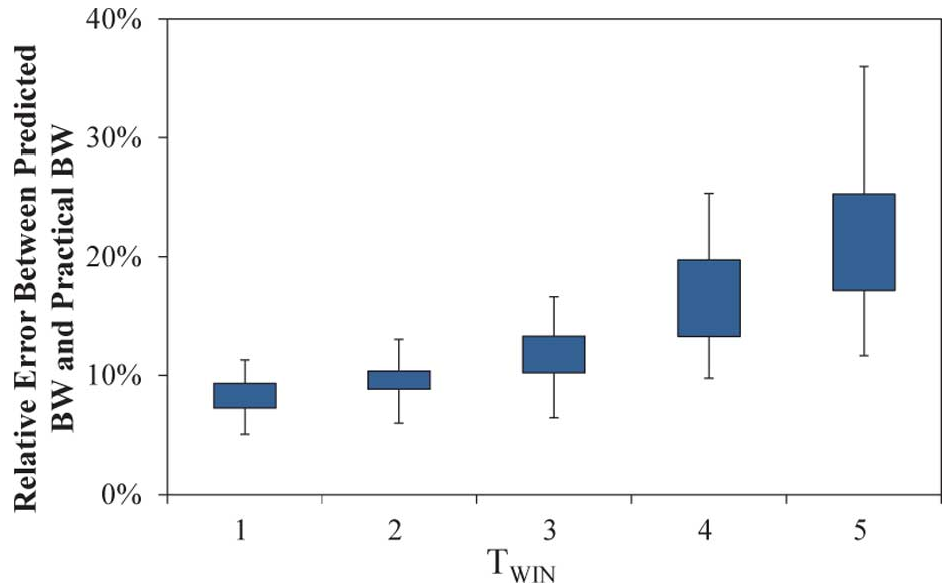 Figure 2: Prediction error vs. Time Window length. Shorter windows (1s) provide much higher precision.
Click-to-Play Performance
The most striking result is the reduction in latency. When the ESoV mechanism caches content in the localVB (local storage), the start-up delay is virtually eliminated (ignorable delay). Even when fetching from the cloud agent, the delay remains under 1 second.
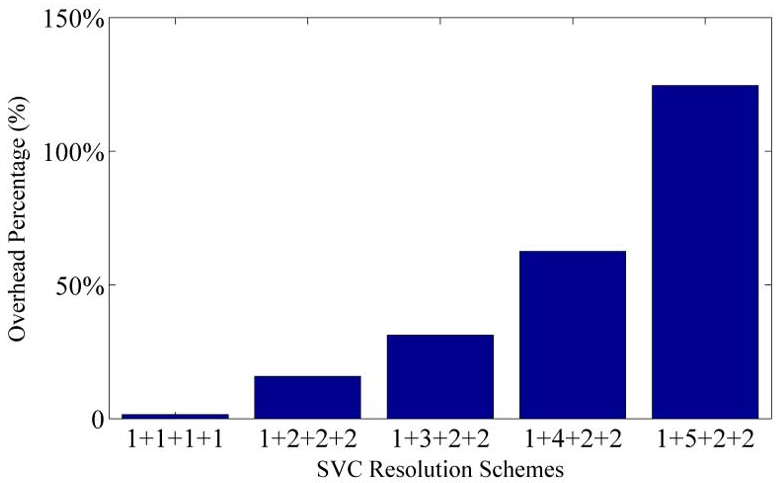 Figure 3: Average click-to-play delay across different caching scenarios.
Critical Insight & Conclusion
The genius of AMES-Cloud isn't just in the SVC or the Cloud; it’s in the privatization of control. By giving every user a "mini-server" (agent) in the cloud, the system can afford to be highly personalized and proactive.
Takeaway: Future video platforms must move away from "one-size-fits-all" streaming. The combination of cloud-side agent processing and social-aware prefetching is the most viable path to the "instant-on" video experience users demand.
Limitations: The current prototype does not fully account for the server-side cost of massive-scale SVC encoding and the energy consumption on the mobile device during background prefetching via cellular data.